
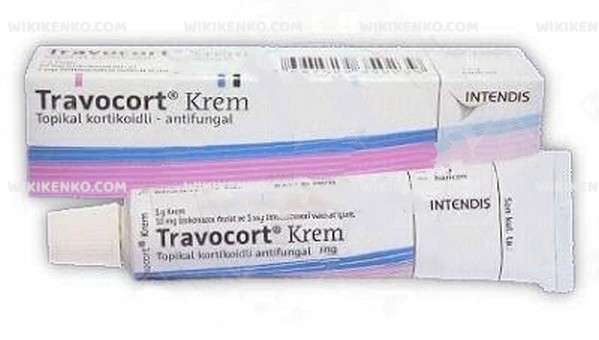
Description
Travocort Cream represents a dual-action topical medication designed to address fungal infections of the skin, particularly when accompanied by inflammatory responses. This medication combines antifungal and anti-inflammatory properties to provide effective treatment for various dermatological conditions. A thorough understanding of its composition, mechanisms, applications, and proper usage can help optimize treatment outcomes while minimizing potential risks.
Composition and Formulation
Travocort Cream features a distinctive formulation containing two primary active ingredients working synergistically. Each gram of Travocort Cream contains 10 mg (1%) isoconazole nitrate and 1 mg (0.1%) diflucortolone valerate. This combination classifies Travocort as a corticosteroid-antimycotic preparation, leveraging the antifungal properties of isoconazole nitrate alongside the anti-inflammatory effects of diflucortolone valerate.
The excipients in Travocort Cream include cetostearyl alcohol, disodium edetate, liquid paraffin, white soft paraffin, polysorbate 60, sorbitan stearate, and purified water. These inactive ingredients create a stable delivery system for the active components while ensuring proper application characteristics.
Mechanism of Action
Isoconazole Nitrate Action
Isoconazole nitrate belongs to the azole class of antifungal medications. It exerts its therapeutic effect by inhibiting the synthesis of ergosterol, a vital component of fungal cell membranes. This inhibition disrupts membrane integrity and function, ultimately preventing fungal growth and reproduction. Isoconazole demonstrates efficacy against various microorganisms, including dermatophytes, yeasts, yeast-like fungi, and molds, as well as organisms causing Erythrasma.
Research indicates that isoconazole penetrates rapidly into human skin after application, reaching maximum concentrations in the horny layer and living skin within approximately one hour. High concentrations are maintained for at least seven hours, with significant levels detected in the horny layer (approximately 3500 μg/ml), living epidermis (approximately 20 μg/ml), and dermis (approximately 3 μg/ml).
Diflucortolone Valerate Action
Diflucortolone valerate is a potent synthetic glucocorticoid that suppresses inflammatory processes in the skin. It works primarily by inducing lipocortins, which are phospholipase A2 inhibitory proteins that subsequently inhibit the release of arachidonic acid. This inhibition prevents the formation and release of inflammatory mediators. Additionally, diflucortolone valerate binds to glucocorticoid receptors, stimulating their migration to the cell nucleus where it promotes the transcription of anti-inflammatory genes while suppressing the expression of pro-inflammatory genes.
The combined effect of these two active ingredients creates a synergistic therapeutic approach. Interestingly, research suggests that the corticosteroid component may retard the percutaneous absorption of isoconazole nitrate due to its vasoconstrictive effect. However, despite this interaction, the antifungal efficacy of isoconazole is not compromised by the presence of the corticosteroid.
Therapeutic Indications
Travocort Cream is primarily indicated for the treatment of inflammatory or eczematous skin conditions accompanied by fungal infections. It serves as an effective intervention for the initial or intermediate treatment of superficial fungal infections of the skin, particularly when these infections present with significant inflammation or eczematous manifestations.
Specific conditions for which Travocort may be prescribed include:
-
Fungal infections of the skin where inflammation is present (e.g., redness, swelling, soreness)
-
Tinea pedis (athlete’s foot), especially in the interdigital spaces
-
Tinea manuum (fungal infection of the hands)
-
Tinea corporis (ringworm affecting the body)
-
Tinea cruris (jock itch in the groin and genital regions)
-
Candidiasis of the skin
The dual-action formula makes Travocort particularly valuable for addressing both the infectious and inflammatory aspects of these conditions simultaneously, providing faster symptom relief while targeting the underlying fungal cause.
Dosage and Administration
Application Method
Travocort Cream should be applied topically to the affected areas of skin. Prior to application, the area should be thoroughly cleaned and dried. A thin layer of the cream should be applied to cover the affected area and a small margin of surrounding skin.
Frequency and Duration
The standard recommendation is to apply Travocort Cream twice daily to the affected skin areas. The treatment duration depends on the clinical response, but generally, Travocort therapy must be terminated after regression of the inflammatory or eczematous skin condition, and at the latest after two weeks of use.
After the inflammatory component has resolved, treatment should continue with a glucocorticoid-free antifungal preparation to complete the eradication of the fungal infection. This approach is particularly important when treating infections in the inguinal and genital regions.
Special Populations
For children aged 2 years or older and adolescents, dose adjustments are not generally required. However, limited safety data are available for children under 2 years of age. In all cases, particularly with pediatric patients, care should be taken to use the minimum effective amount for the shortest necessary duration.
For application to facial skin, extra caution should be exercised to prevent the cream from coming into contact with the eyes. When treating fungal infections in interdigital spaces, it may be advisable to place a strip of gauze smeared with Travocort between the toes or fingers.
Side Effects
While Travocort Cream is generally well-tolerated when used as directed, it may cause adverse effects in some individuals. Knowledge of these potential side effects is crucial for monitoring and ensuring safe use.
Common Side Effects
The most frequently observed adverse reactions in clinical studies include application site irritation and burning. Other reported local reactions include:
-
Itching (pruritus)
-
Redness (erythema)
-
Dryness at the application site
Less Common Side Effects
Less frequently reported adverse effects include:
-
Skin striae (stretch marks)
-
Folliculitis (inflammation of hair follicles)
-
Telangiectasia (small dilated blood vessels)
Rare or Serious Side Effects
With prolonged use, especially over large areas or under occlusive dressings, the following systemic effects may occur:
-
Skin atrophy
-
Acneiform changes in the skin
-
Depression of the hypothalamic-pituitary-adrenal axis
-
Growth retardation (in children)
-
Blurred vision
-
Blisters at the application site
Contraindications
Travocort should not be used in cases of:
-
Hypersensitivity to isoconazole nitrate, diflucortolone valerate, or any excipients in the formulation
-
Tuberculous or syphilitic processes in the treatment area
-
Viral infections such as varicella (chickenpox) or herpes zoster (shingles)
-
Rosacea or perioral dermatitis
-
Postvaccination skin reactions in the area to be treated
Precautionary Use
Caution is advised when considering Travocort for:
-
Treatment of large body surface areas
-
Prolonged treatment periods
-
Use under occlusive dressings
-
Application near the eyes
-
Use in patients with glaucoma
-
Application in skin crease areas
Special Populations
Pregnancy
Travocort Cream should not be used during pregnancy. Animal studies have demonstrated reproductive toxicity for diflucortolone valerate. Epidemiological studies suggest a possible increased risk of oral clefts among newborns when mothers receive glucocorticoids during the first trimester. Although the risk may be lower with topical applications due to minimal systemic absorption, adverse effects cannot be excluded in neonates whose mothers receive treatment during pregnancy.
Breastfeeding
The safety of Travocort during lactation has not been established. It remains unknown whether isoconazole nitrate or diflucortolone valerate are excreted in human milk, and a risk to the breastfed infant cannot be excluded. Nursing mothers should not apply Travocort to the breasts to prevent inadvertent ingestion by the infant.
Pediatric Use
Dose adjustments are not generally required for children aged 2 years or older and adolescents. However, only limited safety data are available for children under 2 years of age. Children may be more susceptible to systemic toxicity from topical corticosteroids due to their larger skin surface area to body weight ratio.
Storage and Handling
Travocort Cream should be stored below 25°C in a cool, dry place, away from direct sunlight and heat sources. The medication should be kept out of the reach and sight of children. The tube should be tightly closed when not in use to prevent contamination and maintain product stability.
Hygienic Considerations
Successful treatment with Travocort requires adherence to proper hygienic measures to prevent reinfection. Personal linen such as face cloths, towels, and underwear should be changed daily and washed at high temperatures. For tinea pedis (athlete’s foot), the spaces between the toes must be thoroughly dried after washing, and clean socks or stockings should be worn daily.
If a secondary bacterial infection is present alongside the fungal infection, appropriate antimicrobial therapy should be instituted concurrently.
Key Information
| Parameter | Information |
|---|---|
| Active Ingredients | Isoconazole nitrate (1%) and Diflucortolone valerate (0.1%) |
| Classification | Combination antifungal and topical corticosteroid |
| Main Indications | Inflammatory or eczematous fungal skin infections |
| Dosage | Apply twice daily to affected areas |
| Treatment Duration | Until inflammation subsides; maximum 2 weeks |
| Common Side Effects | Irritation, burning, itching, redness, dryness |
| Serious Side Effects | Skin atrophy, striae, HPA axis suppression (with extensive use) |
| Contraindications | Hypersensitivity, tuberculosis/syphilis in treatment area, viral skin infections, rosacea, perioral dermatitis |
| Pregnancy Safety | Not recommended during pregnancy |
| Breastfeeding Safety | Not recommended during breastfeeding |
| Pediatric Use | Limited data for children under 2 years; use with caution |
| Storage Conditions | Below 25°C, away from direct sunlight |
| Prescription Status | Prescription required |
| Effects on Driving | No effects on ability to drive and use machines observed |
Conclusion
Travocort Cream offers an effective therapeutic approach for managing inflammatory fungal skin infections through its unique combination of antifungal and anti-inflammatory properties. The isoconazole nitrate component targets the fungal infection directly, while diflucortolone valerate addresses the inflammatory symptoms, providing comprehensive treatment for affected individuals.
While Travocort provides rapid symptom relief and targets the underlying infection, proper use-including adherence to recommended dosages, treatment duration, and hygiene measures-is essential for optimal outcomes. It is particularly important to remember that treatment with Travocort should typically be limited to two weeks, after which therapy should continue with a corticosteroid-free antifungal preparation if needed.
Healthcare providers should carefully consider the benefit-risk profile when prescribing Travocort, particularly for vulnerable populations such as pregnant or breastfeeding women, children, and elderly patients. Patients should receive thorough education on application techniques, potential side effects, and the importance of completing the full course of therapy as directed by their healthcare provider.


Rihanda Adrian Fourie –
Goodday.
I am wound care specialist. I would like to buy Travacort cream in bulk.
Could you please send me a price?
Regards
Rihanda Adrian Fourie
Specialist wound care clinic and podiatry.
Medical Guidance Center –
Hello there, this is Wikikenko.
Travocort cream is a topical medication used for treating skin inflammation caused by fungal infections (eg between fingers, hands, genitals and groin). It contains two active ingredients: isoconazole nitrate, an antifunga agent, and diflucortolone valerate, a corticosteroid.
The price of Travocort cream may vary depending on the country, pharmacy and pack size. please log in to see the up-to-date Travocort Cream prices.
Please note that Travocort cream is a prescription-only medicine and should be used only as directed by your doctor. You may want to contact your local pharmacy or supplier for more details.