
Description
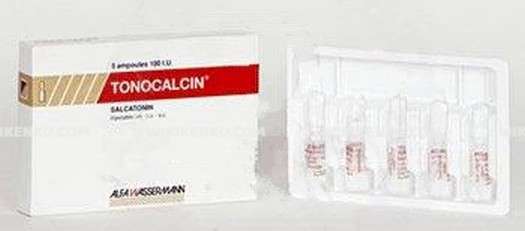
Tonocalcin Ampul 100 IU/mL is a pharmaceutical preparation containing synthetic salmon calcitonin (salcatonin), a peptide hormone that plays a crucial role in calcium homeostasis within the body. Developed as a therapeutic agent for various metabolic bone disorders, this medication has been in clinical use for over three decades. As a parenteral formulation available in ampules, it provides an effective treatment option for conditions characterized by abnormal calcium metabolism and accelerated bone resorption. This article provides detailed information about Tonocalcin’s composition, pharmacological properties, therapeutic applications, and clinical considerations for healthcare professionals.
Composition and Pharmaceutical Form
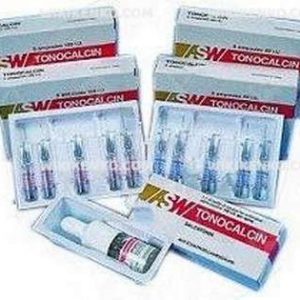
Tonocalcin Ampul contains salcatonin (synthetic salmon calcitonin) at a concentration of 100 IU per milliliter in a clear solution. It is supplied in 1 mL glass ampules with packages typically containing 5 ampules per carton. The active ingredient, salmon calcitonin, is a 32-amino acid polypeptide hormone that differs from human calcitonin in 13 amino acid positions.
This structural difference contributes to its enhanced potency compared to human calcitonin, making it the preferred therapeutic option in clinical applications. The complete amino acid sequence of salmon calcitonin is: Cys-Ser-Asn-Leu-Ser-Thr-Cys-Val-Leu-Gly-Lys-Leu-Ser-Gln-Glu-Leu-His-Lys-Leu-Gln-Thr-Tyr-Pro-Arg-Thr-Asn-Thr-Gly-Ser-Gly-Thr-Pro, with a disulfide bond between the cysteine residues at positions 1 and 7.
Pharmacological Properties
Mechanism of Action
Salmon calcitonin exerts its therapeutic effects through binding to specific G protein-coupled calcitonin receptors, which are predominantly found on osteoclasts. Upon binding, it activates multiple signaling pathways, including the adenylyl cyclase and phosphatidyl-inositol-calcium pathways. The principal pharmacodynamic effects of calcitonin occur in two major target tissues: bone and kidney.
In bone tissue, calcitonin inhibits osteoclast-mediated bone resorption through multiple mechanisms. It induces rapid contraction of osteoclasts, reducing their motility and capacity to resorb bone matrix.
Additionally, it inhibits carbonic anhydrase II, disrupting the acidic environment necessary for optimal osteoclast activity. Calcitonin also impedes the differentiation of osteoclast precursors into mature forms, contributing to an overall reduction in bone breakdown. This bone-preserving action is particularly beneficial during periods of calcium mobilization, such as pregnancy and lactation.
At the renal level, calcitonin increases urinary excretion of calcium, phosphate, sodium, magnesium, and potassium by decreasing tubular reabsorption. This promotes diuresis and contributes to lowering serum calcium levels, although this effect is relatively minor compared to its action on bone.
Pharmacokinetics
Following subcutaneous or intramuscular administration, salmon calcitonin is rapidly absorbed with high bioavailability, approximately 71% for subcutaneous and 66% for intramuscular routes. Peak plasma concentrations are typically reached within the first hour post-administration, with peak levels ranging between 200 and 400 pg/ml after a 100 IU dose.
The peptide has short absorption and elimination half-lives of 10-15 minutes and 50-80 minutes, respectively. It is primarily metabolized through proteolysis in the kidneys, forming pharmacologically inactive fragments. Plasma protein binding is moderate, ranging from 30% to 40%. Due to its predominantly renal metabolism, patients with end-stage renal failure may experience altered clearance, although the clinical significance of this effect remains uncertain.
Therapeutic Indications
Tonocalcin Ampul 100 IU/mL is indicated for several clinical conditions related to abnormal calcium metabolism and bone disorders:
Metabolic Bone Disorders
Paget’s disease of bone (osteitis deformans) represents a primary indication, particularly in cases characterized by bone pain, neurological complications, progressive bone lesions, incomplete or recurrent fractures, and elevated biomarkers of bone turnover such as serum alkaline phosphatase and urinary hydroxyproline excretion. Salmon calcitonin effectively reduces bone turnover and alleviates symptoms in this condition.
Postmenopausal osteoporosis constitutes another major indication, where Tonocalcin helps prevent further bone loss and reduces fracture risk. It is particularly valuable in patients who cannot tolerate or have contraindications to other osteoporosis treatments.
Hypercalcemic States
Tonocalcin is effective in managing hypercalcemia of various etiologies, including malignancy-associated hypercalcemia (secondary to tumoral osteolysis in breast, lung, and kidney carcinomas, multiple myeloma, and other malignancies), hyperparathyroidism, immobilization-induced hypercalcemia, and vitamin D intoxication. Its rapid action in lowering serum calcium makes it suitable for both acute and chronic management of hypercalcemia.
Pain Management
The medication has demonstrated efficacy in managing bone pain associated with osteolysis and/or osteopenia. Additionally, it has been used in neurodystrophic conditions such as algodistrophy (also known as Sudeck’s disease or complex regional pain syndrome).
Other Applications
Some clinical evidence supports the use of Tonocalcin in acute pancreatitis. Research has also investigated its potential benefits in osteoarthritis and phantom limb pain.
Dosage and Administration
Tonocalcin Ampul 100 IU/mL can be administered through multiple parenteral routes, including subcutaneous (SC), intramuscular (IM), and intravenous (IV) injection or infusion. The selection of administration route and dosage regimen depends on the specific condition being treated.
Paget’s Disease
For Paget’s disease, the recommended dosage is 50-100 IU daily administered subcutaneously or intramuscularly. In cases with inadequate response, the dose may be increased to 200 IU daily. Improvement is typically observed within the initial months of treatment, after which the dose may be reduced to a maintenance level of 50 IU daily.
Hypercalcemia
The management of hypercalcemia requires individualized dosing based on severity. For acute treatment, the recommended dose is 5-10 IU per kg body weight daily, administered either by slow intravenous infusion in 500 mL normal saline over at least six hours or by slow intravenous injection in 2-4 divided doses throughout the day. Alternatively, the same daily dose may be given via subcutaneous or intramuscular injection. If the injection volume exceeds 2 mL, the intramuscular route is preferable, and multiple injection sites should be used.
Osteoporosis
For prevention of acute bone loss, particularly in situations of immobilization, the recommended dose is 100 IU daily or 50 IU twice daily for 2-4 weeks, administered subcutaneously or intramuscularly. Treatment should continue until complete remobilization is achieved.
General Administration Guidelines
When administered intravenously, Tonocalcin should be diluted in 500 mL of normal saline and infused slowly over at least six hours to minimize adverse effects. For subcutaneous or intramuscular administration, injection sites should be rotated to minimize local reactions. Bedtime administration may help reduce the incidence of nausea and vomiting, particularly during the initiation of therapy.
Clinical Considerations
Contraindications
Tonocalcin is contraindicated in patients with known hypersensitivity to calcitonin or any component of the formulation. Due to its protein nature, allergic reactions, including bronchospasm and swelling of the tongue/throat, may occur and potentially progress to anaphylaxis in susceptible individuals.
Warnings and Precautions
Long-term use of calcitonin is not recommended due to concerns regarding increased malignancy risk. Clinical data indicate a small but significant increase in the risk of malignancies with prolonged use, with higher risk observed with intranasal (2.4%) compared to oral (0.7%) administration.
Tonocalcin should be used cautiously during pregnancy due to insufficient safety data, although animal studies have shown potential effects on fetal weight. As calcitonin may pass into breast milk and has been demonstrated to inhibit lactation in animals, its use is not recommended during breastfeeding.
In pediatric populations, long-term administration should be avoided unless medically necessary, as sufficient data regarding safety and efficacy in children are lacking.
Side Effects
The most common adverse effects associated with Tonocalcin include nausea, dizziness, mild flushing with sensations of warmth, and occasionally polyuria and tremors. These effects are generally dose-dependent and more frequent with intravenous administration compared to subcutaneous or intramuscular routes. Most adverse reactions are mild and transient, often diminishing with continued therapy.
More serious but rare adverse effects include allergic reactions, which may manifest as skin rash, pruritus, bronchospasm, or, in severe cases, anaphylaxis. Patients should be monitored for signs of hypersensitivity, particularly during initial administration.
Drug Interactions
Potential interaction exists between Tonocalcin and cardiac glycosides, as calcitonin may temporarily reduce serum calcium levels below normal. In patients concurrently receiving cardiac glycosides, dose adjustments of these medications may be necessary to prevent complications.
Storage and Handling
Tonocalcin Ampul should be stored in a refrigerator at temperatures between 2°C and 8°C (36°F to 46°F). The product must be protected from freezing to maintain its stability and efficacy. Prior to administration, the solution should be inspected for particulate matter and discoloration; if present, the ampule should not be used.
Table Guide
| Parameter | Details |
|---|---|
| Active Ingredient | Synthetic salmon calcitonin (salcatonin) 100 IU/mL |
| Pharmaceutical Form | Clear solution in 1 mL glass ampules |
| Package Size | 5 ampules per carton |
| Administration Routes | Subcutaneous (SC), Intramuscular (IM), Intravenous (IV) |
| Therapeutic Uses | – Paget’s disease of bone – Postmenopausal osteoporosis – Hypercalcemia (various etiologies) – Bone pain related to osteolysis/osteopenia – Neurodystrophic conditions (e.g., Sudeck’s disease) – Acute pancreatitis |
| Standard Dosage | – Paget’s disease: 50-100 IU daily SC/IM – Hypercalcemia: 5-10 IU/kg daily IV/SC/IM – Osteoporosis: 100 IU daily or 50 IU twice daily SC/IM |
| Common Side Effects | – Nausea and dizziness – Facial flushing and warmth sensations – Polyuria – Tremors |
| Contraindications | Known hypersensitivity to calcitonin |
| Special Precautions | – Not recommended for long-term use – Use with caution during pregnancy – Not recommended during breastfeeding – Limited data for use in children |
| Drug Interactions | Potential interaction with cardiac glycosides |
| Storage Requirements | Refrigerate at 2-8°C (36-46°F), protect from freezing |
| Origin/Manufacturer | Italy (Alfa Wasserman) |
Conclusion
Tonocalcin Ampul 100 IU/mL represents an important therapeutic option in the management of metabolic bone disorders and hypercalcemic states. Its ability to inhibit osteoclast-mediated bone resorption and promote calcium excretion makes it valuable for treating conditions characterized by excessive bone turnover and elevated serum calcium levels. However, its use should be limited to the shortest duration possible at the lowest effective dose due to concerns regarding long-term safety.
As with all medications, individualized treatment approaches are essential, considering patient-specific factors and potential risks and benefits. Healthcare providers should carefully monitor patients during therapy and be vigilant for potential adverse effects. While newer therapeutic options for metabolic bone disorders have emerged, salmon calcitonin continues to hold a place in specific clinical scenarios, particularly for short-term management of acute conditions such as hypercalcemia and for patients who cannot tolerate alternative treatments.











Reviews
There are no reviews yet.