
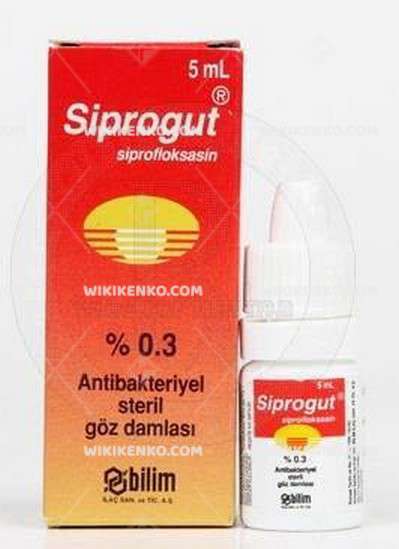
Description
Siprogut Sterile Eye Drop is an ophthalmic antibiotic solution primarily utilized for treating bacterial eye infections. Containing the active ingredient ciprofloxacin, this medication belongs to the fluoroquinolone class of antibiotics and is formulated to effectively combat a wide range of ocular bacterial pathogens. This article provides a detailed examination of Siprogut Sterile Eye Drop, exploring its composition, mechanism of action, therapeutic applications, administration guidelines, clinical benefits, and important precautions.
Composition and Pharmaceutical Properties
Active Ingredient and Formulation
Siprogut Sterile Eye Drop contains ciprofloxacin hydrochloride monohydrate at a concentration of 3.5 mg per milliliter, which is equivalent to 3 mg of ciprofloxacin base per milliliter. The solution is formulated as a sterile, clear to slightly yellow ophthalmic preparation with a pH of approximately 4.5 and osmolality near 300 mOsm. The medication is presented in a transparent plastic bottle with a dropper delivery system, containing 5 mL of solution.
Excipients and Preservatives
In addition to the active pharmaceutical ingredient, Siprogut contains several excipients that contribute to its stability, efficacy, and shelf life. These include benzalkonium chloride (0.006%) as a preservative, mannitol (46 mg/mL), disodium EDTA (0.5 mg/mL), sodium acetate (0.024 mg/mL), acetic acid, sodium hydroxide, and water for injection. It is worth noting that the presence of benzalkonium chloride may cause eye irritation and potential color changes in soft contact lenses.
Pharmacological Profile
Mechanism of Action
Ciprofloxacin, the active component of Siprogut, functions as a bactericidal agent by targeting specific bacterial enzymes essential for DNA replication. The drug inhibits bacterial DNA gyrase (topoisomerase II) and topoisomerase IV, which are crucial for bacterial DNA replication, transcription, repair, and recombination. By interfering with these vital processes, ciprofloxacin prevents bacterial multiplication and ultimately causes bacterial cell death.
Antimicrobial Spectrum
Siprogut exhibits a broad spectrum of antibacterial activity against numerous gram-positive and gram-negative ocular pathogens. Clinical studies have demonstrated effectiveness against common ocular bacteria including Staphylococcus aureus (including methicillin-resistant strains), Staphylococcus epidermidis, Streptococcus pneumoniae, Streptococcus (viridans group), Pseudomonas aeruginosa, Enterococcus faecalis, Staphylococcus haemolyticus, and various other gram-negative organisms. This wide antimicrobial coverage makes Siprogut a valuable option in treating a range of bacterial eye infections.
Therapeutic Indications
Siprogut Sterile Eye Drop is primarily indicated for the treatment of ocular infections caused by bacteria susceptible to ciprofloxacin. The major therapeutic applications include:
Bacterial Conjunctivitis
Siprogut effectively treats bacterial conjunctivitis, commonly known as “pink eye,” an inflammatory condition of the conjunctiva caused by bacterial pathogens. Symptoms typically include redness, discharge, tearing, and discomfort, which can be effectively alleviated with proper administration of the medication.
Corneal Ulcers
The medication is indicated for the management of bacterial corneal ulcers, which are open sores on the cornea resulting from bacterial infection. Corneal ulcers represent a serious condition that requires prompt and effective treatment to prevent potential visual impairment.
Other Superficial Ocular Infections
Siprogut is also utilized for treating other superficial bacterial infections of the eye and surrounding structures when caused by susceptible bacterial strains. The drug’s penetration into ocular tissues enables it to reach therapeutic levels at the infection site.
Dosage and Administration
Administration Guidelines for Different Conditions
The dosage regimen for Siprogut varies depending on the specific ocular condition being treated:
For Corneal Ulcers:
-
First day: Apply 2 drops to the affected eye every 15 minutes for the first 6 hours, followed by 2 drops every 30 minutes for the remainder of the day
-
Second day: Apply 2 drops every hour
-
Days 3 through 14: Apply 2 drops every 4 hours
For Bacterial Conjunctivitis:
-
First 48 hours: Apply 1 drop every 2-4 hours to the affected eye while awake
-
Days 3 through 7: If clinical improvement is observed, reduce to 1 drop every 6 hours
Proper Application Technique
For optimal efficacy and safety, the following administration guidelines should be followed:
-
Wash hands thoroughly before and after application
-
Tilt the head back slightly and gently pull down the lower eyelid to create a small pocket
-
Hold the dropper above the eye and instill the prescribed number of drops
-
Avoid touching the dropper tip to any surface, including the eye, to prevent contamination
-
After instillation, gently close the eyes and apply pressure to the inner corner (tear duct) for 1-2 minutes to reduce systemic absorption
-
If using multiple eye medications, wait at least 5 minutes between applications
-
Remove contact lenses before applying the drops and wait at least 10 minutes before reinserting them
Benefits and Clinical Efficacy
Siprogut Sterile Eye Drop offers several therapeutic advantages in managing bacterial eye infections:
Effective Bacterial Control
The medication provides effective coverage against a wide range of gram-positive and gram-negative bacteria responsible for common ocular infections. Studies have shown that ciprofloxacin achieves therapeutic concentrations in ocular tissues, including the aqueous humor and cornea, when administered topically.
Symptom Relief
Regular application of Siprogut helps alleviate symptoms associated with bacterial eye infections, such as redness, discharge, irritation, and discomfort. The anti-inflammatory properties work in conjunction with the antibacterial action to provide comprehensive relief.
Tissue Penetration
Ciprofloxacin demonstrates good penetration into ocular tissues, including subretinal fluid, achieving therapeutic concentrations without significant differences between different brands of ciprofloxacin eye drops. This effective penetration contributes to the medication’s ability to treat various types of ocular infections.
Convenient Administration
The eye drop formulation provides a convenient, non-invasive method of delivering the antibiotic directly to the site of infection. The dosing schedule, while initially frequent for severe conditions, can be reduced as the infection improves, enhancing patient compliance.
Side Effects and Adverse Reactions
Common Side Effects
While Siprogut is generally well-tolerated, some patients may experience transient side effects following administration:
-
Localized eye irritation or discomfort upon instillation
-
Burning or stinging sensation in the eye
-
Temporary redness or itching of the eye
-
Blurred vision for a short period after application
-
Dry eyes
-
Bad taste in the mouth (due to drainage through the tear ducts)
These effects are typically mild and temporary, resolving without intervention as treatment continues.
Serious Adverse Reactions
Although rare, some patients may experience more serious reactions that warrant immediate medical attention:
-
Allergic reactions, including swelling, rash, or severe eye pain
-
Persistent vision changes
-
Worsening of infection symptoms despite treatment
Patients should be advised to discontinue use and consult a healthcare provider if these symptoms occur.
Precautions and Contraindications
Siprogut is contraindicated in the following situations:
-
Known hypersensitivity to ciprofloxacin
-
History of allergic reactions to other quinolone antibiotics
-
Viral, fungal, or mycobacterial eye infections (as the medication is ineffective against these pathogens)
Special Populations
Pediatric Use: The safety and efficacy of Siprogut have been established in children 1 year and older. Studies involving 230 children aged 1-12 years reported no serious adverse effects. However, the medication is not recommended for children under 1 year of age, as sufficient safety data are not available.
Pregnancy and Lactation: Women who are pregnant, breastfeeding, or planning pregnancy should consult their healthcare provider before using Siprogut to discuss the potential risks and benefits.
Contact Lens Wearers: Patients should be advised to remove contact lenses before applying Siprogut and wait at least 10 minutes before reinsertion. Furthermore, wearing contact lenses during active eye infections is generally not recommended. The benzalkonium chloride preservative in Siprogut may cause irritation and can be absorbed by soft contact lenses.
Storage and Handling
Siprogut Sterile Eye Drop should be stored below 25°C (77°F) and protected from light. Once opened, the bottle should be used within 15 days to maintain sterility and efficacy. Patients should be instructed not to use the medication if the solution changes color or becomes cloudy.
To maintain sterility and prevent contamination, the dropper tip should never touch any surface, including the eye. The bottle should be kept tightly closed when not in use, and hands should be washed thoroughly before and after handling the medication.
Summary Table
| Parameter | Details |
|---|---|
| Active Ingredient | Ciprofloxacin hydrochloride monohydrate 3.5 mg/mL (equivalent to ciprofloxacin 3 mg/mL) |
| Formulation | Sterile ophthalmic solution, clear to slightly yellow, pH ~4.5 |
| Primary Indications | Bacterial conjunctivitis, corneal ulcers, superficial bacterial eye infections |
| Dosage – Corneal Ulcers | Day 1: 2 drops every 15 min for 6 hours, then every 30 min Day 2: 2 drops hourly Days 3-14: 2 drops every 4 hours |
| Dosage – Conjunctivitis | First 48 hours: 1 drop every 2-4 hours Days 3-7: 1 drop every 6 hours if improved |
| Common Side Effects | Eye irritation, burning sensation, redness, itching, blurred vision, bad taste in mouth |
| Serious Side Effects | Allergic reactions (rare), persistent vision changes, worsening infection |
| Contraindications | Hypersensitivity to ciprofloxacin or other quinolones, viral/fungal eye infections |
| Storage Conditions | Below 25°C, protected from light, use within 15 days after opening |
| Special Precautions | Remove contact lenses before use, avoid contamination of dropper tip, not recommended for children under 1 year |
| Mechanism of Action | Inhibits bacterial DNA gyrase and topoisomerase IV, preventing DNA replication |
| Antimicrobial Spectrum | Effective against various gram-positive and gram-negative bacteria |
Conclusion
Siprogut Sterile Eye Drop represents an effective therapeutic option for the management of bacterial eye infections, including conjunctivitis and corneal ulcers. Its active ingredient, ciprofloxacin, provides broad-spectrum antibacterial activity against common ocular pathogens. When used according to prescribed guidelines, Siprogut demonstrates good penetration into ocular tissues, achieving therapeutic concentrations necessary for bacterial eradication.
While generally well-tolerated, patients should be aware of potential side effects and follow proper administration techniques to maximize benefits and minimize risks. Adherence to the prescribed dosage regimen and duration is essential to ensure complete resolution of the infection and prevent the development of antibiotic resistance.
For personalized advice regarding the use of Siprogut Sterile Eye Drop, consultation with a healthcare professional is recommended, particularly for special populations such as pregnant women, nursing mothers, and young children. Early intervention with appropriate antibiotic therapy like Siprogut can help prevent complications and promote faster recovery from bacterial eye infections.











Reviews
There are no reviews yet.