
Description
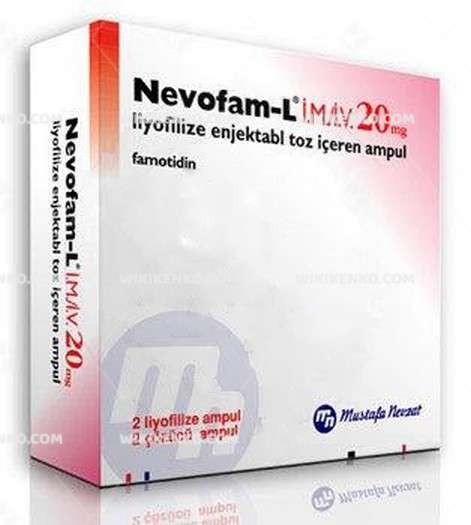
Nevofam-L (Im/Iv Liyofilize Injection Powder Iceren Ampul) represents a parenteral formulation of famotidine, a widely utilized histamine H2-receptor antagonist. This injectable preparation, containing 20 mg of famotidine per ampule, is primarily designed for situations requiring rapid acid suppression when oral administration is not feasible or sufficient. The medication is formulated as a lyophilized powder in ampules that requires reconstitution prior to intramuscular or intravenous administration. This comprehensive analysis examines the pharmacological properties, therapeutic applications, and clinical considerations associated with Nevofam-L.
Composition and Pharmaceutical Form
Nevofam-L is a sterile, lyophilized powder for injection packaged in ampules. Each ampule contains 20 mg of famotidine as the active pharmaceutical ingredient. The lyophilization process ensures extended shelf stability and proper reconstitution properties for clinical use. The formulation may include additional excipients to maintain pH balance, enhance solubility, and ensure stability of the active ingredient. The powder requires reconstitution with an appropriate diluent before administration, after which it can be delivered either via the intramuscular or intravenous route depending on clinical necessity and urgency.
Chemical Structure and Properties
Famotidine, chemically designated as 3-[[[2-[(aminoiminomethyl)amino]-4-thiazolyl]methyl]thio]-N-(aminosulfonyl)propanimidamide, functions as a competitive inhibitor of histamine at H2 receptors. Its molecular structure enables high specificity for the H2 receptor with minimal interaction with H1 receptors or other physiological systems. The compound exhibits moderate water solubility in its lyophilized form, which improves significantly upon reconstitution with appropriate solvents. The injectable formulation bypasses first-pass metabolism, allowing for more predictable pharmacokinetics compared to oral formulations.
Pharmacological Profile
Mechanism of Action
Famotidine selectively antagonizes histamine H2 receptors located primarily on the basolateral membrane of gastric parietal cells. By competitively inhibiting the binding of histamine to these receptors, famotidine effectively suppresses both basal and stimulated gastric acid secretion. The medication inhibits acid production triggered by histamine, gastrin, and muscarinic agonists, although the inhibition of histamine-mediated pathways remains its primary mechanism. Unlike earlier-generation H2 antagonists, famotidine demonstrates higher potency and receptor selectivity, requiring lower doses for therapeutic effects.
Pharmacokinetics
When administered intravenously, famotidine achieves peak plasma concentrations immediately, while intramuscular injection results in peak levels within 30-60 minutes. The injectable form provides a bioavailability of approximately 100%, contrasting with the oral bioavailability of 40-45%. Famotidine exhibits limited protein binding (15-20%) and distributes widely throughout body tissues, including the blood-brain barrier to a limited extent. The elimination half-life typically ranges between 2.5-3.5 hours in patients with normal renal function, but may extend significantly in those with renal impairment. Approximately 65-70% of the administered dose undergoes renal elimination as unchanged drug, with the remainder metabolized primarily in the liver.
Therapeutic Applications
Primary Indications
Nevofam-L injectable famotidine serves multiple therapeutic purposes in clinical settings. It is primarily indicated for the short-term treatment of active duodenal ulcers and benign gastric ulcers when oral therapy is not feasible. Additionally, the formulation proves valuable in managing pathological hypersecretory conditions, including Zollinger-Ellison syndrome, where rapid acid suppression is essential. The injectable preparation also finds application in the prophylaxis of stress ulcers and related upper gastrointestinal bleeding in critically ill patients. For surgical patients, Nevofam-L may be administered perioperatively to reduce the risk of acid aspiration pneumonitis associated with general anesthesia.
Special Clinical Scenarios
In intensive care settings, Nevofam-L provides a valuable option for stress ulcer prophylaxis in high-risk patients, including those with severe burns, head trauma, or mechanical ventilation. The injectable formulation also serves as an important therapeutic option in cases of severe gastroesophageal reflux disease (GERD) when patients cannot tolerate oral medications. For patients with active upper gastrointestinal bleeding, particularly those with suspected peptic ulcer disease, Nevofam-L may be incorporated into initial management strategies alongside other interventions. The medication may also benefit patients undergoing certain diagnostic procedures requiring gastric acid suppression.
Administration and Dosing Guidelines
Preparation and Administration
Reconstitution of Nevofam-L requires strict adherence to aseptic technique. The lyophilized powder should be reconstituted with the appropriate diluent as specified in the product monograph. For intravenous administration, further dilution may be necessary, typically in common solutions such as 0.9% sodium chloride or 5% dextrose. Direct intravenous administration should proceed slowly, typically over a period of at least 2 minutes. For continuous infusions, compatibility with other medications in the infusion line requires verification. For intramuscular administration, the reconstituted solution should be injected deeply into a large muscle mass, commonly the gluteal region.
Dosage Recommendations
Standard adult dosing for Nevofam-L typically involves 20 mg administered intravenously or intramuscularly every 12 hours. For pathological hypersecretory conditions, including Zollinger-Ellison syndrome, higher and more frequent doses may be necessary, often determined through clinical response assessment. In patients with renal impairment (creatinine clearance <50 mL/min), dose adjustment becomes necessary, generally extending the interval to 36-48 hours between doses. Pediatric dosing requires careful calculation based on body weight and specific indication. Duration of injectable therapy should be limited, with transition to oral formulations when feasible.
Clinical Considerations and Precautions
Contraindications
Nevofam-L is contraindicated in patients with known hypersensitivity to famotidine or any component of the formulation. Patients with previous allergic reactions to other H2-receptor antagonists should be treated with caution due to potential cross-reactivity. The medication should be used cautiously in individuals with severe renal or hepatic dysfunction, as altered drug clearance may lead to increased plasma concentrations and potential toxicity.
Special Populations
For elderly patients, consideration of age-related decreases in renal function may necessitate dosage adjustments, though famotidine generally demonstrates a favorable safety profile in geriatric populations. In pregnant women, famotidine falls under FDA pregnancy category B, indicating no evidence of risk in animal studies, though human data remains limited. During lactation, famotidine is excreted in breast milk, requiring careful consideration of benefits versus potential risks. Pediatric use should be approached with caution, with dosing based on limited clinical data and adjusted according to body weight.
Safety Profile and Side Effects
Common Adverse Reactions
The injectable formulation of famotidine generally demonstrates excellent tolerability. Headache represents the most commonly reported adverse effect, occurring in approximately 1-5% of patients. Other relatively common adverse reactions include constipation, diarrhea, dizziness, and fatigue. Local injection site reactions, including pain, redness, and swelling, may occur with intramuscular administration. These effects typically resolve spontaneously and rarely necessitate discontinuation of therapy. Transient elevations in liver enzymes have been observed in some patients but rarely correlate with clinical hepatotoxicity.
Serious Adverse Events
Although rare, serious adverse reactions have been reported with famotidine administration. Central nervous system effects, including confusion, hallucinations, and seizures, have been documented, particularly in elderly patients or those with renal impairment. Cardiovascular effects, such as arrhythmias and QT prolongation, have been reported infrequently. Hematological abnormalities, including thrombocytopenia, agranulocytosis, and pancytopenia, represent extremely rare but serious potential complications. Severe hypersensitivity reactions, while uncommon, may manifest as anaphylaxis, angioedema, or bronchospasm, requiring immediate medical intervention.
Drug Interactions and Monitoring Recommendations
Significant Drug Interactions
Famotidine exhibits fewer drug interactions compared to earlier H2-receptor antagonists due to its minimal effect on hepatic cytochrome P450 enzymes. Nevertheless, several notable interactions warrant attention. Concurrent administration with medications requiring acidic gastric pH for absorption (e.g., atazanavir, ketoconazole) may result in reduced efficacy of these agents. High-dose famotidine may compete with drugs that undergo active tubular secretion, potentially affecting elimination kinetics. Combining famotidine with other CNS depressants may increase the risk of adverse neurological effects, particularly in elderly patients or those with renal impairment.
Monitoring Parameters
During Nevofam-L therapy, clinical monitoring should focus on therapeutic response and potential adverse effects. In patients receiving prolonged treatment, periodic assessment of renal function is advisable, particularly in those with pre-existing renal impairment. Monitoring for central nervous system effects becomes especially important in elderly patients, who demonstrate increased susceptibility. In patients with liver disease, occasional liver function tests may be prudent. For individuals with cardiac abnormalities, particularly those predisposed to QT prolongation, electrocardiographic monitoring may be warranted with extended therapy.
Storage, Handling, and Stability
Nevofam-L ampules should be stored according to manufacturer specifications, typically at controlled room temperature (15-30°C) and protected from light. The unopened ampules maintain stability until the labeled expiration date when stored properly. After reconstitution, the solution should be used promptly, although specific stability timeframes may vary based on diluent and storage conditions. Any reconstituted solution demonstrating discoloration or particulate matter should be discarded. Proper disposal of unused medication should follow institutional protocols for pharmaceutical waste management.
Summary of Key Information
| Parameter | Details |
|---|---|
| Active Ingredient | Famotidine 20 mg |
| Pharmaceutical Form | Lyophilized powder for IM/IV injection in ampules |
| Primary Indications | Peptic ulcer disease, stress ulcer prophylaxis, hypersecretory conditions, GERD |
| Standard Adult Dosage | 20 mg IV/IM every 12 hours |
| Adjustment for Renal Impairment | Q36-48h when CrCl <50 mL/min |
| Common Side Effects | Headache, dizziness, constipation, diarrhea |
| Serious Adverse Events | CNS disturbances, cardiac arrhythmias, blood dyscrasias (rare) |
| Contraindications | Hypersensitivity to famotidine or other H2 antagonists |
| Drug Interactions | Medications requiring acidic environment for absorption |
| Reconstitution | Requires appropriate diluent as per product specifications |
| Storage | Controlled room temperature, protected from light |
Conclusion
Nevofam-L represents an important parenteral formulation of famotidine that addresses critical therapeutic needs when oral administration is impractical or insufficient. The injectable preparation provides rapid and reliable acid suppression for various upper gastrointestinal disorders, with particular utility in acute care settings. The favorable safety profile, limited drug interaction potential, and established efficacy make it a valuable component of the gastroenterological therapeutic armamentarium. However, as with all medications, appropriate patient selection, careful dosing considerations for special populations, and vigilant monitoring for adverse effects remain essential components of clinical practice. Healthcare providers should always balance the benefits of treatment against potential risks, particularly in vulnerable populations.











Reviews
There are no reviews yet.