

Description
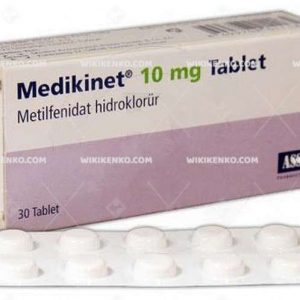
Medikinet 5 mg tablets are branded methylphenidate hydrochloride tablets marketed in several European countries and in Turkey, usually as white, round tablets that can be divided into equal halves. Each tablet contains 5 mg of methylphenidate hydrochloride, equivalent to approximately 4.35 mg of methylphenidate free base.
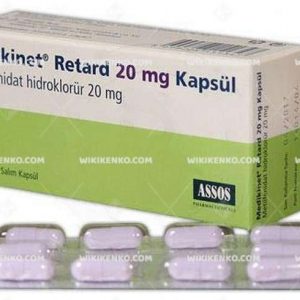
The qualitative excipients typically include lactose monohydrate (around 42.28 mg per tablet), microcrystalline cellulose, pre‑gelatinised maize starch, calcium hydrogen phosphate dihydrate and magnesium stearate as a lubricant. In Turkey, the product is registered as MEDIKINET 5 MG 30 TABLET containing 30 immediate‑release tablets in PVC/PE/PVdC–aluminium blisters, manufactured for or by ASSOS İlaç Kimya Gıda Ürünleri Üretim ve Tic. A.Ş.
The product is classified under ATC code N06BA04 (methylphenidate) and is available only on prescription; in Turkey it is dispensed on “kırmızı reçete” (restricted/narcotic‑class prescription).
Table 1. Qualitative and quantitative composition (per tablet)
| Component | Quantity (per tablet) |
|---|---|
| Methylphenidate hydrochloride | 5 mg (≈ 4.35 mg methylphenidate base) |
| Lactose monohydrate (excipient) | ≈ 42.28 mg |
| Other excipients | Microcrystalline cellulose, pre‑gelatinised maize starch, calcium hydrogen phosphate dihydrate, magnesium stearate |
Indications and clinical use
Medikinet 5 mg is indicated for the treatment of ADHD in children from 6 years of age and adolescents when non‑pharmacological interventions alone are insufficient, and diagnosis is made according to DSM or ICD criteria by a specialist. In some jurisdictions, it is also used in adults with persistent ADHD, within specialist supervision, although adult indications may vary by country and regulatory approval.
The medicine should be used as part of a comprehensive treatment programme, including psychological, educational and social measures, because pharmacotherapy alone is rarely sufficient to manage the complex presentation of ADHD. It is not indicated in all children with ADHD and the decision to use methylphenidate must be based on a thorough assessment of symptom severity, functional impairment and comorbidities.
Dosage and administration
Treatment should be initiated and supervised by physicians experienced in the management of ADHD or behavioural disorders. The Medikinet 5 mg strength is particularly suited to initiation, titration and fine‑tuning of dose because the tablets are small and divisible.
Doses are individual and must be titrated to the lowest effective dose, usually in increments of 5–10 mg, observing clinical response and tolerability at intervals of about weekly. Treatment interruptions (e.g. during weekends or school holidays) may be used periodically to reassess the patient’s need for ongoing therapy.
Paediatric population (≥ 6 years)
In children ≥ 6 years, an initial dose of 5 mg once or twice daily (e.g. at breakfast and lunch) is commonly used, with gradual titration up to a maximum daily dose that is generally limited to around 60 mg in divided doses, depending on national labelling. Doses should be taken with or after food to reduce gastrointestinal adverse effects and to limit rapid fluctuations in plasma concentrations.
Medikinet 5 mg tablets may be given in the morning and at midday; late‑afternoon or evening dosing should be avoided because of the risk of insomnia. The tablet can be split to allow 2.5 mg increments where very fine titration is required.
Adults
Where licensed, adults may start at low doses (e.g. 5 mg once or twice daily) with gradual titration, similar to paediatric practice, under specialist supervision. Maximum daily doses and precise recommendations differ between regulatory territories and prescribers must follow local product information and guidelines.
Mechanism of action and pharmacodynamics
Methylphenidate is a centrally acting sympathomimetic that functions primarily as a norepinephrine and dopamine reuptake inhibitor in the central nervous system. It blocks the dopamine transporter (DAT) and norepinephrine transporter (NET) in the striatum and prefrontal cortex, leading to increased synaptic concentrations of these neurotransmitters and enhanced neurotransmission.
In ADHD, these pharmacodynamic actions are thought to improve attention, reduce impulsivity and hyperactivity, and enhance executive function, although the precise pathophysiological mechanisms are not fully elucidated. The clinical effect of immediate‑release methylphenidate typically begins within 30–60 minutes after an oral dose and lasts for approximately 1–4 hours, consistent with its relatively short elimination half‑life.
Pharmacokinetics
After oral administration, methylphenidate is rapidly absorbed, but exhibits substantial inter‑ and intra‑individual variability in plasma concentrations. Peak plasma levels generally occur within about 1–2 hours for immediate‑release tablets, with a distribution between plasma and erythrocytes of roughly 57% and 43% respectively. Plasma protein binding is low (approximately 10–33%), and the apparent volume of distribution after intravenous administration is around 2.2 l/kg.
Methylphenidate is extensively metabolised, primarily by de‑esterification to ritalinic acid, which is pharmacologically inactive; only small amounts of hydroxylated metabolites (e.g. hydroxymethylphenidate) are formed. Therapeutic activity is attributed mainly to the parent compound, which has a short elimination half‑life compatible with the 1–4 hour duration of action. The drug and its metabolites are largely excreted via the urine.
Table 2. Selected pharmacokinetic parameters (immediate‑release methylphenidate)
| Parameter | Typical description |
|---|---|
| Time to peak concentration (Tmax) | Approximately 1–2 hours after oral dose |
| Distribution | 57% in plasma, 43% in erythrocytes |
| Plasma protein binding | Approximately 10–33% |
| Volume of distribution | ≈ 2.2 l/kg (2.65 ± 1.1 l/kg d‑isomer; 1.8 ± 0.9 l/kg l‑isomer) |
| Duration of action | Approximately 1–4 hours (immediate‑release) |
| Main metabolite | Ritalinic acid (inactive) |
Clinical efficacy in ADHD
Randomised, placebo‑controlled trials of immediate‑release methylphenidate in children and adolescents with ADHD consistently demonstrate clinically meaningful reductions in core symptoms, including inattention, hyperactivity and impulsivity. Improvements are typically observed on standardised rating scales (e.g. ADHD rating scales completed by teachers and parents) and translate into better classroom behaviour and academic performance.
Immediate‑release preparations such as Medikinet 5 mg are frequently used at the start of therapy to determine the optimal dose and to assess responsiveness, even if patients are later transitioned to modified‑release formulations for convenience. Evidence also supports continued benefits in many individuals into adolescence and adulthood when treatment is maintained appropriately, although regular re‑evaluation is recommended to confirm ongoing need.
Contraindications
Medikinet 5 mg must not be used in patients with known hypersensitivity to methylphenidate or any excipient, including lactose. It is contraindicated in patients with glaucoma, phaeochromocytoma, severe hypertension, severe cardiovascular disorders (such as advanced heart disease, cardiomyopathies, serious arrhythmias), and in those with cerebrovascular disorders that confer high risk.
It is also contraindicated in patients with current or marked history of severe depression, anorexia nervosa, psychotic disorders, bipolar disorder not adequately controlled, or suicidal tendencies, as stimulants may exacerbate these conditions. Concomitant treatment with non‑selective, irreversible monoamine oxidase inhibitors (MAOIs) or use within at least 14 days after their discontinuation is contraindicated because of the risk of hypertensive crisis.
Warnings and precautions
Before initiating therapy, a detailed cardiovascular and psychiatric history should be obtained, including family history of sudden cardiac death or ventricular arrhythmia, and a physical examination should be performed (including blood pressure and heart rate). Periodic monitoring of blood pressure, pulse, weight, height (in children) and psychiatric status is recommended throughout treatment.
Methylphenidate can cause modest increases in heart rate and blood pressure; caution is advised in patients with pre‑existing cardiovascular conditions or risk factors. Growth retardation may occur in children and adolescents; therefore, height and weight should be recorded at least every 6 months, and therapy should be reviewed if growth is not as expected.
There is potential for abuse, misuse and diversion because methylphenidate is a central nervous system stimulant with reinforcing properties; patients with a history of substance use disorder require particular caution and close supervision. Emergence or worsening of psychiatric symptoms such as psychosis, mania, aggression, anxiety or tics should prompt dose adjustment or discontinuation.
Adverse reactions
The safety profile of Medikinet 5 mg is consistent with that of other immediate‑release methylphenidate products. Very common adverse reactions in children and adolescents include decreased appetite, insomnia, headache and abdominal pain. Common reactions include nausea, vomiting, dry mouth, tachycardia, palpitations, increased blood pressure, mood changes, irritability and dizziness.
Less common but clinically important events include growth retardation in children, weight loss, peripheral vasculopathy (including Raynaud’s phenomenon), tics, anxiety, depression, and aggressive or hostile behaviour. Rare but serious reactions include seizures, severe cardiovascular events (e.g. myocardial infarction, stroke, sudden cardiac death), and severe psychiatric reactions such as mania or psychosis. The incidence of adverse effects is dose‑related, and careful titration helps to minimise risk.
Drug interactions
Methylphenidate may potentiate the effects of centrally acting sympathomimetics and vasopressor agents. Co‑administration with non‑selective, irreversible MAOIs is contraindicated because of the risk of severe hypertensive reactions; at least 14 days should elapse between stopping an MAOI and starting methylphenidate.
Caution is advised when combining methylphenidate with drugs that elevate blood pressure or heart rate, including some antidepressants (e.g. SNRIs), antipsychotics and antihypertensives, as dose adjustment may be required. Methylphenidate can inhibit the metabolism of certain coumarin anticoagulants, some anticonvulsants and tricyclic antidepressants, whereby dose reductions of these agents may be necessary and close monitoring is recommended.
Use in special populations
In children under 6 years of age, safety and efficacy have not been established and Medikinet 5 mg is not recommended. In elderly patients, clinical experience is limited and use is generally not recommended due to lack of data.
In patients with moderate to severe renal or hepatic impairment, there are no specific dosage recommendations, but increased exposure cannot be excluded; use requires careful individual risk–benefit assessment. During pregnancy, methylphenidate should be avoided unless the potential benefit justifies the potential risk to the fetus, and it should not be used during breastfeeding without weighing the benefits of therapy against the potential for adverse effects in the breast‑fed infant.
Overdose
Acute overdose with methylphenidate can produce central and peripheral sympathomimetic toxicity, including vomiting, agitation, tremor, hyperreflexia, muscle twitching, convulsions, euphoria, confusion, hallucinations, sweating, flushing, headache, tachycardia, hyperpyrexia and mydriasis. Severe intoxication can lead to arrhythmias, hypertension, hypotension, circulatory collapse, rhabdomyolysis and coma.
Management is supportive and symptomatic; there is no specific antidote. Gastric decontamination (e.g. activated charcoal) may be considered in recent ingestion, with close monitoring of cardiovascular status, temperature and neurological symptoms.
Pharmaceutical characteristics
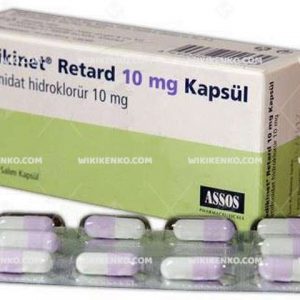
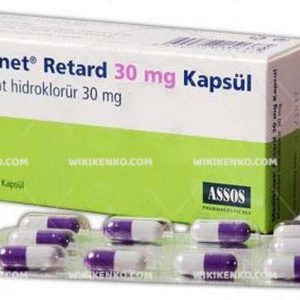
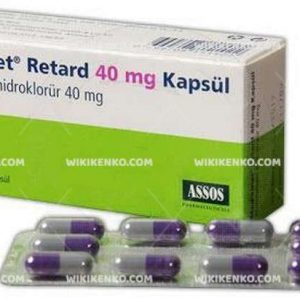
Medikinet 5 mg tablets are white, round, scored and embossed (e.g. with “S”), and can be divided into equal halves to allow 2.5 mg dosing. The tablets are supplied in PVC/PE/PVdC or PVC/PVdC blisters with aluminium foil backing, in pack sizes that commonly include 20, 28, 30, 50, 56, 98 or 100 tablets, though not all pack sizes are marketed in every country.
No special storage conditions are generally required beyond keeping the product in its original packaging to protect from moisture and out of the sight and reach of children. In Turkey, MEDIKINET 5 MG 30 TABLET has a bar code such as 8699708011146 and may have specific national pricing and reimbursement status, which are subject to periodic regulatory updates.












Reviews
There are no reviews yet.