
Description
Pharmaceutical Description
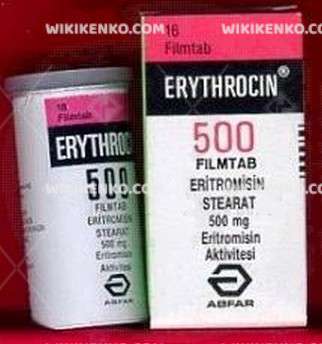
Erythrocin 500 mg Film Tablet contains erythromycin stearate as the active substance, providing 500 mg of erythromycin base per film‑coated tablet for oral administration. Erythromycin is a macrolide antibiotic produced by a strain of Saccharopolyspora erythraea and is pharmacologically characterized by a 14‑membered lactone ring with attached deoxy sugars. The stearate salt is formulated as a film‑coated, usually oblong tablet designed to improve palatability and gastric stability.
Qualitative and Quantitative Composition
Each film‑coated tablet contains erythromycin stearate BP/USP, equivalent to 500 mg erythromycin. Excipients typically include povidone, maize starch, magnesium hydroxide or similar disintegrants, polacrilin potassium, and a film‑coating system (hypromellose, macrogols, titanium dioxide, sorbic acid and related components), although the exact excipient profile may vary by manufacturer and market.
Mechanism of Action and Antibacterial Spectrum
Erythromycin is a bacteriostatic macrolide that exerts its antibacterial activity by binding reversibly to the 50S ribosomal subunit of susceptible bacteria, inhibiting translocation steps of protein synthesis. At higher concentrations against highly susceptible organisms, erythromycin may exhibit bactericidal activity.
The spectrum includes many Gram‑positive organisms (e.g. Streptococcus pyogenes, Streptococcus pneumoniae, methicillin‑susceptible Staphylococcus aureus) and selected Gram‑negative and atypical organisms (e.g. Haemophilus influenzae when combined with sulfonamides, Mycoplasma pneumoniae, Chlamydia trachomatis, Listeria monocytogenes, Bordetella pertussis, Treponema pallidum, Legionella species). Activity is absent or unreliable against many Enterobacteriaceae and Pseudomonas aeruginosa.
Clinical Indications
Erythrocin film tablets are indicated for treatment of infections caused by susceptible organisms and should be used according to antibacterial stewardship principles. Indications largely follow those for systemic oral erythromycin formulations.
Approved and Commonly Accepted Uses
-
Upper respiratory tract infections: pharyngitis, tonsillitis, sinusitis due to susceptible Streptococcus pyogenes, Streptococcus pneumoniae, and, when combined with sulfonamides, some Haemophilus influenzae.
-
Lower respiratory tract infections: acute bronchitis, pneumonia, including infections caused by S. pneumoniae, M. pneumoniae and Legionella species.
-
Skin and soft‑tissue infections: impetigo, erysipelas, cellulitis, folliculitis due to susceptible streptococci and staphylococci (excluding most MRSA).
-
Diphtheria: as an adjunct to antitoxin and for eradication of Corynebacterium diphtheriae carriage.
-
Pertussis: treatment and chemoprophylaxis of Bordetella pertussis infection.
-
Chlamydial infections: urogenital infections during pregnancy, neonatal conjunctivitis and pneumonia due to Chlamydia trachomatis, and uncomplicated urethral, endocervical or rectal infections when tetracyclines are contraindicated.
-
Nongonococcal urethritis due to Ureaplasma urealyticum when tetracyclines cannot be used.
-
Syphilis: as an alternative in penicillin‑allergic patients, with appropriate serological follow‑up.
-
Prophylaxis of rheumatic fever and bacterial endocarditis in selected penicillin‑allergic patients according to guidelines.
The product should not be used for viral infections, and its use should be guided by local resistance data where available.
Posology and Method of Administration
Erythrocin 500 mg film tablets are administered orally and are generally recommended to be taken on an empty stomach (e.g. one hour before or two hours after meals) to optimize absorption, unless gastric intolerance necessitates administration with food. Tablets should be swallowed whole with water and not chewed or crushed unless the specific formulation allows division.
Dosage in Adults
For most susceptible infections in adults, typical regimens include:
-
250 mg every 6 hours, or 500 mg every 12 hours, with daily doses generally ranging from 1 to 2 g.
-
In more severe infections, the total daily dose may be increased up to 4 g, divided into appropriate doses; twice‑daily dosing is usually not recommended above 1 g/day.
For Chlamydia trachomatis urogenital infections or nongonococcal urethritis (when tetracyclines are contraindicated), suggested oral regimens include 500 mg four times daily for at least 7 days or equivalent divided dosing using smaller strengths.
Dosage in Paediatric Population
Paediatric dosing (using weight‑appropriate erythromycin formulations) is generally 30–50 mg/kg/day of erythromycin base in divided doses, which may be increased up to 100 mg/kg/day in severe infections, according to national product characteristics and guidelines. Film‑coated 500 mg tablets are usually reserved for adolescents or children able to swallow tablets and requiring doses consistent with the tablet strength.
Dosage Adjustments
Because erythromycin is primarily eliminated by hepatic mechanisms, caution and potential dosage adjustment may be required in patients with significant hepatic impairment. No specific adjustment is routinely required in isolated renal impairment, but caution is advisable in severe renal dysfunction, particularly at high doses or when combined with other nephrotoxic drugs. Elderly patients may receive standard adult doses but are at increased risk of drug interactions and cardiac adverse effects, particularly QT prolongation.
Pharmacokinetic and Pharmacodynamic Properties
Absorption and Distribution
Erythromycin stearate is acid‑labile; the enteric film coating and salt form are designed to protect the active moiety from gastric degradation and improve systemic bioavailability. Oral erythromycin is moderately absorbed, with peak plasma concentrations typically reached within 1–4 hours after dosing, and food can reduce or delay absorption. The drug distributes widely into body tissues and fluids, including respiratory secretions and middle ear fluid, but achieves low concentrations in cerebrospinal fluid except when meninges are inflamed.
Metabolism and Elimination
Erythromycin undergoes extensive hepatic metabolism and is predominantly excreted in bile; a smaller fraction is excreted unchanged in urine. The elimination half‑life is usually around 1.5–2 hours in subjects with normal liver function, but may be prolonged in hepatic dysfunction. Erythromycin is both a substrate and a potent inhibitor of cytochrome P450 3A (CYP3A), with important implications for drug–drug interactions.
Contraindications
Erythrocin 500 mg film tablets are contraindicated in the following situations:
-
Known hypersensitivity to erythromycin, other macrolide or ketolide antibiotics, or any component of the formulation.
-
Concomitant administration with drugs highly dependent on CYP3A for clearance and associated with serious or life‑threatening events when elevated (e.g. ergotamine or dihydroergotamine, certain statins, cisapride, pimozide, astemizole, terfenadine in jurisdictions where still relevant).
-
Pre‑existing QT prolongation, ventricular arrhythmias including torsades de pointes, or significant electrolyte disturbances predisposing to arrhythmia.
Special Warnings and Precautions for Use
Hepatotoxicity
Erythromycin has been associated with cholestatic hepatitis, hepatocellular injury, and elevated liver enzymes, typically developing after several days to weeks of therapy and more frequently with high doses or in patients with pre‑existing hepatic impairment. Therapy should be discontinued if signs of liver dysfunction (fatigue, anorexia, jaundice, dark urine, pruritus, right upper quadrant pain) occur, and appropriate evaluation undertaken.
Clostridioides difficile‑Associated Diarrhoea
Clostridioides (Clostridium) difficile‑associated diarrhoea (CDAD) has been reported with virtually all systemic antibacterials including erythromycin and may range from mild diarrhoea to fatal colitis. CDAD should be considered in all patients presenting with diarrhoea following antibacterial use, and discontinuation of erythromycin, stool testing, and specific therapy should be instituted as clinically indicated.
Myasthenia Gravis
Exacerbation of symptoms of myasthenia gravis and new onset myasthenic syndrome have been reported in patients receiving erythromycin, and caution is recommended in this population.
QT Prolongation and Cardiac Effects
Erythromycin can prolong the QT interval and has been associated with ventricular arrhythmias including torsades de pointes, especially in patients with risk factors such as structural heart disease, electrolyte disturbances, concurrent QT‑prolonging drugs, or high systemic concentrations due to drug interactions. Baseline and follow‑up ECG evaluation may be warranted in high‑risk patients.
Drug–Drug Interactions
Erythromycin is a strong inhibitor of CYP3A and can increase plasma concentrations of many co‑administered agents, potentially leading to serious toxicity. Clinically important interactions include:
-
Cardiovascular agents: elevated levels and risk of arrhythmias with drugs such as certain class IA and III antiarrhythmics, calcium channel blockers (e.g. verapamil, diltiazem) and others metabolized by CYP3A.
-
QT‑prolonging drugs: additive risk when combined with cisapride, pimozide, certain antipsychotics, and some antihistamines; these combinations are generally contraindicated.
-
Statins: increased risk of myopathy and rhabdomyolysis with CYP3A‑metabolized statins such as simvastatin and lovastatin; temporary discontinuation or alternative agents should be considered.
-
Theophylline, carbamazepine, valproate and others: elevated concentrations may require dose adjustment and clinical or serum‑level monitoring.
-
Oral anticoagulants (e.g. warfarin): enhancement of anticoagulant effect has been reported, necessitating additional INR monitoring and dose adjustment.
Coadministration with other potentially ototoxic or nephrotoxic agents should be undertaken cautiously, especially in patients with underlying renal impairment.
Undesirable Effects
The safety profile of erythromycin is well characterized and primarily involves gastrointestinal, hepatic, hypersensitivity and cardiac events.
Common and Important Adverse Reactions (Narrative Summary)
-
Gastrointestinal: nausea, vomiting, abdominal pain, cramping, diarrhoea and anorexia are among the most frequently reported adverse effects, often dose‑related and occasionally requiring dose reduction or discontinuation.
-
Hepatic: transient elevations in liver enzymes, cholestatic hepatitis and jaundice, typically reversible after discontinuation.
-
Hypersensitivity: rash, urticaria, pruritus and, rarely, anaphylaxis or severe cutaneous adverse reactions.
-
Cardiac: QT prolongation, ventricular arrhythmias including torsades de pointes, particularly in predisposed patients or with interacting drugs.
-
Ototoxicity: reversible hearing loss and tinnitus have been reported, mainly with high doses and in patients with renal or hepatic impairment.
-
Others: headache, dizziness, candidiasis and, rarely, pancreatitis or interstitial nephritis have been described.
Representative Adverse Reaction Profile
The table below provides an illustrative summary of key adverse reactions associated with systemic erythromycin use, grouped by system organ class and approximate frequency categories reported in product information and clinical experience; exact frequencies may vary by source and population.
| System organ class | Adverse reaction examples | Approximate frequency classification* |
|---|---|---|
| Gastrointestinal disorders | Nausea, vomiting, abdominal pain, diarrhoea | Very common / common |
| Hepatobiliary disorders | Transient liver enzyme elevations, cholestatic hepatitis, jaundice | Uncommon; rare for clinical hepatitis |
| Immune system disorders | Rash, urticaria, pruritus, anaphylactic reactions | Uncommon; rare for anaphylaxis |
| Cardiac disorders | QT prolongation, ventricular arrhythmias including torsades de pointes | Rare; serious but potentially fatal |
| Nervous system/ear disorders | Reversible hearing loss, tinnitus (high doses, renal/hepatic impairment) | Rare |
| Infections | Clostridioides difficile‑associated diarrhoea/colitis | Frequency not known; potentially serious |
*Frequency categories are approximate and may differ among regulatory documents; they are presented for didactic purposes and should not replace the specific wording of the locally approved product characteristics.
Use in Special Populations
Pregnancy and Lactation
Erythromycin has been used extensively in pregnancy, and epidemiological data do not suggest a major teratogenic risk; it is generally considered an alternative when first‑line agents (e.g. beta‑lactams or tetracyclines) are unsuitable, particularly for chlamydial infections in pregnancy. Erythromycin is excreted in human breast milk in small amounts; while systemic exposure to the breast‑fed infant is low, potential for gastrointestinal disturbance or sensitisation exists, and clinical judgement is required.
Paediatric and Geriatric Use
Erythromycin is widely used in paediatric practice for respiratory, skin and chlamydial infections, with dose adjustment based on body weight and careful monitoring for gastrointestinal intolerance and hypertrophic pyloric stenosis in young infants. In older adults, increased susceptibility to drug–drug interactions, hepatic impairment and cardiac conduction abnormalities necessitates cautious use, particularly at high doses or with other QT‑prolonging medications.
Overdose
Symptoms of acute erythromycin overdose are likely to be extensions of the adverse effect profile, including severe nausea, vomiting, diarrhoea and abdominal distress, with potential for reversible hearing loss at very high exposures. Management is supportive, including gastric decontamination if appropriate, correction of fluid and electrolyte imbalances, and ECG monitoring in patients with risk factors for arrhythmia; haemodialysis or peritoneal dialysis are not expected to significantly enhance clearance due to high tissue binding and hepatobiliary elimination.
Pharmaceutical Particulars and Storage
Film‑coated erythromycin stearate 500 mg tablets are supplied in blister packs or bottles, usually as white or off‑white oblong tablets, sometimes engraved or score‑lined depending on manufacturer. The product should be stored according to the manufacturer’s specifications, typically at or below 25 °C, protected from moisture and light, and kept out of sight and reach of children. Erythromycin preparations should not be used beyond the labelled expiry date, and any unused product should be disposed of according to local requirements for medicinal waste.
Clinical and Stewardship Considerations
Erythrocin 500 mg Film Tablet remains a clinically relevant oral macrolide option in the management of respiratory, skin and selected systemic infections, especially in patients with beta‑lactam allergy or in situations where atypical pathogens are suspected. However, rising macrolide resistance among key pathogens (e.g. Streptococcus pneumoniae, Streptococcus pyogenes and certain staphylococci) mandates local susceptibility surveillance and restricts its empirical use to scenarios where activity is likely or confirmed. Judicious prescribing, appropriate dosing, adherence to treatment duration, and avoidance of unnecessary use are essential to preserve the clinical utility of erythromycin and to minimise the risks of adverse events and antimicrobial resistance.
Important Note for Clinical Use
The exact Summary of Product Characteristics (SmPC) or local prescribing information for the specific marketed brand (including any Turkish or regional Erythrocin 500 mg Film Tablet) should always be consulted for definitive indications, doses, contraindications and regulatory wording, as formulations, approved uses and safety statements may differ by jurisdiction and manufacturer.










Reviews
There are no reviews yet.