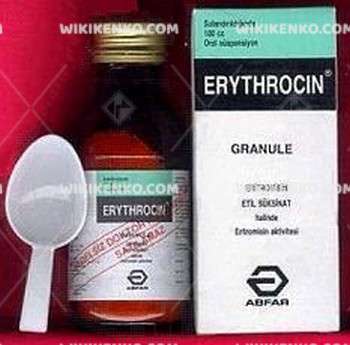
Erythrocin Oral Suspension Icin Granul

Dosage form

Pack size

Potency

200 Mg/5Ml 100Ml

Manufacturer

Origin

Generic Name (Ingredient)

Erythrocin Dissolution Of Erythromycin Ethyl Succinate Equivalent To Erythromycin 200 Mg On Each Scale (5 Ml) Of The Suspension Formed When The Granule Was Reconstituted. It Contains No.3 Saccharin Sodium, Sodium Cyclamate, Citric Acid, Imide B Kinase Aroma And Sugar.

Erythrocin Oral Suspension “İçin Granül” is best understood as a granule formulation for oral suspension containing erythromycin ethylsuccinate (EES), a lipophilic ester of the macrolide antibiotic erythromycin designed to improve acid stability and palatability in paediatric and adult oral therapy.

read more

Assuming you’re in a life-threatening situation and require immediate access to medication, please visit our Community Support Network page.


Description

Upon reconstitution with water, each 5 mL of the resulting suspension contains erythromycin ethylsuccinate in an amount equivalent to 200 mg of erythromycin base. This strength corresponds to commonly marketed “EES 200 mg/5 mL” paediatric suspensions used worldwide.

Qualitative and quantitative composition

  • Active ingredient

    • Erythromycin ethylsuccinate, equivalent to erythromycin 200 mg per 5 mL of reconstituted suspension.

  • Excipients (representative for this class of EES granules; exact proprietary quantities are manufacturer‑specific)
    Formulations similar to Erythrocin “İçin Granül” typically contain:

    • Sucrose (bulk sweetener)

    • Saccharin sodium and sodium cyclamate (intense sweeteners)

    • Citric acid (acidulant, flavour modifier, pH adjustment)

    • Sodium citrate (buffering agent)

    • Cellulose derivatives or xanthan gum (suspending and viscosity‑enhancing agents)

    • Aluminium magnesium silicate or similar silicates (suspending agent/antisedimentation)

    • Flavouring agents (e.g. cherry, mixed fruit, banana or “aroma” flavours) to improve palatability.

    • Colouring agents such as carmoisine or FD&C dyes, depending on market.

The user‑reported excipients (“saccharin sodium, sodium cyclamate, citric acid, sugar, aroma”) are consistent with published ingredient lists for 200 mg/5 mL erythromycin ethylsuccinate granules for suspension in various markets.

Mechanism of Action and Pharmacological Class

Erythromycin ethylsuccinate is a pro‑drug of erythromycin, a 14‑membered macrolide antibiotic that exerts a bacteriostatic or bactericidal effect depending on organism and concentration.

  • Mechanism of action

    • Erythromycin binds reversibly to the 50S ribosomal subunit of susceptible bacteria, inhibiting translocation and blocking peptide chain elongation.

    • This leads to suppression of microbial protein synthesis and inhibition of bacterial growth.

  • Antibacterial spectrum
    Erythromycin is active against many Gram‑positive and selected Gram‑negative organisms, including:

    • Streptococcus pyogenes, Streptococcus pneumoniae

    • Staphylococcus aureus (non‑MRSA)

    • Corynebacterium diphtheriae, Bordetella pertussis

    • Mycoplasma pneumoniae, Chlamydia trachomatis

    • Some strains of Haemophilus influenzae (higher doses or combination may be required)

As with all macrolides, susceptibility should ideally be confirmed by local antibiograms due to increasing resistance in common respiratory pathogens.

Pharmacokinetics

Absorption

The ethylsuccinate ester is more acid‑stable than erythromycin base, allowing improved absorption from the upper gastrointestinal tract when given orally. Oral suspensions of erythromycin ethylsuccinate are readily and reliably absorbed, though bioavailability can be influenced by food, gastric pH, and age.

Distribution

After absorption, erythromycin is widely distributed into tissues and body fluids, achieving therapeutic concentrations in respiratory tract secretions, middle ear fluid, skin, soft tissues and genitourinary tissues. Protein binding is moderate (approximately 70–90% in adult plasma).

Metabolism and elimination

Erythromycin is primarily metabolised in the liver and excreted in bile; a smaller fraction appears unchanged in the urine. The elimination half‑life is typically 1.5–2.5 hours in subjects with normal hepatic function but can be prolonged in hepatic impairment. Erythromycin is not effectively removed by dialysis, which is relevant in overdose or renal replacement therapy.

Therapeutic Indications

Although exact indications for a Turkish‑market product would be defined in its national summary of product characteristics, Erythrocin Oral Suspension “İçin Granül” can be expected to share the standard indications for erythromycin ethylsuccinate granules:

  • Treatment of infections caused by erythromycin‑susceptible organisms, including:

    • Upper and lower respiratory tract infections (e.g. pharyngitis, tonsillitis, otitis media, sinusitis, bronchitis, community‑acquired pneumonia).

    • Skin and soft tissue infections (e.g. impetigo, erysipelas, folliculitis).

    • Certain genitourinary and sexually transmitted infections when caused by susceptible organisms (e.g. uncomplicated chlamydial infections).

    • Gastrointestinal infections such as intestinal amebiasis as part of appropriate regimens.

    • Oral/dental infections when a macrolide is indicated.

  • Prophylactic uses

    • Prophylaxis of pertussis and diphtheria in contacts or at‑risk patients.

    • Long‑term prophylaxis of recurrent rheumatic fever or certain endocarditis risks in penicillin‑allergic patients, according to guideline recommendations.

Selection must consider official guidance on antimicrobial stewardship and local resistance patterns.

Posology and Method of Administration

General dosing principles

Dosing regimens vary with indication, pathogen, patient age and body weight. For erythromycin ethylsuccinate 200 mg/5 mL suspensions, typical paediatric dose recommendations are in the range of 30–50 mg/kg/day of erythromycin base, divided into 2–4 doses, with higher doses (up to 90 mg/kg/day) used for severe infections. Adults often receive 1–2 g/day divided into 2–4 doses.

The suspension is administered orally, usually with or just after food to improve gastrointestinal tolerability, although absorption may be slightly reduced.

Example of indicative paediatric dose calculation

For a child weighing 15 kg treated at 40 mg/kg/day of erythromycin base:

  • Total daily dose ≈ 600 mg/day

  • With 200 mg per 5 mL suspension, this equals 15 mL/day, typically given as 5 mL three times daily.

Exact regimens must follow the locally approved product label and clinician judgement.

Reconstitution and Pharmaceutical Handling

Granules for oral suspension are supplied in a bottle that must be reconstituted with a specified volume of purified water to yield the labelled concentration (e.g. 200 mg/5 mL).

  • The bottle is shaken to loosen the granules, then water is added in two stages to a marked line, with vigorous shaking after each addition to ensure uniform dispersion.

  • After reconstitution, the suspension is usually stored below a specified temperature (often ≤25 °C) and discarded after a defined period (commonly 7–14 days), as stability data dictate.

  • The bottle should be shaken well before each dose to resuspend the granules and ensure accurate dosing.

Care must be taken when dosing patients with diabetes or hereditary fructose intolerance, due to the sucrose content.

Contraindications

The safety profile and contraindications of erythromycin ethylsuccinate suspensions have been extensively characterised in regulatory monographs and clinical practice. Erythrocin Oral Suspension “İçin Granül” would generally be contraindicated in:

  • Known hypersensitivity to erythromycin, other macrolides or any excipient (e.g. sweeteners, dyes).

  • History of cholestatic jaundice or hepatic dysfunction associated with prior erythromycin use.

  • Known or suspected QT interval prolongation, congenital long QT syndrome, or history of ventricular arrhythmias including torsades de pointes.

  • Concomitant use with drugs highly dependent on CYP3A metabolism and known to prolong QT interval (e.g. certain class IA/III antiarrhythmics, cisapride, pimozide, some ergot alkaloids), in line with product‑specific interactions.

Warnings and Precautions

Cardiovascular risk

Erythromycin has been associated with QT prolongation, ventricular tachyarrhythmias and torsades de pointes, particularly in patients with underlying cardiac disease, electrolyte disturbances (hypokalaemia, hypomagnesaemia), or concomitant use of other QT‑prolonging agents. Careful assessment of benefit–risk is required in these populations.

Hepatic effects

Reversible cholestatic hepatitis, including jaundice and elevated liver enzymes, has been reported with erythromycin, especially with higher doses or prolonged courses. Use with caution in patients with pre‑existing hepatic impairment and monitor liver function as clinically indicated.

Gastrointestinal effects and C. difficile

Macrolides frequently cause gastrointestinal adverse reactions such as abdominal pain, nausea, vomiting and diarrhoea. Antibiotic‑associated colitis due to Clostridioides difficile, ranging from mild diarrhoea to fatal colitis, has been reported; if significant diarrhoea occurs, C. difficile colitis must be considered and broad‑spectrum antibiotic therapy promptly reassessed.

Ocular, otic and neurologic concerns

Rare cases of reversible hearing loss, hallucinations and other neuropsychiatric phenomena have been described. Mitochondrial optic neuropathy has been reported in association with long‑term macrolide exposure, although this is uncommon.

Use in special populations

  • Paediatric use: EES suspensions are widely used in paediatrics; dosing must be weight‑adjusted and adherence monitored.

  • Pregnancy and lactation: Erythromycin has been used extensively in pregnancy and is generally considered compatible when clearly indicated, but national guidelines and product labelling should be consulted.

  • Renal impairment: Dose adjustment is usually not required in isolated renal impairment, but accumulation may occur with combined hepatic and renal dysfunction.

Drug–Drug Interactions

Erythromycin is a potent inhibitor of CYP3A4 and P‑glycoprotein, and is itself a substrate for hepatic metabolism. Erythrocin Oral Suspension “İçin Granül” is therefore expected to share the interaction profile of other erythromycin formulations.

Clinically important interactions

  • Cardiac/QT‑prolonging agents: Co‑administration with certain antiarrhythmics (e.g. quinidine, disopyramide, dofetilide), astemizole, terfenadine, cisapride, pimozide or some antipsychotics may markedly increase the risk of torsades de pointes and is generally contraindicated or discouraged.

  • Ergot alkaloids: Combined use with ergotamine or dihydroergotamine can precipitate ergot toxicity and is usually contraindicated.

  • Statins: Simvastatin, lovastatin and, to a lesser extent, atorvastatin concentrations may rise, increasing risk of myopathy or rhabdomyolysis; temporary suspension or alternative statins (not CYP3A substrates) may be advised.

  • Theophylline, carbamazepine, cyclosporine, warfarin and other CYP3A substrates: Erythromycin can raise plasma levels; clinical and laboratory monitoring, with dose adjustment, may be required.

Interaction profiles may be more restrictive in national labelling, and all concomitant medicines should be reviewed.

Adverse Reactions

The adverse reaction spectrum of erythromycin ethylsuccinate suspension parallels that of other oral erythromycin products. Gastrointestinal events are the most frequent and usually dose‑related; serious hepatobiliary and cardiac events are rare but clinically important.

Table 1. Representative adverse reactions associated with erythromycin ethylsuccinate oral suspensions

System organ class Common / very common effects Uncommon / rare / very rare effects
Gastrointestinal Nausea, vomiting, abdominal pain, diarrhoea Antibiotic‑associated colitis including C. difficile colitis, pancreatitis
Hepatobiliary Transient elevation of liver enzymes Cholestatic hepatitis, jaundice, hepatic dysfunction
Cardiac Palpitations QT prolongation, torsades de pointes, ventricular tachyarrhythmias, cardiac arrest
Nervous system Headache, dizziness Seizures (very rare), syncope
Ear and labyrinth Reversible hearing loss, tinnitus (especially high doses or renal impairment)
Psychiatric Hallucinations, confusional states
Eye disorders Mitochondrial optic neuropathy (very rare)
Skin and subcutaneous tissue Mild rash, pruritus, urticaria Stevens–Johnson syndrome, toxic epidermal necrolysis, erythema multiforme, angioedema
Immune system Anaphylaxis, hypersensitivity reactions

Patients should be counselled to discontinue therapy and seek urgent medical attention if they develop signs of severe hypersensitivity, severe diarrhoea, jaundice or symptoms suggestive of cardiac arrhythmia.

Overdose

Clinical presentation

Acute overdose with erythromycin ethylsuccinate suspensions generally results in exaggeration of known adverse effects, especially:

  • Marked nausea, vomiting and diarrhoea

  • Abdominal cramps

  • Reversible hearing loss at very high doses, particularly in renal impairment

Serious cardiotoxicity or hepatotoxicity could theoretically be amplified in predisposed individuals.

Management

There is no specific antidote. Management is supportive:

  • Gastric decontamination (e.g. gastric lavage, activated charcoal) may be considered shortly after ingestion in significant overdose, subject to local poison centre guidance.

  • Maintenance of fluid and electrolyte balance is essential, particularly in children with severe diarrhoea or vomiting.

  • Cardiac rhythm and QT interval should be monitored in high‑risk cases.

  • Erythromycin is not effectively dialysable, so haemodialysis or peritoneal dialysis does not significantly enhance elimination.

Excipients‑Related Considerations

The excipient profile of Erythrocin Oral Suspension “İçin Granül” is relevant for patients with specific intolerances or dietary requirements.

Sweeteners and carbohydrates

  • Sucrose provides bulk and sweetness; each 5 mL can contain several grams of sucrose in many EES formulations, which is clinically relevant for diabetic patients or those on calorie‑restricted diets.

  • Saccharin sodium and sodium cyclamate are intense sweeteners that enhance taste but may be undesirable in patients with known hypersensitivity or particular dietary preferences.

  • Patients with rare hereditary problems of fructose intolerance, glucose–galactose malabsorption or sucrase–isomaltase insufficiency may need to avoid sucrose‑containing formulations, subject to national guidance.

Acidulants, flavours and colours

  • Citric acid and sodium citrate stabilise pH and influence taste but rarely cause clinically significant reactions.

  • Artificial flavourings (“aroma”) and colourants such as carmoisine (CI 14720) may provoke hypersensitivity in susceptible individuals.

A careful review of excipient lists is therefore prudent in patients with multiple allergies or specific intolerances.

Clinical Use and Stewardship Considerations

From an antimicrobial stewardship standpoint, erythromycin ethylsuccinate suspensions like Erythrocin “İçin Granül” occupy an important but narrowing niche due to evolving macrolide resistance. Current guideline‑concordant use emphasises:

  • Reserving erythromycin for patients with beta‑lactam allergy or for specific pathogens where macrolides retain good activity (e.g. Bordetella pertussis, some atypical respiratory pathogens).

  • Using the shortest effective course and appropriate weight‑based dosing to minimise resistance selection and adverse effects.

  • Reviewing therapy when culture and sensitivity data become available and de‑escalating to narrower‑spectrum agents when feasible.

Summary

Erythrocin Oral Suspension “İçin Granül” can be characterised as a 200 mg/5 mL erythromycin ethylsuccinate granule‑for‑suspension product formulated with sucrose, saccharin sodium, sodium cyclamate, citric acid and flavouring agents to optimise stability and palatability for paediatric and adult use. It shares the pharmacology, indications, contraindications, interaction profile and adverse‑effect spectrum of other erythromycin ethylsuccinate oral suspensions and should be prescribed in accordance with national product information and contemporary antimicrobial stewardship principles.

Reviews

There are no reviews yet.

Be the first to review “Erythrocin Oral Suspension Icin Granul”

Your email address will not be published. Required fields are marked *

Use the form below to report an error

Please answer the questions as thoroughly and accurately as possible. Your answers will help us better understand what kind of mistakes happen, why and where they happen, and in the end the purpose is to build a better archive to guide researchers and professionals around the world.


If an image of the drug is not available on the Wikikenko health encyclopedia, you have the option to submit images/leaflets of the product. Following verification by our pharmaceutical specialist, your submitted images/leaflets will be included in our archive, with due acknowledgment of your contribution. Your cooperation in this matter would greatly assist researchers in finding the information they seek. Upload Images/Leaflet (Less than 2MB)

No Choosen File

Wikikenko.com does not sell, distribute, or provide any pharmaceutical products or health services. Our platform functions solely as a health encyclopedia, providing information on a wide range of health topics, including but not limited to medications.


Medical Disclaimer: Seek Professional Advice

The information on this page is not intended to be a substitute for professional medical advice, diagnosis, or treatment. always seek the advice for your physician or another qualified health provider with any questions you may have regarding a medical condition. Always remember to

  1. Ask your own doctor for medical advice.
  2. Names, brands, and dosage may differ between countries.
  3. When not feeling well, or experiencing side effects always contact your own doctor.

Why you can't look for symptoms on the Internet

If diagnoses could be made simply from a textbook or an article on a website, we would all be doctors and treat ourselves. Nothing can replace the experience and knowledge of specially trained people. As in any field, in medicine there are unscrupulous specialists, differences of opinion, inaccurate diagnoses and incorrect test results. According to Wikipedia, cyberchondria is a mental disorder consisting in the desire to independently make a diagnosis based on the symptoms of diseases described on Internet sites.

 

People also search for…


More results…

Generic selectors
Exact matches only
Search in title
Search in content
Post Type Selectors

The expert search feature is especially useful for healthcare professionals, researchers, and scientists who require accurate and up-to-date information on pharmaceutical products. By narrowing down their searches using filters, they can easily access the relevant data they need, making informed decisions about treatment options or drug research endeavors.

Expert Search  →


Recent comments