
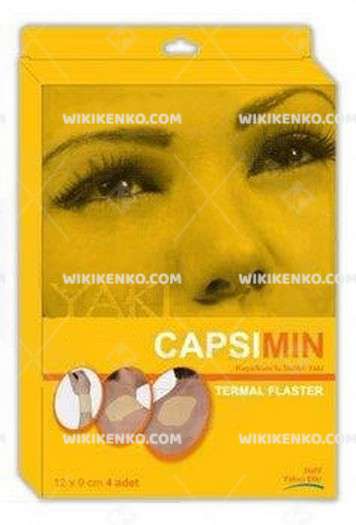
Description
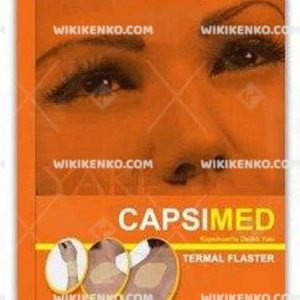
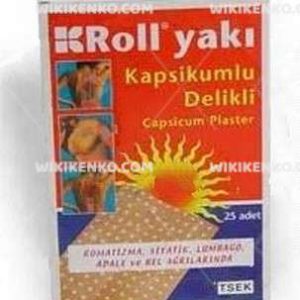
Capsi – Min Kapsikumlu Delikli Yakı belongs to the class of topical analgesic patches based on capsicum extract, traditionally used in Turkey and other regions for relief of joint and muscle pain. Each patch is reported to contain 14.12 mg capsicum oleoresin corresponding to approximately 1.1 mg capsaicin as the primary active constituent, together with the counter‑irritants methyl salicylate, menthol, camphor, and thymol. Similar Turkish formulations of capsicum “delikli yakı” (perforated plasters) are indicated for pain associated with arthritis, low back pain, strains, and sprains. The patch is applied topically to intact skin over the painful area for a defined duration, providing prolonged local exposure while limiting systemic absorption.
Publicly available technical information for Capsi – Min specifies the capsicum content; other active components are typically present at concentrations comparable to established OTC topical analgesics. For context, many capsicum ointments and patches marketed in Turkey and internationally contain capsicum oleoresin in the range of 0.5–0.525% (corresponding to about 0.05% capsaicin) with menthol 5%, camphor 4–5%, and methyl salicylate around 3–20%, depending on the dosage form. These strengths fall within ranges used in monograph‑compliant OTC pain relief products in various jurisdictions, where capsaicin concentrations typically range from 0.025–0.25% and methyl salicylate and menthol from low to mid‑percentage levels.
Table 1. Representative active ingredient ranges in capsicum‑based topical analgesics
| Component | Example quantitative data from similar products* | Typical pharmacological role |
|---|---|---|
| Capsicum oleoresin / capsaicin | 0.525% capsicum oleoresin (0.05% capsaicin) in Turkish capsicum ointment; 0.25 g capsaicin per patch in an OTC capsicum patch. | TRPV1 agonist; defunctionalizes nociceptors, reducing pain over time. |
| Menthol | 5% in Turkish ointment; 5–7.8% in OTC creams and patches. | Counter‑irritant; TRPM8 agonist; cooling sensation and mild local analgesia. |
| Camphor | 4–5% in ointments; 9.6% in some patches. | Counter‑irritant; modulates TRP channels; produces warming sensation and analgesia. |
| Methyl salicylate | 3% in Turkish ointment; ~20% in some OTC creams. | Salicylate‑type analgesic; local anti‑inflammatory and counter‑irritant action. |
*Values are from closely related capsicum‑menthol‑camphor‑methyl salicylate products, not from a formally published full label for Capsi – Min itself.
Mechanisms of action
Capsaicin and capsicum oleoresin
Capsaicin, the principal pungent alkaloid of Capsicum annuum, acts as a highly selective agonist at the transient receptor potential vanilloid 1 (TRPV1) ion channel expressed on small‑diameter nociceptive fibers. Initial activation of TRPV1 leads to depolarization of nociceptors and a transient burning or stinging sensation, followed by depletion of neuropeptides such as substance P and calcitonin gene‑related peptide and functional desensitization or “defunctionalization” of the nerve endings. Repeated or prolonged exposure diminishes nociceptor responsiveness to noxious stimuli, producing a delayed but sustained analgesic effect in conditions such as neuropathic pain and musculoskeletal pain.
Menthol
Menthol is a terpene alcohol that activates the transient receptor potential melastatin 8 (TRPM8) channel, which is associated with cold sensation, and at higher concentrations can modulate other TRP channels. Cutaneous TRPM8 activation induces a cooling sensation and mild local analgesia and also exerts counter‑irritant effects that can alter pain perception at the spinal level. Menthol may enhance the subjective efficacy of topical preparations by providing rapid onset sensory relief while the slower, capsaicin‑mediated desensitization develops.
Camphor
Camphor is a bicyclic monoterpene widely used as a component of topical balms and liniments for its rubefacient and mild analgesic properties. Experimental work shows that camphor can both activate and desensitize subtypes of TRP channels, including TRPV1 and TRPA1, depending on concentration and context, which may contribute to both an initial warming and subsequent analgesic effect. Camphor also acts as a counter‑irritant, producing local hyperemia and a sensation that competes with deep musculoskeletal pain.
Methyl salicylate and thymol
Methyl salicylate is an organic ester of salicylic acid that functions as a topical analgesic and counter‑irritant, enhancing local blood flow and producing a warming sensation. Although systemic absorption can occur, its primary use in such preparations is local, where it may exert mild anti‑inflammatory effects via cyclo‑oxygenase inhibition in superficial tissues. Thymol, a phenolic monoterpene from thyme oil, has antiseptic properties and may contribute mild local anesthetic and counter‑irritant effects, although clinical data in analgesic patches are limited.
Therapeutic indications and clinical rationale
Indications inferred from analogous products
While a detailed, regulatory‑grade label for Capsi – Min is not publicly indexed, similar capsicum‑containing patches marketed in Turkey and elsewhere are indicated for adjunctive relief of pain in:
-
Osteoarthritis and other degenerative joint disorders.
-
Rheumatoid arthritis and non‑specific rheumatic pain.
-
Low back pain, sciatica, and lumbago.
-
Muscle strains, sprains, contusions, and sports‑related injuries.
-
Peripheral neuropathic pain states such as post‑herpetic neuralgia and painful diabetic neuropathy in some preparations.
Evidence from randomized and observational studies on capsaicin‑based topicals (creams, gels, and patches) supports modest but clinically relevant pain reduction in chronic osteoarthritis, neuropathic pain, and localized musculoskeletal pain when used regularly over several weeks. Combination formulations including menthol, camphor, and methyl salicylate add rapid‑onset counter‑irritant relief that may improve patient‑reported outcomes such as time to onset of perceived benefit.
Place in therapy
Capsicum‑based patches are usually positioned as non‑prescription, second‑line or adjunctive therapies after simple oral analgesics (e.g., paracetamol) or NSAIDs, especially in patients where systemic NSAIDs are contraindicated or poorly tolerated. They are particularly useful when pain is superficial and localized, allowing high local concentrations of active agents with lower systemic exposure. Because of the potential for local irritation, they may be best suited for motivated patients who can tolerate an initial burning or warming sensation and adhere to regular use.
Dosage, administration, and practical use
Specific application instructions for Capsi – Min are not standardized in publicly accessible databases, but they are generally similar to other capsicum patches. In practice, a single patch is applied to clean, dry, intact skin over the painful area, avoiding mucous membranes, broken skin, or areas of dermatitis. Depending on the product, patches are usually left in place for several hours (for example 8–12 hours) and may be used once or twice daily, with total daily exposure limited by the manufacturer.
The patch should be pressed firmly to ensure good contact, and patients should wash hands thoroughly with soap and water after handling to avoid accidental transfer of capsaicin to eyes or other sensitive areas. If excessive burning or discomfort occurs, the patch can be removed, and the skin gently cleansed with an oil‑based cleanser or mild soap; cooling compresses may be used for symptomatic relief. Clinicians should counsel patients that maximum analgesic benefit from capsaicin often occurs only after several days to weeks of consistent use, although menthol and camphor may provide earlier subjective relief.
Safety profile, adverse effects, and precautions
Local adverse effects
The most common adverse reactions to capsicum‑based patches are localized and dose‑dependent.
-
Burning, stinging, or warmth at the application site.
-
Erythema and local erythematous rash.
-
Pruritus or mild edema.
These effects usually decrease with continued use as desensitization occurs, but in some individuals, especially those with sensitive skin or concomitant dermatoses, they may be intolerable and require discontinuation. Health Canada’s safety review of OTC topical pain relievers concluded that products containing menthol have been associated with rare but serious skin burns, and requested enhanced safety information from manufacturers; capsicum‑only products did not show a clear signal, but caution with combination products remains advised.
Systemic toxicity
Systemic absorption of capsaicin from standard over‑the‑counter strength patches is generally low, and systemic toxicity is rare when used as directed. However, methyl salicylate can be absorbed through the skin, and excessive topical application, use on large body surfaces, occlusion, or use in children can lead to salicylate toxicity, particularly when combined with other salicylate or NSAID exposure. Camphor, if significantly absorbed or ingested accidentally (for example by children chewing on a patch), can cause central nervous system toxicity including seizures. For this reason, patches must be kept out of reach of children and disposed of safely after use.
Contraindications and special populations
Typical contraindications, extrapolated from similar products, include:
-
Hypersensitivity to capsicum, salicylates, menthol, camphor, thymol, or any excipients.
-
Application on broken, irritated, or infected skin.
-
Use under occlusive dressings unless specifically instructed.
-
Use in children below a specified age (often under 12 years) due to higher risk of irritation and systemic absorption.
Caution is warranted in patients with aspirin or NSAID hypersensitivity or asthma triggered by salicylates, in those on anticoagulant therapy, and in individuals with peripheral vascular disease or neuropathy where reduced sensation may mask progressive irritation. Because of limited controlled data, use in pregnancy and lactation should be individualized and restricted to short‑term, small‑area application when potential benefit outweighs potential risk.
Drug interactions and special considerations
Clinically significant systemic drug–drug interactions are unlikely at standard topical doses but cannot be completely excluded for methyl salicylate, especially when multiple salicylate sources are used concomitantly. Theoretical interactions include potentiation of anticoagulant and antiplatelet effects when used with warfarin, other coumarins, or direct oral anticoagulants if substantial systemic salicylate exposure occurs. Concomitant use with other topical counter‑irritants or heat sources (such as heating pads) may increase local irritation and risk of burns and is generally discouraged.
Table 2. Key characteristics of Capsi – Min Kapsikumlu Delikli Yakı (inferred from class and related products)
| Parameter | Description (class‑based / product‑related) |
|---|---|
| Pharmaceutical form | Perforated capsicum‑based topical patch (“delikli yakı”) for external use. |
| Active ingredients | Capsicum oleoresin (capsaicin), methyl salicylate, menthol, camphor, thymol. |
| Therapeutic class | Topical counter‑irritant and analgesic for musculoskeletal and neuropathic pain. |
| Main mechanisms | TRPV1‑mediated nociceptor defunctionalization (capsaicin), TRPM8 activation (menthol), counter‑irritant rubefacient action (camphor, methyl salicylate), mild antiseptic effects (thymol). |
| Principal indications | Adjunctive relief of localized pain in arthritis, low back pain, muscle strains/sprains, and selected peripheral neuropathic conditions. |
| Common adverse reactions | Local burning, erythema, pruritus, warmth at application site. |
| Serious safety concerns | Rare severe skin burns (mainly menthol‑containing products), potential salicylate toxicity and camphor toxicity with misuse or ingestion. |
| Regulatory status | Non‑prescription topical analgesic class; individual authorization details vary by jurisdiction and manufacturer. |
Conclusion
Capsi – Min Kapsikumlu Delikli Yakı represents a multi‑component, capsicum‑based topical analgesic plaster integrating the pharmacological actions of capsaicin, menthol, camphor, methyl salicylate, and thymol to provide local relief of musculoskeletal and certain neuropathic pain conditions. Its efficacy is supported indirectly by a substantial evidence base for similar capsaicin and counter‑irritant formulations, while its safety profile is dominated by predictable local reactions and rare but important risks of severe skin burns and systemic toxicity if misused.
In clinical practice, the product is best used as an adjunct to systemic analgesic strategies in well‑selected patients, with careful attention to application instructions, skin integrity, and patient education regarding potential irritation and proper handling











Reviews
There are no reviews yet.