
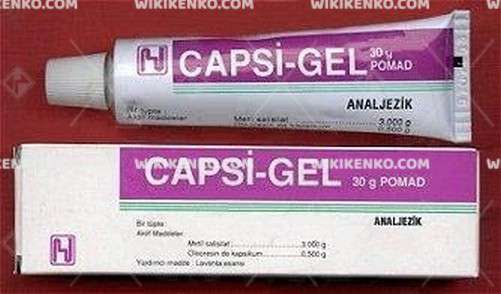
Capsi – Gel Pomade

Dosage form

Pack size

Potency

30G

Manufacturer

Origin

Generic Name (Ingredient)

Combined

Capsi-Gel Pomade (often written “CAPSİ-GEL Pomad”) is a topical analgesic pomade marketed in Turkey that contains methyl salicylate and capsicum (oleoresin capsicum) as its primary active pharmaceutical ingredients.

read more

Assuming you’re in a life-threatening situation and require immediate access to medication, please visit our Community Support Network page.


Description

Capsi-Gel Pomade is a semi-solid topical preparation intended for external application to relieve localized musculoskeletal pain and discomfort. It belongs to the pharmacotherapeutic group of counterirritant and rubefacient topical agents that exert analgesic effects mainly through peripheral sensory modulation and increased local blood flow.

Pharmaceutical Composition and Formulation

According to the Turkish product information, each 30 g tube of Capsi-Gel Pomade has the following active components:

  • Methyl salicylate: 3.0 g (approximately 10% w/w)

  • Oleoresin capsicum (capsicum extract): 0.5 g (approximately 1.7% w/w)

An essential oil (lavender essence) is listed among the excipients, contributing fragrance and potential soothing properties.

Table 1. Active ingredients of Capsi-Gel Pomade per 30 g tube

Component Quantity per 30 g Approximate concentration Pharmacological role
Methyl salicylate 3.0 g ~10% w/w Topical analgesic, anti‑inflammatory, rubefacient
Oleoresin capsicum 0.5 g ~1.7% w/w Counterirritant, TRPV1 agonist, analgesic

The pomade base is a hydrophobic ointment base that allows gradual release of these lipophilic actives onto the stratum corneum. Lavender essence functions primarily as a fragrance but may add mild calming sensory effects.

Mechanism of Action

Capsicum (oleoresin capsicum)

Oleoresin capsicum contains capsaicinoids, principally capsaicin, which are potent agonists of the transient receptor potential vanilloid 1 (TRPV1) receptor localized on nociceptive C-fibers in the skin. Initial agonism induces burning, stinging, and erythema, followed by functional desensitization of nociceptors and depletion of neuropeptides such as substance P from peripheral nerve terminals. Repeated or sustained exposure therefore results in reduced transmission of pain impulses from the periphery to the spinal cord, providing local analgesia in muscles and joints.

Methyl salicylate

Methyl salicylate is a salicylate ester that acts as a topical analgesic and mild anti‑inflammatory agent. After percutaneous absorption, it is partly hydrolysed to salicylic acid, which can inhibit cyclo‑oxygenase enzymes and thereby reduce prostaglandin synthesis locally. In addition, methyl salicylate has rubefacient properties, causing local vasodilation, warming sensation, and increased blood flow to superficial tissues, which may augment relief of musculoskeletal aches.

Combined pharmacodynamic profile

The combination of oleoresin capsicum with methyl salicylate in Capsi-Gel Pomade aims to achieve complementary mechanisms: rapid counterirritant and warming effects (methyl salicylate) together with progressive desensitization of nociceptive fibers (capsicum). This dual action is expected to produce both immediate subjective relief and longer‑lasting reduction in pain signalling at the application site.

Indications and Therapeutic Uses

Formal Turkish labelling text is limited in accessible sources, but based on composition and analogous capsaicin–salicylate preparations, Capsi-Gel Pomade is used for:

  • Symptomatic relief of localized musculoskeletal pain (e.g. myalgia, arthralgia, tendinitis)

  • Pain associated with minor sprains, strains, contusions, and overuse injuries

  • Localized back or neck pain of non‑serious origin

Veterinary and sports formulations with similar capsaicin gels are indicated for muscle and joint pain and for warming tissues prior to exercise, which supports this therapeutic positioning.

Capsi-Gel Pomade is intended exclusively for external use on intact skin and is not indicated for systemic treatment of inflammatory rheumatic diseases.

Dosage and Method of Administration

Specific dosing instructions in publicly available Turkish documents are concise, but typical regimens for comparable products recommend:

  • Application of a thin layer to the affected area

  • Gentle massage until the pomade is absorbed

  • Re-application up to 2–3 times daily, depending on severity of symptoms

Treatment duration is usually short term (several days to a few weeks) and should be limited when persistent burning or irritation occurs. Use in children requires caution and consultation with a healthcare professional, especially due to salicylate content and capsaicin-induced irritation.

Pharmacokinetics

Percutaneous absorption

Salicylates in topical analgesics can undergo variable skin absorption depending on concentration, vehicle, skin integrity, and surface area. Methyl salicylate is lipophilic and can be absorbed through intact skin, where it is hydrolysed to salicylic acid and may enter the systemic circulation. Capsaicin exhibits predominantly local action; systemic absorption after low‑concentration topical application is limited but not negligible, especially with large-area or occlusive use.

Distribution, metabolism, and excretion

Systemically absorbed methyl salicylate is distributed widely, conjugated in the liver, and excreted mainly via the kidneys as salicyluric acid and other metabolites. Capsaicin absorbed through skin is extensively metabolized by hepatic cytochrome P450 enzymes to more polar metabolites eliminated in urine and bile. In routine topical use at recommended doses, systemic exposure remains low and clinically significant systemic pharmacokinetic effects are uncommon in healthy adults.

Clinical Efficacy Data

No randomized controlled trials specifically evaluating Capsi-Gel Pomade were identified in accessible medical databases or product literature; therefore, the evidence base must be extrapolated from studies of similar capsaicin- and methyl salicylate–containing topical formulations.

  • Capsaicin-containing topical preparations have shown efficacy in various neuropathic and musculoskeletal pain conditions through desensitization of nociceptors.

  • Topical salicylate rubefacients have demonstrated modest improvement in acute musculoskeletal pain compared with placebo in some clinical trials, although effect sizes are generally small.

Given these data, Capsi-Gel Pomade can be regarded as an evidence‑informed symptomatic treatment, but high‑quality, product-specific clinical trials are lacking, and its therapeutic role should be considered adjunctive rather than disease-modifying.

Safety Profile and Adverse Reactions

Local adverse effects

The most frequent adverse reactions with capsaicin–salicylate topical products are localized and dose‑dependent:

  • Burning, stinging, or warmth at the site of application

  • Erythema and pruritus

  • Irritant contact dermatitis in susceptible individuals

These reactions typically diminish with continued use as nociceptors become desensitized, but discontinuation is warranted if severe irritation, blistering, or allergic dermatitis develops.

Systemic toxicity risks

Systemic toxicity is unlikely when Capsi-Gel Pomade is used as directed on limited skin areas, but risks increase with:

  • Application to large body surfaces or under occlusive dressings

  • Use on damaged or inflamed skin, which enhances absorption

  • Use in children, in individuals with low body weight, or in those with renal or hepatic impairment

Excessive exposure to methyl salicylate can lead to salicylate systemic toxicity (salicylism), characterized by tinnitus, dizziness, nausea, vomiting, hyperventilation, and metabolic disturbances. There are case reports of serious salicylate poisoning from overuse of high‑concentration methyl salicylate rubs, although not specifically with Capsi-Gel Pomade.

Table 2. Common and potential adverse reactions associated with capsaicin–methyl salicylate topical products

Adverse effect type Manifestation Typical course
Local irritation Burning, stinging, erythema, warmth Usually mild and transient, may decrease over time
Allergic dermatitis Pruritic rash, vesicles, swelling Requires discontinuation and medical evaluation
Ocular irritation Burning, tearing if accidental eye contact Resolve after thorough rinsing, may need care
Salicylate toxicity (rare) Tinnitus, nausea, hyperventilation, confusion Associated with overuse and high systemic exposure

Contraindications and Special Precautions

Documented or reasonable contraindications for Capsi-Gel Pomade include:

  • Known hypersensitivity to salicylates, capsaicin/capsicum, lavender oil, or any excipient

  • History of aspirin-sensitive asthma or NSAID‑induced bronchospasm (due to salicylate component)

  • Application on broken, infected, or eczematous skin

  • Application near mucous membranes, eyes, or genitals

Precautions are advised in:

  • Children and adolescents, because of enhanced salicylate absorption and theoretical risk of systemic toxicity

  • Pregnant and breastfeeding women: topical salicylates and capsaicin should be used only if clearly needed and under medical supervision, as safety data are limited

  • Patients with renal or hepatic impairment or those concurrently taking systemic salicylates or anticoagulants, due to potential additive effects of salicylate exposure

Users should wash hands thoroughly after application and avoid touching eyes or mucosa.

Drug and Excipient Interactions

Systemic drug–drug interactions are unlikely at recommended topical doses, but the following considerations apply:

  • Concomitant systemic aspirin, other NSAIDs, or anticoagulant therapy may theoretically increase bleeding risk if significant salicylate absorption occurs.

  • Occlusive dressings, heat pads, or simultaneous use with other topical agents on the same area may increase percutaneous absorption of methyl salicylate and capsaicin.

Lavender essence has minimal documented pharmacokinetic interactions but may cause contact allergy in sensitized individuals.

Use in Special Populations

Pediatric use

Due to the presence of methyl salicylate and capsaicin, many topical counterirritants are not recommended for young children or are used only under medical guidance. Enhanced skin permeability, high surface area-to-body weight ratio, and risk of unintentional ingestion contribute to a greater potential for toxicity. Label‑specific age restrictions for Capsi-Gel Pomade were not fully accessible; cautious, supervised use is therefore advisable.

Geriatric use

Older adults commonly use topical analgesics to avoid systemic NSAIDs; Capsi-Gel Pomade may be appropriate as a localized symptomatic therapy, provided that skin integrity is maintained and concurrent anticoagulant or salicylate therapy is considered. Thin or fragile skin may be more prone to irritation from capsaicin.

Pregnancy and lactation

Human data on topical capsaicin and methyl salicylate during pregnancy and lactation are limited. Some references suggest that topical salicylates should be used cautiously and only if expected benefit outweighs potential risk, especially when applied on large areas or for prolonged periods. Capsaicin’s systemic exposure is low at typical topical doses, but absence of robust reproductive toxicity data supports a precautionary approach.

Regulatory Status and Pharmacovigilance

Capsi-Gel Pomade appears in Turkish sources as an over-the-counter topical medicinal pomade containing methyl salicylate and capsicum, but detailed marketing authorization documentation and full prescribing information are not readily accessible in English. Comparable capsaicin–salicylate gels in other countries are often regulated as non‑prescription analgesic topicals or as medical devices/cosmetics, depending on jurisdiction and claims. Ongoing pharmacovigilance should focus on skin reactions and rare cases of salicylate toxicity associated with misuse or over‑application.

Conclusion

Capsi-Gel Pomade (Capsi-Gel Pomad) is a Turkish topical analgesic ointment containing methyl salicylate and oleoresin capsicum, formulated to provide counterirritant, rubefacient, and nociceptor‑desensitizing effects for localized musculoskeletal pain. Its pharmacological rationale is supported by broader evidence on topical capsaicin and salicylates, though product‑specific randomized clinical trials were not identified, and its use should remain symptomatic and adjunctive. When applied as directed on intact skin and for limited periods, the preparation is generally well tolerated, with local irritation being the most common adverse effect; however, clinicians and patients must remain aware of potential salicylate systemic toxicity with excessive or inappropriate use.

Reviews

There are no reviews yet.

Be the first to review “Capsi – Gel Pomade”

Your email address will not be published. Required fields are marked *

Use the form below to report an error

Please answer the questions as thoroughly and accurately as possible. Your answers will help us better understand what kind of mistakes happen, why and where they happen, and in the end the purpose is to build a better archive to guide researchers and professionals around the world.


If an image of the drug is not available on the Wikikenko health encyclopedia, you have the option to submit images/leaflets of the product. Following verification by our pharmaceutical specialist, your submitted images/leaflets will be included in our archive, with due acknowledgment of your contribution. Your cooperation in this matter would greatly assist researchers in finding the information they seek. Upload Images/Leaflet (Less than 2MB)

No Choosen File

Wikikenko.com does not sell, distribute, or provide any pharmaceutical products or health services. Our platform functions solely as a health encyclopedia, providing information on a wide range of health topics, including but not limited to medications.


Medical Disclaimer: Seek Professional Advice

The information on this page is not intended to be a substitute for professional medical advice, diagnosis, or treatment. always seek the advice for your physician or another qualified health provider with any questions you may have regarding a medical condition. Always remember to

  1. Ask your own doctor for medical advice.
  2. Names, brands, and dosage may differ between countries.
  3. When not feeling well, or experiencing side effects always contact your own doctor.

Why you can't look for symptoms on the Internet

If diagnoses could be made simply from a textbook or an article on a website, we would all be doctors and treat ourselves. Nothing can replace the experience and knowledge of specially trained people. As in any field, in medicine there are unscrupulous specialists, differences of opinion, inaccurate diagnoses and incorrect test results. According to Wikipedia, cyberchondria is a mental disorder consisting in the desire to independently make a diagnosis based on the symptoms of diseases described on Internet sites.

 

People also search for…


More results…

Generic selectors
Exact matches only
Search in title
Search in content
Post Type Selectors

The expert search feature is especially useful for healthcare professionals, researchers, and scientists who require accurate and up-to-date information on pharmaceutical products. By narrowing down their searches using filters, they can easily access the relevant data they need, making informed decisions about treatment options or drug research endeavors.

Expert Search  →


Recent comments