
Description
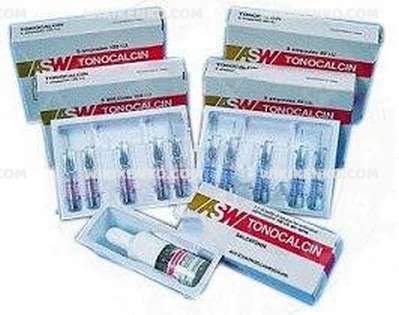
Tonocalcin Ampul 50 IU/mL represents a pharmacological preparation containing synthetic salmon calcitonin, a polypeptide hormone utilized in various metabolic bone disorders. This therapeutic agent, manufactured by Alfa Wasserman in Italy, has been employed clinically for more than five decades in the management of conditions characterized by abnormal bone metabolism and calcium dysregulation.
The following comprehensive analysis explores the pharmacological properties, therapeutic applications, administration protocols, and safety considerations associated with this medication to provide healthcare professionals with essential information for optimal patient management.
Chemical Composition and Structure
Molecular Characteristics
Synthetic salmon calcitonin (salcatonin), the active ingredient in Tonocalcin, is a 32-amino acid polypeptide that mimics the natural hormone produced by parafollicular cells in the thyroid gland. The molecular structure of salmon calcitonin differs from human calcitonin at 16 amino acid positions, with the most significant variations occurring between positions 10 and 27.
These structural differences account for the enhanced potency observed with salmon-derived calcitonin compared to its human counterpart. The molecule features a critical disulfide bond between cysteine residues at positions 1 and 7, which maintains its three-dimensional conformation and biological activity.
Pharmaceutical Formulation
Tonocalcin Ampul 50 IU/mL is supplied as a solution for injection in 1 mL ampules, with each ampule containing 50 International Units of synthetic salmon calcitonin. The preparation is designed for parenteral administration via subcutaneous, intramuscular, or intravenous routes, allowing flexibility in clinical application based on therapeutic requirements and patient factors.
Pharmacological Properties
Mechanism of Action
Salmon calcitonin primarily exerts its effects through interaction with specific G protein-coupled calcitonin receptors, which predominantly signal via the cAMP and PLC/IP3 pathways. The pharmacological actions of calcitonin manifest principally in two target tissues: bone and kidney. In osseous tissue, calcitonin directly inhibits osteoclast activity by inducing cellular contraction, reducing motility, and impairing the capacity for bone resorption. Additionally, the hormone inhibits carbonic anhydrase II, disrupting the acidic microenvironment necessary for optimal osteoclast function, and impedes the differentiation of osteoclast precursors.
In renal tissue, calcitonin promotes diuresis and diminishes tubular reabsorption of calcium and phosphate, contributing to reduced serum levels of these minerals.
Pharmacokinetics and Pharmacodynamics
Following parenteral administration, salmon calcitonin demonstrates rapid absorption with high bioavailability. Subcutaneous and intramuscular injections yield similar bioavailability rates of approximately 71% and 66%, respectively. The hormone exhibits a relatively short pharmacokinetic profile, with peak plasma concentrations achieved within the first hour post-administration and plasma levels between 200-400 pg/mL following a 100 IU dose. Protein binding is moderate, ranging from 30% to 40%.
The elimination half-life of salmon calcitonin spans approximately 50-80 minutes, with metabolism occurring primarily in the kidneys and peripheral tissues to form pharmacologically inactive fragments. Consequently, patients with severe renal impairment may experience altered clearance, although the clinical significance of this finding remains undetermined.
Pharmacodynamic studies have established several biological markers of calcitonin activity, including alterations in cyclic AMP, adenosine, venous blood pO₂, and cytosolic free calcium in circulating cells. The peak activity of these parameters typically occurs between 101 and 182 minutes after administration, with more consistent responses observed following nasal spray compared to intramuscular administration.
Therapeutic Applications
Clinical Indications
Tonocalcin Ampul 50 IU/mL is indicated for several metabolic bone disorders and calcium homeostasis disturbances, including:
-
Paget’s disease of bone (osteitis deformans), particularly in cases characterized by bone pain, neurological complications, progressive bone lesions, incomplete or recurrent fractures, and biochemical markers of increased bone turnover (elevated serum alkaline phosphatase and urinary hydroxyproline excretion).
-
Osteoporosis, including postmenopausal osteoporosis, when accompanied by other appropriate therapies.
-
Hypercalcemia of various etiologies, including malignancy-associated conditions (breast, lung, and renal carcinomas, multiple myeloma), tumor-induced osteolysis, hyperparathyroidism, immobilization, and vitamin D intoxication.
-
Neurodystrophic disorders, including algodistrophy and Sudeck’s disease.
-
Acute pancreatitis, where calcium regulation may be beneficial.
-
Osteolytic and osteopenic bone pain conditions.
Evidence of Efficacy
Salmon calcitonin has demonstrated clinical efficacy in managing the aforementioned conditions through its dual actions on bone metabolism and calcium homeostasis. In Paget’s disease, calcitonin reduces biochemical markers of bone turnover and alleviates pain associated with active disease. For osteoporosis management, calcitonin contributes to increased bone mineral density, particularly in trabecular bone, and may reduce the incidence of vertebral fractures.
In hypercalcemic states, the hormone rapidly reduces serum calcium levels by inhibiting bone resorption and enhancing renal calcium excretion. Recent investigations have also suggested potential analgesic properties of calcitonin in managing neuropathic pain conditions, including painful diabetic neuropathy.
Dosage and Administration
Tonocalcin Ampul 50 IU/mL may be administered via subcutaneous, intramuscular, or intravenous routes, with the selection dependent on the specific clinical indication, required onset of action, and patient characteristics.
Dosage Recommendations
The dosage regimen varies according to the indication being treated:
-
Paget’s Disease: The recommended initial dose is 50-100 IU daily via subcutaneous or intramuscular injection. In severe cases, the dose may be increased to 200 IU daily. Following clinical improvement (typically within the first few months of therapy), maintenance therapy with 50 IU daily may be sufficient.
-
Hypercalcemia: The dosage depends on the severity and etiology of the hypercalcemic state. Treatment typically begins with higher doses, which are subsequently titrated based on calcium levels and clinical response.
-
Osteoporosis: Dosage regimens should be integrated with comprehensive management approaches, including calcium and vitamin D supplementation.
-
Neurodystrophic Conditions: Individualized dosing based on clinical presentation and response.
Administration at bedtime may help mitigate potential gastrointestinal side effects such as nausea and vomiting.
Safety Profile
Contraindications
Tonocalcin is contraindicated in the following conditions:
-
Known hypersensitivity to calcitonin or any excipients in the formulation.
-
Pre-existing hypocalcemia, which may be exacerbated by the calcium-lowering effects of the hormone.
Side Effects
The administration of salmon calcitonin may be associated with various adverse reactions, categorized by frequency and clinical significance:
-
Common side effects include nausea, vomiting, abdominal pain, diarrhea, and facial flushing, which are often dose-dependent and more pronounced with intravenous administration compared to subcutaneous or intramuscular routes.
-
Hypocalcemia may occur, particularly in patients with marginal calcium status or those receiving concomitant medications affecting calcium homeostasis.
-
Allergic reactions, ranging from mild cutaneous manifestations to severe anaphylactic responses, have been reported and necessitate careful monitoring, particularly in patients with a history of hypersensitivity reactions.
-
Long-term use has been associated with an increased risk of malignancy, with analyses of randomized controlled trials indicating an absolute risk increase of 0.7% to 2.4% compared to placebo.
-
Local reactions at the injection site, including pain, redness, and swelling, may occur.
-
Other reported adverse effects include headache, dizziness, taste disturbances, visual disturbances, arthralgia, and development of neutralizing antibodies to calcitonin.
Special Population Considerations
Pregnancy and Lactation
Limited human data exist regarding the use of salmon calcitonin during pregnancy. Animal studies have demonstrated decreased fetal birth weights when administered at doses 14-56 times the recommended human dose, potentially due to metabolic effects on the maternal organism. Calcitonin does not cross the placenta, suggesting minimal direct fetal exposure.
Regarding lactation, no specific human data are available. However, salmon calcitonin has been shown to inhibit lactation in animals, raising concerns about potential effects on milk production in nursing mothers. The excretion of calcitonin into breast milk is not expected due to its polypeptide nature.
Pediatric Use
There is insufficient evidence to support the use of salmon calcitonin in pediatric osteoporotic conditions. Consequently, its use in children aged 0 to 18 years is not recommended unless medically necessary, and prolonged administration beyond several weeks should be avoided without compelling clinical justification.
Geriatric Use
Elderly patients may exhibit altered pharmacokinetics due to age-related changes in renal function. However, specific dosage adjustments based solely on advanced age are not generally required, though clinical monitoring may be warranted.
Renal Impairment
Patients with end-stage renal disease demonstrate significantly reduced metabolic clearance of calcitonin compared to individuals with normal renal function. While the clinical relevance of this finding remains uncertain, careful monitoring is advisable in this population.
Drug Interactions
Clinically Significant Interactions
-
Cardiac Glycosides: The calcium-lowering effects of calcitonin may potentiate the actions of cardiac glycosides, necessitating careful monitoring and potential dosage adjustments in patients receiving concurrent therapy.
-
Medications Affecting Calcium Homeostasis: Concomitant use with other agents that influence calcium metabolism (e.g., bisphosphonates, calcium supplements, vitamin D analogues) may result in additive effects on serum calcium levels.
-
Other potential interactions have been reported with various medications, including abacavir, acalabrutinib, acebutolol, aceclofenac, and acemetacin, although the clinical significance of these interactions requires further evaluation.
Key Information
| Parameter | Information |
|---|---|
| Active Ingredient | Synthetic Salmon Calcitonin (Salcatonin) 50 IU per mL |
| Manufacturer | Alfa Wasserman (Italy) |
| Formulation | Solution for injection in 1 mL ampules |
| Administration Routes | Subcutaneous, Intramuscular, Intravenous |
| Primary Indications | Paget’s disease, Osteoporosis, Hypercalcemia, Neurodystrophic disorders |
| Standard Dosage | Paget’s disease: 50-100 IU daily (SC/IM), up to 200 IU if needed Hypercalcemia: Individualized based on severity Osteoporosis: Individualized, with calcium/vitamin D supplements |
| Common Side Effects | Nausea, Vomiting, Abdominal pain, Diarrhea, Facial flushing |
| Serious Adverse Effects | Allergic reactions (including anaphylaxis), Hypocalcemia, Increased malignancy risk with long-term use |
| Contraindications | Hypersensitivity to calcitonin, Hypocalcemia |
| Pregnancy Category | Limited human data-Probably compatible |
| Lactation | No human data-Potential inhibition of lactation based on animal studies |
| Storage | Store according to package instructions, typically at controlled room temperature |
| Special Populations | Not recommended for pediatric use Monitor in renal impairment Use with caution in elderly patients |
Conclusion
Tonocalcin Ampul 50 IU/mL represents a valuable therapeutic option in the management of various metabolic bone disorders and calcium homeostasis disturbances. The synthetic salmon calcitonin formulation offers significant clinical benefits through its dual actions on bone metabolism and calcium regulation. However, healthcare practitioners should carefully weigh these benefits against potential risks, particularly with long-term use, and consider alternative therapeutic options in appropriate clinical scenarios.
Individualized treatment approaches, incorporating regular monitoring and comprehensive management strategies, remain essential for optimizing outcomes in patients receiving salmon calcitonin therapy. As with all pharmacological interventions, ongoing vigilance for adverse effects and attention to emerging safety data should guide clinical decision-making regarding the initiation, continuation, and discontinuation of therapy.












Reviews
There are no reviews yet.