
Description
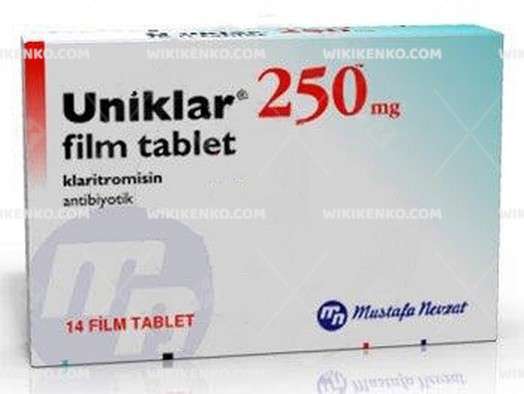
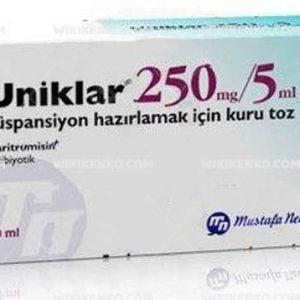
Uniklar Film Tablet 250 Mg is a pharmaceutical product containing 250 mg of Clarithromycin, a semi-synthetic macrolide antibiotic widely used in clinical practice. Manufactured in Turkey, this medication plays a significant role in treating various bacterial infections. This article provides comprehensive information about Uniklar, including its composition, mechanism of action, therapeutic applications, dosage recommendations, and safety considerations.
Composition and Pharmaceutical Form
Uniklar Film Tablet contains 250 mg of Clarithromycin as its active pharmaceutical ingredient. The tablet is presented as a smooth, yellow, elliptical biconvex film-coated formulation. According to the product information, each tablet contains several excipients including croscarmellose sodium, pregelatinized starch, silicon dioxide, povidone, stearic acid, magnesium stearate, talk, microcrystalline cellulose, hydroxypropyl methylcellulose, propylene glycol, sorbitan monooleate, hydroxypropyl cellulose, titanium dioxide (E171), quinoline yellow (E104) lacquer, vanillin, and sorbic acid. These excipients contribute to the stability, bioavailability, and overall efficacy of the medication.
Mechanism of Action
Primary Antimicrobial Activity
Clarithromycin exerts its antibacterial effect through a well-defined mechanism. It functions as a protein synthesis inhibitor by binding to the 50S subunit of the bacterial ribosome. This binding effectively blocks the translocation of aminoacyl transfer-RNA and polypeptide synthesis, preventing bacteria from producing essential proteins needed for their survival and reproduction. This mechanism renders Clarithromycin bacteriostatic at normal doses, although it may exhibit bactericidal activity at higher concentrations.
Metabolic Considerations
Upon administration, Clarithromycin undergoes first-pass metabolism in the liver, where it is converted to several metabolites, most notably 14-(R)-hydroxyclarithromycin. This active metabolite works synergistically with the parent compound, enhancing the overall antimicrobial effect of the medication. This metabolic profile contributes to Clarithromycin’s effectiveness against a broad spectrum of bacterial pathogens.
Therapeutic Indications
Upper Respiratory Tract Infections
Uniklar is frequently prescribed for the treatment of upper respiratory tract infections including pharyngitis (throat inflammation), tonsillitis (inflammation of the tonsils), and acute maxillary sinusitis. The medication has demonstrated efficacy against common causative pathogens such as Streptococcus pyogenes, Haemophilus influenzae, and Moraxella catarrhalis.
Lower Respiratory Tract Infections
This antibiotic also serves as an effective therapeutic option for lower respiratory tract infections. It is commonly used in the management of acute bacterial exacerbations of chronic bronchitis and community-acquired pneumonia. Its activity against respiratory pathogens including Streptococcus pneumoniae, Haemophilus influenzae, and atypical agents such as Mycoplasma pneumoniae and Chlamydia pneumoniae makes it particularly valuable in this context.
Skin and Soft Tissue Infections
Uniklar demonstrates effectiveness in treating uncomplicated skin and soft tissue infections caused by susceptible microorganisms, particularly Staphylococcus aureus and Streptococcus pyogenes. In these cases, the medication helps resolve the infection by inhibiting bacterial growth and allowing the body’s immune system to eliminate the pathogens.
Helicobacter pylori Eradication
One of the notable applications of Clarithromycin is in the eradication of Helicobacter pylori, a bacterium associated with peptic ulcer disease. Uniklar is often prescribed as part of a combination therapy regimen alongside other medications such as amoxicillin and proton pump inhibitors to treat H. pylori infections and reduce the recurrence of duodenal ulcers.
Mycobacterial Infections
Clarithromycin has demonstrated efficacy in the treatment of infections caused by Mycobacterium avium complex (MAC), particularly in patients with compromised immune systems. It can be used both for treatment of active infections and as prophylaxis against MAC in certain AIDS patients with low CD4 counts.
Pharmacokinetic Properties
Absorption and Bioavailability
Clarithromycin is well absorbed from the gastrointestinal tract following oral administration. It demonstrates a bioavailability of approximately 50-55%, which is reduced due to first-pass metabolism. The presence of food slightly increases the peak plasma concentration but does not significantly affect the overall bioavailability of the medication.
Distribution
After absorption, Clarithromycin is widely distributed throughout the body tissues, achieving concentrations that are often higher than those in the bloodstream. This favorable tissue distribution contributes to its effectiveness against localized infections in various body systems.
Metabolism and Elimination
The primary site of metabolism for Clarithromycin is the liver, where it undergoes oxidative N-demethylation and hydroxylation. The 14-hydroxy metabolite and unchanged Clarithromycin are primarily excreted in urine. The elimination half-life ranges from 3-7 hours depending on the dosage, which supports the twice-daily dosing regimen common for this medication.
Dosage and Administration
Standard Adult Dosage
For most infections in adults, the standard recommended dosage of Uniklar 250 mg is one tablet taken twice daily (every 12 hours). The duration of therapy typically ranges from 7 to 14 days, depending on the nature and severity of the infection being treated. For certain infections, notably H. pylori eradication, specific combination protocols with other medications are recommended.
Special Populations
Dosage adjustments may be necessary for patients with moderate to severe renal impairment. According to the product information, no more than one Uniklar film-coated tablet should be taken daily in patients with moderate renal dysfunction. No significant modifications are typically required for patients with mild hepatic impairment.
Administration Recommendations
Uniklar can be taken with or without food. However, consistent administration with respect to meals may help maintain stable blood levels of the medication. The tablets should be swallowed whole with adequate liquid and should not be crushed or chewed.
Contraindications and Precautions
Absolute Contraindications
Uniklar is contraindicated in patients with known hypersensitivity to Clarithromycin, other macrolide antibiotics, or any of the excipients contained in the formulation. Additionally, concomitant administration with certain medications including astemizole, cisapride, pimozide, terfenadine, ergotamine, dihydroergotamine, lovastatin, or simvastatin is contraindicated due to the risk of serious adverse effects.
Precautions
Caution is advised when prescribing Uniklar to patients with hepatic or renal impairment, as dose adjustments may be necessary. The medication should be used during pregnancy only when the potential benefits clearly outweigh the risks, as its safety during pregnancy has not been firmly established. Healthcare providers should also be vigilant for potential drug interactions, particularly with medications metabolized by the CYP3A4 enzyme system.
Uniklar Film Tablet 250 Mg Side Effects
Common Side Effects
The most frequently reported adverse effects associated with Uniklar include gastrointestinal disturbances such as diarrhea, nausea, vomiting, dyspepsia, abdominal pain, and taste alterations. These effects are generally mild to moderate in intensity and often resolve without necessitating discontinuation of therapy.
Serious Adverse Effects
Although rare, more serious adverse reactions may occur, including severe allergic reactions, liver function abnormalities, and QT interval prolongation. Prolonged use of Clarithromycin, as with other antibiotics, may lead to superinfection due to overgrowth of non-susceptible organisms. Patients should be monitored for signs of superinfection during treatment.
Drug Interactions
Clarithromycin is known to interact with numerous medications primarily due to its inhibitory effect on the CYP3A4 enzyme system. Notable interactions include those with theophylline, oral anticoagulants, ergot alkaloids, triazolam, carbamazepine, cyclosporine, phenobarbital, phenytoin, warfarin, midazolam, lovastatin, digoxin, and several other medications. These interactions may necessitate dose adjustments or alternative therapeutic approaches.
Storage Recommendations
Uniklar Film Tablet should be stored in its original packaging at room temperature, protected from excessive heat, moisture, and direct light. The medication should be kept out of reach of children and should not be used beyond the expiration date indicated on the packaging.
| Parameter | Information |
|---|---|
| Active Ingredient | Clarithromycin 250 mg |
| Pharmaceutical Form | Film-coated tablet |
| Appearance | Yellow, elliptical biconvex tablet |
| Manufacturer | Lilyum İlaç (Turkey) |
| Standard Adult Dosage | 250 mg twice daily (every 12 hours) |
| Treatment Duration | 7-14 days (condition-dependent) |
| Primary Indications | Upper and lower respiratory tract infections, skin infections, H. pylori eradication |
| Mechanism of Action | Inhibition of bacterial protein synthesis by binding to 50S ribosomal subunit |
| Bioavailability | Approximately 50-55% |
| Half-life | 3-7 hours |
| Common Side Effects | Diarrhea, nausea, abdominal pain, taste disturbances |
| Serious Side Effects | Severe allergic reactions, liver dysfunction, QT prolongation |
| Contraindications | Hypersensitivity to macrolides, concurrent use of certain medications |
| Pregnancy Category | C (use only when benefits outweigh risks) |
| Storage Conditions | Room temperature, protected from moisture and light |
Conclusive Summary
Uniklar Film Tablet 250 mg represents an important therapeutic option in the management of various bacterial infections. Its active ingredient, Clarithromycin, offers broad-spectrum antimicrobial activity through inhibition of bacterial protein synthesis. When prescribed appropriately and used according to recommendations, this medication can effectively treat respiratory, skin, and H. pylori infections among others. As with all antibiotics, Uniklar should be used judiciously to minimize the development of bacterial resistance and optimize patient outcomes.











Reviews
There are no reviews yet.