
Description
Pharmaceutical Description and Composition
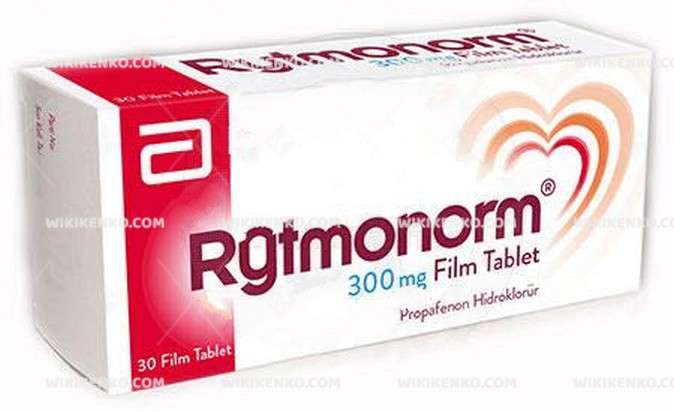
Rytmonorm is a film‑coated oral tablet formulation containing propafenone hydrochloride as its single active pharmaceutical ingredient. The 300 mg strength tablet contains 300 mg of propafenone hydrochloride, corresponding to 300 mg of propafenone base for clinical and labelling purposes. The product is typically described as white to off‑white, round, biconvex, film‑coated tablets, often marked with “300” on one side depending on the national presentation.
The core and coating contain conventional excipients, such as microcrystalline cellulose, maize or corn starch, sodium croscarmellose, hypromellose (hydroxypropyl methylcellulose), polyethylene glycols (macrogol 400 and macrogol 6000), titanium dioxide and magnesium stearate. The tablets contain a very small amount of sodium, generally less than 1 mmol per tablet, and are considered essentially sodium‑free in most regulatory summaries. The formulation is immediate‑release, intended for multiple daily dosing in adults under strict cardiologic supervision.
Mechanism of Action and Pharmacological Class
Propafenone is classified as a class 1C antiarrhythmic agent according to the Vaughan–Williams classification. It exerts a potent, use‑dependent blockade of fast inward sodium channels in cardiac myocytes, leading to pronounced slowing of phase 0 depolarisation, reduced conduction velocity, and prolongation of intra‑cardiac conduction times, particularly in the His–Purkinje system and accessory pathways. At therapeutic plasma concentrations, propafenone also exhibits weak beta‑adrenergic receptor‑blocking and calcium channel‑blocking properties, which can contribute to its negative inotropic and chronotropic effects.
Electrophysiologically, propafenone increases the AH and HV intervals, prolongs QRS duration, and may modestly prolong the effective refractory period in atrial, ventricular, and accessory pathway tissue without a major effect on action potential duration. These actions suppress premature atrial and ventricular ectopic activity and terminate or prevent re‑entry‑dependent tachyarrhythmias, including those associated with Wolff–Parkinson–White syndrome.
Indications and Therapeutic Uses
Rytmonorm 300 mg is indicated for the treatment and prevention of clinically significant tachyarrhythmias where suppression of arrhythmia outweighs the potential pro‑arrhythmic risk. Typical approved indications include:
-
Paroxysmal supraventricular tachyarrhythmias, including atrial fibrillation and atrial flutter requiring rhythm control, and AV junctional tachycardias.
-
Tachyarrhythmias associated with accessory AV pathways, such as Wolff–Parkinson–White syndrome and related pre‑excitation syndromes.
-
Symptomatic ventricular arrhythmias, including frequent ventricular extrasystoles and paroxysmal or sustained ventricular tachycardia, in patients without severely impaired left ventricular function.
Use in asymptomatic arrhythmias or benign ectopy without structural risk is generally discouraged because of the known class 1C‑related pro‑arrhythmic risk profile, especially in patients with prior myocardial infarction or advanced structural heart disease.
Dosage, Administration, and Titration (Adults)
The dosage of Rytmonorm must be individualised, generally starting with lower total daily doses and titrated according to clinical response, ECG monitoring, and tolerability. For many adults with body weight above approximately 70 kg, initial oral therapy may start at 150 mg three times daily (450 mg/day) with gradual escalation to 300 mg twice daily or 300 mg three times daily (600–900 mg/day) in divided doses, depending on country‑specific labelling and clinical judgement. The 300 mg tablet strength is usually used once a patient is stabilised on higher maintenance doses or requires dose consolidation to reduce pill burden.
Tablets are swallowed whole with liquid, preferably at consistent times in relation to meals to minimise pharmacokinetic variability. In patients with impaired hepatic or renal function, or in the elderly, lower starting doses and slower titration are recommended to avoid accumulation and excessive QRS prolongation. Dosing adjustments are also required when propafenone is co‑administered with CYP2D6 or CYP3A4 inhibitors or substrates with narrow therapeutic indices.
Key Pharmacokinetic and Metabolic Characteristics
Propafenone shows high oral absorption but substantial first‑pass metabolism, resulting in highly variable bioavailability between individuals. Peak plasma concentrations are typically achieved within 2–3 hours after immediate‑release tablet administration. The drug is highly protein‑bound and has a relatively large apparent volume of distribution, indicating extensive tissue penetration.
Propafenone is primarily metabolised in the liver by CYP2D6, CYP3A4, and CYP1A2 isoenzymes to active metabolites, notably 5‑hydroxypropafenone and N‑depropylpropafenone, which possess antiarrhythmic and beta‑blocking activity. Genetic polymorphism of CYP2D6 leads to “extensive” and “poor” metaboliser phenotypes with differing plasma levels, half‑lives, and dose requirements. The elimination half‑life in extensive metabolisers is typically about 2–10 hours, whereas it may be markedly prolonged in poor metabolisers or patients with hepatic dysfunction.
Renal excretion of unchanged drug is limited; most of the dose is eliminated via hepatic metabolism and biliary/fecal excretion. These pharmacokinetic features underpin the need for careful dose titration and monitoring in patients with hepatic impairment or concomitant use of interacting drugs.
Summary of Clinical Use, Dosage Forms, and Composition (Table)
The following table synthesises key practical attributes of Rytmonorm oral film‑coated tablets across common strengths for clinical, regulatory, and pharmaceutical reference.
| Attribute | Rytmonorm 150 mg Film‑Coated Tablet | Rytmonorm 300 mg Film‑Coated Tablet |
|---|---|---|
| Active ingredient | Propafenone hydrochloride 150 mg per tablet | Propafenone hydrochloride 300 mg per tablet |
| Pharmaceutical form | Immediate‑release film‑coated tablet for oral use | Immediate‑release film‑coated tablet for oral use |
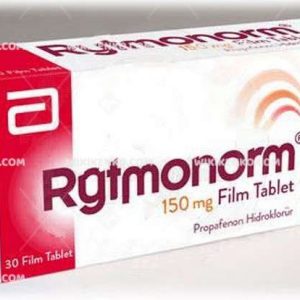
| Appearance | White to off‑white, round, biconvex, often embossed “150” on one side | White to off‑white, round, biconvex, often marked “300”; sometimes scored depending on market |
| Main excipients (core/coating) | Microcrystalline cellulose, pregelatinised starch or maize starch, sodium croscarmellose, hypromellose, macrogols, titanium dioxide, magnesium stearate | Microcrystalline cellulose, corn starch, sodium croscarmellose, hydroxypropyl methylcellulose, macrogol 400, macrogol 6000, titanium dioxide, magnesium stearate |
| Therapeutic class | Class 1C antiarrhythmic agent | Class 1C antiarrhythmic agent |
| Typical role in therapy | Initiation and titration phase, lower‑dose maintenance, use in lower‑weight or higher‑risk patients | Higher‑dose maintenance, dose consolidation in patients stabilised on larger daily doses |
| Route and frequency | Oral, usually divided doses (e.g. two to three times daily) with careful ECG monitoring | Oral, usually two to three times daily as part of a total daily dose up to about 900 mg/day, subject to labelling and clinical judgement |
Contraindications and Major Warnings
Use of Rytmonorm is contraindicated in a range of cardiac and systemic conditions where its negative inotropic and pro‑arrhythmic properties pose unacceptable risk. Contraindications typically include:
-
Significant structural heart disease with reduced left ventricular ejection fraction or manifest heart failure.
-
Cardiogenic shock, severe hypotension, or marked bradycardia.
-
Clinically significant sinus node dysfunction, second‑ or third‑degree AV block, or bundle branch block in the absence of a functioning pacemaker.
-
History of myocardial infarction with asymptomatic ventricular ectopy only, due to increased mortality seen with class 1C agents in such populations.
-
Marked electrolyte disturbances, especially uncorrected hypokalaemia or hyperkalaemia.
-
Known hypersensitivity to propafenone or any excipient.
Major warnings include the risk of new or worsened arrhythmias (pro‑arrhythmia), conduction disturbances, and QRS prolongation, particularly at higher plasma levels or in patients with underlying conduction disease. Initiation and dose changes should occur under close ECG and clinical monitoring, ideally in a specialist setting experienced in managing complex arrhythmias. The drug may worsen heart failure due to negative inotropic effects, and caution is mandatory in patients with marginal ventricular function.
Adverse Reactions and Safety Profile
The adverse reaction profile of propafenone reflects its cardiac electrophysiologic actions, beta‑blocking properties, and systemic exposure. Commonly reported adverse effects include dizziness, fatigue, headache, gastrointestinal disturbances (nausea, vomiting, constipation, metallic taste), and transient visual disturbances. Many of these are dose‑related and may improve with dose reduction or slower titration.
More serious but less frequent adverse reactions include bradycardia, sinoatrial or AV block, worsening of existing heart failure, and various pro‑arrhythmic events, including sustained ventricular tachycardia or ventricular fibrillation. QRS widening and new bundle branch block patterns may signal excessive sodium channel blockade and require reassessment of dosing. Rare but clinically relevant events include agranulocytosis or other blood dyscrasias, hepatotoxicity with elevated liver enzymes, and severe hypersensitivity reactions.
Drug–Drug Interactions and Special Populations
Propafenone is involved in numerous clinically important interactions due to its effects on hepatic enzymes and P‑glycoprotein and its susceptibility to metabolic inhibition. Concomitant administration with other antiarrhythmics (such as amiodarone, other class I agents, or class III drugs) can markedly increase the risk of conduction disturbances and pro‑arrhythmia and should be undertaken only with strong justification and close monitoring. Combination with beta‑blockers or certain calcium channel blockers (e.g. verapamil, diltiazem) may potentiate negative inotropic and chronotropic effects, increasing risk of bradycardia or heart failure.
Propafenone can raise plasma concentrations and effects of drugs such as warfarin, digoxin, and some beta‑blockers, often necessitating dose adjustment and closer clinical or laboratory monitoring. Strong inhibitors of CYP2D6 or CYP3A4 (e.g. certain antidepressants, macrolide antibiotics, azole antifungals, and protease inhibitors) may increase exposure to propafenone and heighten adverse effects. In special populations, including the elderly, patients with hepatic or severe renal impairment, and CYP2D6 poor metabolisers, lower initial doses and careful ECG‑guided titration are recommended.
Clinical and Regulatory Considerations
Rytmonorm (propafenone) is marketed in many countries under marketing authorisations held by companies such as Abbott, Teva, and Viatris, sometimes via local licensees. The availability of 150 mg and 300 mg immediate‑release film‑coated tablets allows flexible dosing across a wide range of body weights and clinical scenarios while maintaining a consistent formulation. National product information documents emphasise that therapy must be initiated and supervised by physicians experienced in managing serious arrhythmias, with regular ECG and laboratory monitoring throughout treatment.
Because Rytmonorm is a high‑risk antiarrhythmic, its use is restricted to situations where rhythm control confers substantial symptomatic or prognostic benefit and when alternative therapies such as non‑pharmacologic ablation have been considered. In all jurisdictions, it is prescription‑only and supplied with patient information leaflets that highlight potential cardiac risks, interactions, and the need for prompt medical attention in the event of syncope, palpitations, or worsening dyspnoea.










Reviews
There are no reviews yet.