
Description
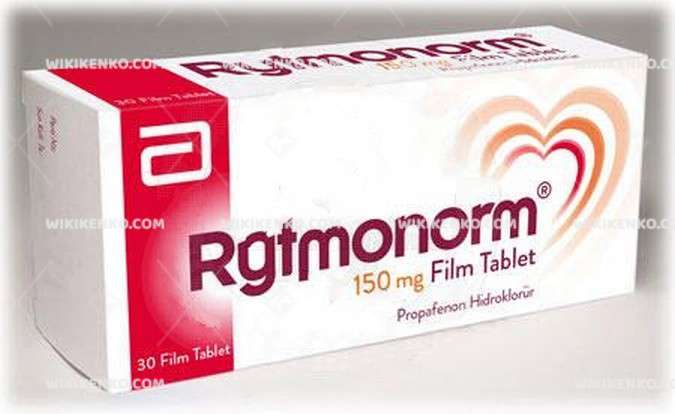
Rytmonorm Film Tablet 150 mg is an oral antiarrhythmic medicinal product containing 150 mg of propafenone hydrochloride, a class 1C sodium‑channel blocking agent, indicated for the management of selected supraventricular and ventricular tachyarrhythmias under specialist supervision.
Product Identity and Qualitative–Quantitative Composition
Rytmonorm Film Tablet 150 mg is a prescription‑only, film‑coated tablet manufactured for the Turkish market, marketed in blister packs (commonly 30 tablets per pack). Each film‑coated tablet contains 150 mg of propafenone hydrochloride as the single active substance. Excipients listed in national data sheets include standard tablet core and coating components (e.g. fillers, binders, disintegrants, coating polymers), which may vary by manufacturer and jurisdiction.
Propafenone hydrochloride is a phenyl‑propylamine derivative classified pharmacologically as a class 1C antiarrhythmic agent with additional weak beta‑adrenergic blocking and calcium‑channel blocking properties.
Mechanism of Action and Pharmacodynamic Profile
Propafenone exerts a potent, use‑dependent blockade of fast inward sodium channels in cardiac myocytes, leading to a marked reduction in phase 0 upstroke velocity of the action potential and consequent slowing of impulse conduction, particularly within His‑Purkinje tissue and working myocardium. This results in prolongation of intra‑atrial, atrioventricular and intraventricular conduction times and an increase in effective refractory periods in atrial tissue, AV node, accessory pathways and ventricular myocardium.
The drug increases diastolic excitability threshold and suppresses abnormal automaticity and triggered activity, thereby reducing the occurrence of premature beats and re‑entrant tachyarrhythmias. Its weak beta‑blocking and calcium‑antagonistic actions may contribute modestly to rate control and negative inotropic effects, which become clinically relevant in patients with pre‑existing left ventricular dysfunction or conduction system disease.
Clinical Indications and Therapeutic Use
According to product information and national data sheets, Rytmonorm (propafenone) is indicated for the treatment of clinically significant tachyarrhythmias when non‑pharmacological or less risky pharmacological measures are inadequate or unsuitable. Typical indications include:
-
Symptomatic supraventricular tachyarrhythmias requiring treatment, such as paroxysmal supraventricular tachycardia (AV junctional tachycardia) and atrial flutter/fibrillation, particularly for prevention of recurrences.
-
Documented symptomatic ventricular tachyarrhythmias, including recurrent ventricular tachycardia, where suppression is judged necessary and benefits outweigh potential proarrhythmic risks.
In some regions, propafenone formulations (e.g. Rythmol) are specifically indicated to prolong time to recurrence of paroxysmal atrial fibrillation/flutter or symptomatic supraventricular tachycardia associated with disabling symptoms. Use should be restricted to patients without severe structural heart disease and managed by physicians experienced in antiarrhythmic therapy.
Posology and Method of Administration
Rytmonorm Film Tablet 150 mg is administered orally and should be swallowed whole with liquid, without chewing, preferably after meals to minimize local anesthetic taste and gastrointestinal discomfort. Dose must be individualized based on clinical response, ECG monitoring, and tolerability.
Adults with normal hepatic and renal function
For standard immediate‑release propafenone tablets, typical starting regimens in adults are 150 mg three times daily (total 450 mg/day), with gradual titration up to 300 mg three times daily (maximum 900 mg/day) under close ECG and clinical supervision. For Rytmonorm 150 mg, national guidance commonly recommends starting at 150 mg two or three times daily, then cautiously increasing dose at intervals of several days according to arrhythmia control and conduction parameters.
Special populations and dose adjustments
Dose reduction is required in hepatic impairment because bioavailability and half‑life increase substantially, leading to higher systemic exposure. In patients with significant liver disease, dosing intervals should be extended and total daily dose reduced; regular ECG and plasma level monitoring (where available) is recommended. In renal impairment, accumulation of metabolites may occur; cautious dosing and monitoring are advised, though parent drug kinetics are primarily hepatic.
Elderly patients and those with reduced left ventricular function or conduction abnormalities should initiate therapy at the lower end of the dosing range with slow titration. Propafenone is not routinely recommended for pediatric use; where used, specialist pediatric cardiology protocols are required.
Pharmacokinetics
Absorption and bioavailability
Propafenone is almost completely absorbed after oral administration, but undergoes extensive, saturable first‑pass hepatic metabolism, resulting in low and dose‑dependent absolute bioavailability. For a 150 mg film‑coated tablet, absolute bioavailability around 3–4% has been reported, increasing to approximately 10% with a 300 mg tablet due to saturation of first‑pass metabolism. Peak plasma concentrations are typically achieved about 3–3.5 hours after single oral doses in most individuals.
Distribution and protein binding
Propafenone is highly bound to plasma proteins and displays a large apparent volume of distribution, reflecting extensive tissue uptake, particularly into cardiac tissue. Protein binding may be reduced in hepatic impairment, further increasing free drug exposure.
Metabolism and elimination
The drug is extensively metabolized in the liver, primarily via cytochrome P450 isoenzymes (notably CYP2D6), to active metabolites such as 5‑hydroxypropafenone and N‑depropylpropafenone, which possess antiarrhythmic and beta‑blocking properties. Genetic polymorphism of CYP2D6 gives rise to “extensive” and “poor” metabolizer phenotypes, leading to large inter‑individual variability in plasma concentrations and half‑life.
Elimination half‑life varies markedly, often in the range of 2–10 hours in extensive metabolizers and longer in poor metabolizers or in hepatic dysfunction. Propafenone and its metabolites are excreted via urine and bile/feces; only a minor fraction is excreted unchanged in the urine.
Pharmacokinetics in hepatic impairment
In patients with hepatic dysfunction, oral bioavailability can increase to approximately 70%, with prolongation of elimination half‑life, reduced systemic clearance, and decreased plasma protein binding. As a consequence, substantial dose reductions and extended dosing intervals are required to avoid accumulation and toxicity.
Efficacy in Supraventricular and Ventricular Arrhythmias
Controlled clinical trials of propafenone immediate‑release tablets have demonstrated efficacy in suppressing supraventricular tachyarrhythmias and prolonging the time to recurrence of paroxysmal atrial fibrillation/flutter. In patients with paroxysmal atrial fibrillation, propafenone has been shown to reduce arrhythmia burden and symptomatic recurrences compared with placebo, provided careful patient selection excludes those with significant structural heart disease.
In ventricular arrhythmias, propafenone reduces the frequency of premature ventricular complexes and episodes of non‑sustained or sustained ventricular tachycardia in selected high‑risk patients; however, all class I antiarrhythmics carry a risk of increased mortality in certain post‑myocardial infarction or structural heart disease populations, and such data have informed the restrictive indications and warnings for this class.
Safety Profile and Adverse Reactions
Adverse reactions to propafenone are common, dose‑related, and primarily involve the cardiovascular, gastrointestinal and nervous systems.
Common and important adverse reactions
-
Cardiovascular: new or worsened arrhythmias (proarrhythmia), including ventricular tachycardia, ventricular fibrillation, atrial flutter with 1:1 conduction, and exacerbation of heart failure; bradycardia, sinus pauses, sinoatrial block, AV block, bundle branch block, hypotension.
-
Central nervous system: dizziness, vertigo, headache, fatigue, abnormal vision, paresthesias, tremor, ataxia; rare seizures, confusion, or psychotic symptoms.
-
Gastrointestinal: nausea, vomiting, constipation, metallic or bitter taste, abdominal discomfort; dry mouth.
-
Hepatic: cholestasis, elevated transaminases or alkaline phosphatase; rare hepatitis.
-
Other: dyspnea, bronchospasm, skin rash, pruritus, alopecia, positive antinuclear antibodies, muscle weakness or cramps, impotence.
Overview table of key pharmacokinetic and safety parameters
| Parameter / Issue | Summary for propafenone 150 mg film‑coated tablet |
|---|---|
| Absolute oral bioavailability | Approximately 3–4% at 150 mg; ~10% at 300 mg due to saturable first‑pass effect. |
| Time to peak plasma concentration | About 3–3.5 hours after oral administration. |
| Main site of metabolism | Hepatic, primarily via CYP2D6, yielding active metabolites. |
| Effect of hepatic impairment | Bioavailability ↑ to ~70%, half‑life prolonged, clearance ↓, protein binding ↓; dose must be reduced. |
| Most frequent adverse reactions | Dizziness, taste disturbances, nausea, bradycardia, conduction disturbances, worsening heart failure. |
| Major safety concern | Proarrhythmia (new or worsened ventricular or supraventricular arrhythmias), potentially life‑threatening. |
Contraindications and Special Warnings
Rytmonorm (propafenone) is contraindicated in several clinical situations due to its electrophysiologic effects and beta‑blocking properties. Key contraindications include:
-
Known hypersensitivity to propafenone or any excipient.
-
Significant structural heart disease, including uncompensated congestive heart failure, cardiogenic shock, or severely reduced left ventricular ejection fraction.
-
Marked bradycardia, sick sinus syndrome, sinoatrial block, second‑ or third‑degree AV block, or intraventricular conduction defects in the absence of a functioning pacemaker.
-
Cardiogenic shock and severe hypotension.
-
Clinically significant bronchospastic disease or severe obstructive pulmonary disease, because of beta‑blocking activity.
-
Marked electrolyte disturbances (e.g. significant hypokalemia or hyperkalemia) that have not been corrected.
Major warnings include the risk of proarrhythmic events, especially in patients with structural heart disease, ischemic cardiomyopathy, or prior myocardial infarction, and the possibility of unmasking Brugada or Brugada‑like syndromes. Baseline and periodic ECG monitoring, assessment of QRS width, PR and QT intervals, and clinical evaluation for new or worsening arrhythmias are essential.
Drug–Drug Interactions
Propafenone is subject to numerous clinically relevant drug interactions due to:
-
Metabolism via CYP2D6 (and other CYP isoenzymes).
-
Inhibition of several CYP pathways.
-
Beta‑blocking and negative inotropic effects.
Inhibitors of CYP2D6 (e.g. certain antidepressants, some antipsychotics) can raise propafenone plasma levels, increasing the risk of conduction disturbances and proarrhythmia. Concomitant use with other antiarrhythmics, beta‑blockers, or calcium channel blockers may lead to additive negative inotropic and dromotropic effects, requiring dose adjustment and careful ECG monitoring. Propafenone can increase plasma concentrations of drugs such as warfarin and certain beta‑blockers by inhibiting their metabolism, necessitating monitoring and dose reduction.
Use in Pregnancy, Lactation, and Special Populations
Human data on propafenone use in pregnancy are limited; as a result, Rytmonorm should be used during pregnancy only when potential benefits clearly outweigh potential risks to the fetus. Propafenone and/or its metabolites may be excreted in human breast milk; therefore, breastfeeding is generally not recommended or should be discontinued, or the infant monitored if maternal therapy is essential.
In elderly patients, reduced organ reserve and comorbidities increase sensitivity to negative inotropic and conduction‑slowing effects; lower initial doses and slower titration are recommended. In hepatic or renal impairment, dosing must be carefully reduced and individualized based on clinical response and adverse effects.
Overdose and Management
Overdose with propafenone can produce severe cardiotoxicity, including pronounced QRS widening, high‑grade AV block, ventricular tachycardia or fibrillation, severe hypotension, cardiogenic shock, and cardiac arrest, as well as seizures and coma. Management is supportive and includes continuous ECG monitoring, correction of electrolyte abnormalities, administration of inotropes and vasopressors, temporary pacing, and advanced life support as required. Because of high protein binding and extensive tissue distribution, dialysis is of limited benefit.
Practical Considerations and Clinical Governance
Rytmonorm Film Tablet 150 mg should be initiated and adjusted only under the supervision of physicians experienced in the treatment of cardiac arrhythmias, with access to continuous ECG monitoring and resuscitation facilities during initiation or dose escalation. Appropriate patient selection (excluding those with contraindications or high structural heart disease burden), correction of electrolyte disturbances, and avoidance of interacting drugs are critical to optimize benefit–risk balance.
Given the complex pharmacokinetics, narrow therapeutic window, and proarrhythmic potential, propafenone therapy requires an individualized, evidence‑based approach with regular reassessment of therapeutic necessity, efficacy, and safety throughout treatment.










Reviews
There are no reviews yet.