

Description
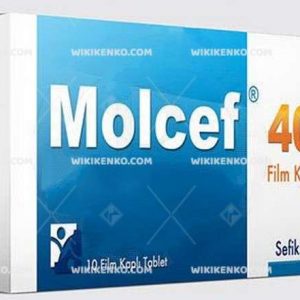
Molcef is a highly effective antibiotic medication that contains cefixime as its active ingredient and is commonly used to treat various bacterial infections. This particular formulation, Molcef Film Coated Tablet 200 Mg, contains 223.835 mg of cefixime trihydrate, which is equivalent to 200 mg of cefixime in its anhydrous form. As a third-generation cephalosporin antibiotic, Molcef demonstrates remarkable bactericidal activity against a wide spectrum of gram-positive and gram-negative organisms, making it a valuable treatment option for various infectious conditions. This article provides a detailed overview of Molcef 200 mg, including its composition, mechanism of action, therapeutic applications, dosage guidelines, and safety considerations.
Composition and Properties
Molcef Film Coated Tablet 200 mg contains cefixime as its primary active pharmaceutical ingredient. Each film-coated tablet contains 223.835 mg of cefixime trihydrate, which corresponds to 200 mg of anhydrous cefixime. The inactive ingredients in Molcef tablets include calcium hydrogen phosphate dihydrate, microcrystalline cellulose, pregelatinized starch, magnesium stearate, and a film coating consisting of Opadry II White (containing titanium dioxide (E171), polyvinyl alcohol, talk, macrogol/PEG 3350, and soya lecithin (E322)). These excipients help in maintaining the stability of the active ingredient and facilitate the proper dissolution and absorption of the medication in the body.
Cefixime belongs to the cephalosporin class of antibiotics, specifically classified as a third-generation cephalosporin. This classification is significant because third-generation cephalosporins generally exhibit enhanced activity against gram-negative bacteria compared to earlier generations while maintaining efficacy against many gram-positive pathogens. Molcef tablets are white to off-white, film-coated tablets that are designed for oral administration, with the film coating helping to mask the bitter taste of cefixime and protect the active ingredient from degradation.
Mechanism of Action
As a cephalosporin antibiotic, Molcef exerts its bactericidal effects through a mechanism that interferes with bacterial cell wall synthesis. Cefixime works by binding to specific penicillin-binding proteins (PBPs), particularly PBP 3, 1a, and 1b, which are essential enzymes involved in the synthesis of peptidoglycan, a crucial component of bacterial cell walls. By inhibiting these proteins, cefixime prevents the cross-linking of peptidoglycan strands, resulting in weakened cell walls that cannot withstand the osmotic pressure within the bacterial cell. This leads to cell lysis and bacterial death.
One of the notable features of cefixime is its high stability in the presence of beta-lactamase enzymes, which are produced by certain bacteria as a defense mechanism against beta-lactam antibiotics. This stability allows Molcef to remain effective against many bacterial strains that have developed resistance to penicillins and some other cephalosporins through beta-lactamase production. This characteristic contributes significantly to the broad spectrum of activity that Molcef demonstrates against various bacterial pathogens.
Therapeutic Indications
Upper Respiratory Tract Infections
Molcef is indicated for the treatment of several upper respiratory tract infections. It is particularly effective against acute otitis media caused by Haemophilus influenzae, Moraxella catarrhalis, and Streptococcus pyogenes. The medication is also indicated for acute sinusitis caused by Streptococcus pneumoniae, Haemophilus influenzae, and Moraxella catarrhalis. Additionally, Molcef is used in the treatment of pharyngitis and tonsillitis caused by Streptococcus pyogenes, although penicillin is typically the first-line treatment for these conditions.
Lower Respiratory Tract Infections
In the context of lower respiratory infections, Molcef is prescribed for acute exacerbations of chronic bronchitis caused by Streptococcus pneumoniae and Haemophilus influenzae. The medication demonstrates efficacy in treating these conditions due to its broad spectrum of activity against the common causative pathogens. The ability of cefixime to achieve therapeutic concentrations in respiratory tissues contributes to its effectiveness in managing these infections.
Urinary Tract Infections
Uncomplicated urinary tract infections, including cystitis and cystourethritis caused by Escherichia coli and Proteus mirabilis, respond well to treatment with Molcef. The medication achieves high urinary concentrations, which enhances its efficacy in treating these infections. For uncomplicated pyelonephritis, Molcef can also be considered as a treatment option, although more severe cases may require parenteral antibiotics initially.
Other Infections
Molcef is also indicated for the treatment of uncomplicated gonorrhea (cervical/urethral) caused by Neisseria gonorrhoeae, including both penicillinase-producing and non-penicillinase-producing strains. In this context, a single 400 mg dose (two 200 mg tablets) is usually sufficient for treatment, making it a convenient therapeutic option for this condition. However, it’s worth noting that due to increasing antibiotic resistance patterns, current guidelines may recommend alternative treatments for gonorrhea in some regions.
Dosage
For adults and children over 12 years of age, the standard dosage of Molcef 200 mg is 400 mg daily. This can be administered either as a single 400 mg dose (two 200 mg tablets) once daily or divided into two 200 mg doses taken approximately 12 hours apart. For uncomplicated gonorrheal infections, a single dose of 400 mg (two 200 mg tablets) is typically sufficient.
For children under 12 years of age, the dosage is calculated based on body weight, with the recommended dose being 8 mg/kg/day. This can be administered either as a single daily dose or divided into two equal doses given 12 hours apart. The duration of therapy generally ranges from 7 to 14 days, depending on the type and severity of the infection being treated, although shorter courses may be appropriate for certain conditions.
Special Populations
In elderly patients with normal renal function, no dosage adjustment is necessary. However, for patients with renal impairment, dosage adjustment is required. When creatinine clearance values are above 20 ml/min, no modification to the standard dosage is needed. For patients with creatinine clearance below 20 ml/min, including those on hemodialysis, the dosage should not exceed 4 mg/kg/day, administered as a single dose.
Administration Guidelines
Molcef tablets should be swallowed whole with sufficient liquid. The tablets can be taken with or without food, although taking them with food may reduce the incidence of gastrointestinal side effects. It is important to complete the full course of treatment as prescribed, even if symptoms improve before the course is finished, to prevent the development of resistant bacteria and ensure complete eradication of the infection.
Side Effects and Safety Considerations
Like all medications, Molcef may cause unwanted side effects in some patients. The most common side effects associated with Molcef include gastrointestinal disturbances such as diarrhea, loose or frequent stools, and nausea. These side effects are generally mild to moderate in severity and often resolve as the body adjusts to the medication. Other potential side effects include headache, dizziness, and skin rashes.
More serious but rare adverse reactions can include severe allergic reactions (characterized by rash, itching, swelling, severe dizziness, or difficulty breathing), Clostridium difficile-associated diarrhea, hemolytic anemia, and seizures. Patients should seek immediate medical attention if they experience any severe or persistent side effects while taking Molcef.
It is worth noting that cross-sensitivity may exist between cephalosporins, penicillins, and other beta-lactam antibiotics. Therefore, caution should be exercised when administering Molcef to patients with a history of hypersensitivity to any of these medications. A thorough allergy history should be obtained before initiating treatment with Molcef.
Drug Interactions
Molcef may interact with several other medications, potentially affecting the efficacy or safety of either drug. Concomitant administration of carbamazepine with cefixime has been associated with elevated carbamazepine levels, warranting monitoring of drug levels when these medications are used together. Similarly, the combination of cefixime with chloramphenicol should be avoided due to potential antagonism between these antibiotics.
Other significant interactions include those with nifedipine, which may increase the bioavailability of cefixime, and probenecid, which can increase the peak concentration and area under the curve of cefixime while decreasing its renal clearance. The concurrent use of salicylates (such as aspirin) with cefixime may result in a 20-25% decrease in cefixime concentrations, although this effect may not be clinically significant in most cases.
Molcef may also interfere with certain laboratory tests, potentially causing false-positive results for ketones in urine when using nitroprusside-based tests and false-positive results for glucose in urine when using Clinitest, Benedict’s solution, or Fehling’s solution. Additionally, a false-positive Coombs’ test may occur during treatment with cephalosporins, which should be considered in hematologic studies and transfusion cross-matching procedures.
Storage and Handling
Molcef tablets should be stored at room temperature, typically between 20°C to 25°C (68°F to 77°F). The medication should be kept in its original container, tightly closed, and protected from light and moisture. Molcef should be kept out of reach of children, and any unused or expired medication should be disposed of properly according to local guidelines or through a medication take-back program.
| Parameter | Details |
|---|---|
| Active Ingredient | Cefixime (as trihydrate) |
| Strength | 200 mg (as 223.835 mg of cefixime trihydrate) |
| Dosage Form | Film-coated tablet |
| Therapeutic Class | Third-generation cephalosporin antibiotic |
| Indications | – Upper respiratory tract infections (otitis media, sinusitis, pharyngitis, tonsillitis) – Lower respiratory tract infections (acute bronchitis, exacerbations of chronic bronchitis) – Uncomplicated urinary tract infections – Uncomplicated gonorrhea |
| Standard Dosage | – Adults and children >12 years: 400 mg daily (as single dose or 200 mg twice daily) – Children <12 years: 8 mg/kg/day – Uncomplicated gonorrhea: Single 400 mg dose |
| Administration | Oral, with or without food |
| Duration of Treatment | 7-14 days (varies by infection type) |
| Common Side Effects | – Diarrhea – Nausea – Loose or frequent stools – Headache – Dizziness |
| Serious Adverse Reactions | – Severe allergic reactions – Clostridium difficile-associated diarrhea – Hemolytic anemia – Seizures |
| Contraindications | – Hypersensitivity to cefixime, other cephalosporins, or any component – History of immediate/severe hypersensitivity reaction to penicillins |
| Special Precautions | – Dose adjustment in severe renal impairment (CrCl <20 ml/min) – Caution in patients with history of penicillin allergy – May cause false-positive results in certain laboratory tests |
| Drug Interactions | – Carbamazepine – Chloramphenicol – Nifedipine – Probenecid – Salicylates – Anticoagulants |
| Storage Conditions | Store at 20°C to 25°C (68°F to 77°F), protect from light and moisture |
Conclusion
Molcef Film Coated Tablet 200 mg represents an effective broad-spectrum antibiotic option for the treatment of various bacterial infections. Its active ingredient, cefixime, demonstrates significant bactericidal activity against many gram-positive and gram-negative pathogens, including those resistant to other antibiotics through beta-lactamase production.
With appropriate dosing and monitoring, Molcef can provide effective treatment for respiratory, urinary tract, and other susceptible bacterial infections while maintaining a generally favorable safety profile. As with all antibiotics, Molcef should be used judiciously to minimize the development of bacterial resistance, and patients should be educated about potential side effects and the importance of completing the full course of treatment.











Reviews
There are no reviews yet.