
Description
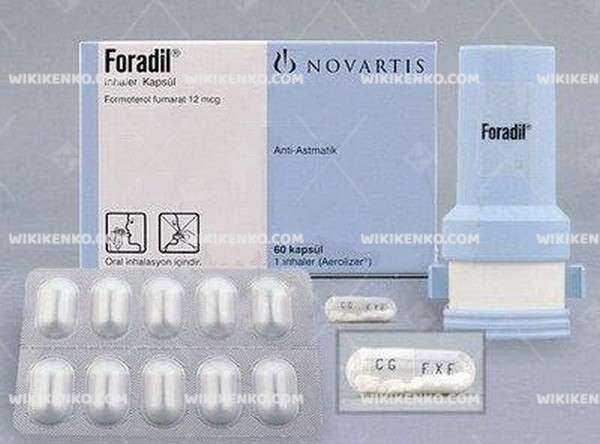
Foradil Inhaler Capsule is a prescription medication containing Formoterol Fumarate Dihydrate as its active ingredient. This comprehensive guide provides detailed information about this medication, its uses, dosage instructions, potential side effects, and other important considerations for patients and healthcare providers.
Foradil Inhaler Capsule Overview
Foradil is a long-acting bronchodilator medication that belongs to the class of drugs known as Long-Acting Beta2-Adrenergic Agonists (LABA). Each Foradil capsule contains 12 micrograms of formoterol fumarate dihydrate in a clear, hard gelatin capsule designed specifically for oral inhalation. The medication is accompanied by an Aerolizer inhaler device through which the powder is inhaled into the lungs. Importantly, Foradil capsules should never be swallowed and must always be used with the Aerolizer inhaler device only.
The active component, formoterol fumarate, is a racemate with the chemical name (±)-2-hydroxy-5-[(1RS)-1-hydroxy-2-[[(1RS)-2-(4-methoxyphenyl)-1-methylethyl]-amino]ethyl]formanilide fumarate dihydrate. It has a molecular weight of 840.9 and an empirical formula of (C19H24N2O4)2- C4H4O4- 2H2O. The formulation also contains 25 mg of lactose as a carrier, which may contain trace levels of milk proteins.
Mechanism of Action
Formoterol fumarate works as a selective beta2-adrenergic receptor agonist. When inhaled, it selectively binds to beta2-adrenergic receptors in the smooth muscle of the airways, stimulating the receptors and causing relaxation of bronchial smooth muscles. This action leads to bronchodilation, or opening of the airways, which improves breathing in patients with respiratory conditions. The medication begins working quickly and provides long-lasting relief, making it suitable for maintenance treatment rather than for immediate relief of acute symptoms.
Therapeutic Indications
Asthma Management
Foradil is indicated for the treatment of asthma in patients aged 5 years and older. However, it is crucial to note that Foradil must always be used in conjunction with a long-term asthma control medication, such as an inhaled corticosteroid. Using Foradil alone for asthma treatment is contraindicated due to increased risk of asthma-related death.
Chronic Obstructive Pulmonary Disease (COPD)
For patients with COPD, including chronic bronchitis and emphysema, Foradil is used as a maintenance treatment to relieve bronchospasm and improve airflow. The medication helps to reduce symptoms and improve lung function in these patients.
Exercise-Induced Bronchoconstriction (EIB)
Foradil can be used to prevent bronchospasm triggered by exercise in patients aged 5 years and older. For this indication, it is taken at least 15 minutes before exercise on an as-needed basis.
Administration and Dosage
The proper administration of Foradil is essential for its effectiveness. The medication must be inhaled orally using only the Aerolizer inhaler device provided. The capsules should never be swallowed.
For asthma and COPD, the usual dosage for adults and children 5 years and older is inhalation of the contents of one 12-microgram Foradil capsule every 12 hours (morning and evening). The maximum recommended daily dose is 24 micrograms (two capsules per day).
For prevention of exercise-induced bronchoconstriction, one 12-microgram capsule should be inhaled at least 15 minutes before exercise. Additional doses should not be used for 12 hours after administration.
Precautions and Warnings
Risk of Asthma-Related Death
Long-acting beta2-adrenergic agonists such as formoterol, the active ingredient in Foradil, increase the risk of asthma-related death. Because of this risk, Foradil must not be used for asthma treatment without concurrent use of a long-term asthma control medication, such as an inhaled corticosteroid.
Not for Acute Symptoms
Foradil is not indicated for the relief of acute bronchospasm or for treating status asthmaticus or other acute episodes of asthma or COPD where intensive measures are required. Patients should always have a rescue inhaler, such as a short-acting bronchodilator, available for immediate relief of acute symptoms.
Paradoxical Bronchospasm
As with other inhaled medications, Foradil can cause paradoxical bronchospasm, which means that breathing problems may worsen immediately after using the medication. If this occurs, treatment with Foradil should be discontinued immediately and alternative therapy started.
Cardiovascular Effects
Formoterol, like other beta-adrenergic agonists, can produce cardiovascular effects such as increased heart rate, blood pressure changes, and cardiac arrhythmias, particularly in susceptible individuals.
Side Effects
Foradil may cause various side effects, ranging from common mild effects to rare serious ones. Patients should be monitored closely, especially when beginning treatment.
Common Side Effects
The most common side effects of Foradil include body aches or pain, chills, cough, difficulty with breathing, ear congestion, fever, headache, hoarseness, loss of voice, runny or stuffy nose, sneezing, sore throat, and unusual tiredness or weakness. In asthma patients, headache, tremor, chest infection, chest pain, and trouble sleeping are frequently reported.
Less Common Side Effects
Less commonly reported side effects include chest pain or discomfort, cough producing mucus, dry throat, labored breathing, pain around the eyes and cheekbones, swollen glands in the neck, tightness in the chest, trauma, trouble swallowing, and voice changes.
Rare Side Effects
Rare but serious side effects that may require immediate medical attention include decreased urine output, dry mouth, fainting, fast or irregular heartbeat, increased thirst, loss of appetite, noisy breathing, and seizures. Symptoms of overdose may include arm or back pain, chest tightness, diarrhea, general feeling of discomfort, increased hunger and urination, loss of consciousness, muscle pain or spasms, nausea, palpitations, racing heartbeat, slow heartbeat, stopping of the heart, sudden loss of consciousness, trouble sleeping, and vomiting.
Drug Interactions
Foradil may interact with various medications, potentially increasing the risk of adverse effects. Caution is advised when using Foradil concurrently with:
-
Other beta-adrenergic agonists, which may potentiate the effect and increase risk of adverse reactions
-
Xanthine derivatives, steroids, or diuretics, which may enhance hypokalemia
-
Monoamine oxidase inhibitors, tricyclic antidepressants, or drugs that prolong the QTc interval, which may increase the risk of cardiovascular effects
-
Beta-blockers, which may diminish the therapeutic effect of Foradil and potentially induce severe bronchospasm
Special Populations
Pregnancy and Lactation
The safety of Foradil during pregnancy and lactation has not been fully established. The medication should be used during pregnancy only if the potential benefit justifies the potential risk to the fetus. Caution should be exercised when administering Foradil to nursing women.
Pediatric Use
Foradil is approved for use in children 5 years of age and older for prevention of exercise-induced bronchospasm and for maintenance treatment of asthma as an add-on to a long-term asthma control medication. The safety and effectiveness in children under 5 years of age have not been established.
Geriatric Use
Elderly patients may be more sensitive to the effects of Foradil due to age-related changes in pharmacokinetics and increased likelihood of concurrent health conditions. Careful monitoring is recommended in this population.
Storage and Handling
Foradil capsules should be stored at room temperature between 68°F and 77°F (20°C to 25°C) and protected from heat and moisture. The capsules should not be removed from their foil blister package until immediately before use. The Aerolizer inhaler should be discarded by the “Use by” date, and a new one should be used with each new prescription.
| Key Information | Details |
|---|---|
| Active Ingredient | Formoterol Fumarate Dihydrate 12 mcg |
| Dosage Forms | Inhalation powder capsules with Aerolizer device |
| Standard Dosage | One capsule inhaled every 12 hours |
| EIB Dosage | One capsule inhaled at least 15 minutes before exercise |
| Maximum Daily Dose | 24 mcg (2 capsules per day) |
| Primary Uses | Asthma (with ICS), COPD, Exercise-Induced Bronchoconstriction |
| Storage | Room temperature between 68°F and 77°F (20°C to 25°C); protect from heat and moisture |
| Price | Approximately £28.06 for 30 days (based on twice daily usage) |
| Contraindications | Asthma without concomitant ICS, status asthmaticus, hypersensitivity to formoterol |
| Device Type | Breath actuated dry powder inhaler |
Conclusion
Foradil Inhaler Capsule is an effective long-acting bronchodilator for the maintenance treatment of asthma (when used with an inhaled corticosteroid), COPD, and prevention of exercise-induced bronchospasm. While it provides significant benefits for patients with these respiratory conditions, it is essential to follow the prescribed dosage and administration instructions carefully and to be aware of the potential risks and side effects. Patients should always discuss any concerns or questions about Foradil with their healthcare provider to ensure safe and effective use of the medication.











Reviews
There are no reviews yet.