
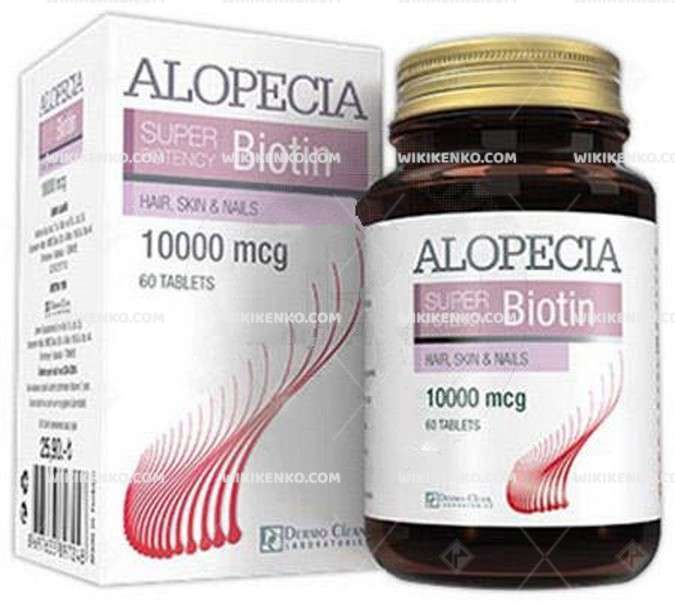
Description
Product characterization
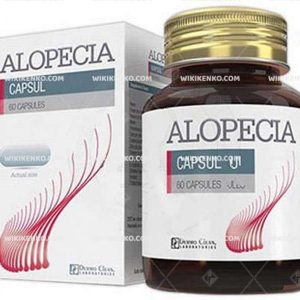
The commercial name “Alopecia Super Potency Biotin Tablet 10000 Mcg” suggests a food‑supplement‑type product marketed for hair loss and beauty indications, likely in Turkey or adjacent markets, formulated as oral tablets. The declared composition is:
-
Biotin: 10 000 micrograms (10 mg) per tablet
-
Zinc (as zinc salt): 7.5 mg per tablet
Products with biotin 10 mg are widely sold as “high‑potency” or “mega‑dose” supplements for hair, skin, and nails and are commonly positioned as once‑daily tablets. This dosage far exceeds the usual dietary reference intakes but remains well below doses used experimentally (hundreds of milligrams) in some neurological and dermatologic indications.
Because this appears to be a cosmetic or dietary supplement, it is unlikely to have undergone the level of pre‑marketing regulatory assessment (e.g. centralized EMA or strict FDA new drug evaluation) that a medicinal product would require for an alopecia indication. Regulatory classification and quality standards therefore depend on the country’s food‑supplement legislation and national competent authority.
Ingredients and pharmaceutical composition
Biotin 10 000 mcg (10 mg)
Biotin is a water‑soluble B‑complex vitamin (vitamin B7, historically vitamin H) acting as an essential cofactor for carboxylase enzymes involved in fatty acid synthesis, gluconeogenesis, and branched‑chain amino acid catabolism. In the context of hair and skin, its main role is support of keratin infrastructure and epithelial cell metabolism.
Commercial biotin 10 mg tablets usually contain excipients such as microcrystalline cellulose, dicalcium phosphate, and magnesium stearate to ensure tablet integrity and manufacturability. These excipients have no pharmacodynamic activity at normal doses.
Zinc 7.5 mg
Zinc is an essential trace element required for DNA synthesis, cell division, and immune function and plays a role in hair follicle proliferation and keratinocyte function. Zinc salts (e.g. zinc gluconate, zinc sulfate, zinc citrate) are commonly used at doses of 5–15 mg elemental zinc/day in hair and skin supplements. In studies of alopecia areata and diffuse hair loss, zinc is often part of combination regimens rather than used alone.
The 7.5 mg elemental zinc content is within typical supplemental intakes and below tolerable upper intake levels in adults, thereby minimizing risk of copper deficiency or significant gastrointestinal intolerance when used as directed.
Mechanism of action
Biotin
Biotin functions as a covalently bound coenzyme for several carboxylases, including:
-
Acetyl‑CoA carboxylase (fatty acid synthesis)
-
Pyruvate carboxylase (gluconeogenesis)
-
Propionyl‑CoA carboxylase and methylcrotonyl‑CoA carboxylase (amino acid metabolism)
In hair biology, biotin:
-
Supports synthesis and cross‑linking of structural proteins such as keratin within the hair shaft and nail plate.
-
May contribute to normal hair shaft thickness and resistance to breakage in deficient states.
In individuals with true biotin deficiency (genetic enzyme defects, chronic anticonvulsant use, severe malnutrition, prolonged parenteral nutrition without biotin), supplementation clearly improves alopecia, dermatitis, and brittle nails. However, in biotin‑replete individuals, mechanistic plausibility does not automatically translate into clinically meaningful hair growth.
Zinc
Zinc acts as a structural and catalytic cofactor for numerous enzymes and transcription factors, including those regulating cell proliferation and immune responses. In the hair follicle, zinc:
-
Participates in DNA synthesis and mitotic activity of matrix keratinocytes.
-
Modulates inflammatory processes implicated in autoimmune alopecias (e.g. alopecia areata).
Zinc deficiency is a recognized cause of diffuse alopecia, paronychia, and dermatitis, and supplementation reverses these manifestations. The benefit of additional zinc in zinc‑replete individuals with androgenetic alopecia remains uncertain and is mostly supported by small, uncontrolled studies or combination regimens.
Clinical evidence for biotin (± zinc) in alopecia
Systematic evaluation of oral biotin for hair loss has found very limited high‑quality evidence for efficacy as monotherapy in otherwise healthy adults with non‑deficiency alopecia. A recent review screened hundreds of publications and, after exclusion of case reports and low‑quality data, concluded that robust randomized controlled trials of biotin alone for hair growth are essentially absent.
Biotin has, however, shown benefit in:
-
Documented biotin deficiency syndromes, where alopecia and dermatitis are classical features.
-
Case reports of brittle nail syndrome and unclassified hair shaft disorders, often at doses of 2.5–10 mg/day.
Biotin in combination therapy for hair loss
Biotin has been more frequently studied as part of combination regimens, which limits attribution of effect:
-
In topical compounded solutions with minoxidil, finasteride, and caffeine, biotin was one of several active components associated with improved hair density in androgenetic alopecia.
-
Mesotherapy cocktails containing minoxidil, finasteride, D‑panthenol, and biotin improved hair density and thickness in small studies.
-
In pediatric alopecia areata, a regimen combining oral biotin, oral zinc, and topical clobetasol led to complete regrowth in a subset of patients, whereas systemic steroids alone did not achieve this outcome; the specific contribution of biotin and zinc cannot be isolated.
A recent trial comparing 5% topical minoxidil with oral biotin (dose lower than 10 000 mcg) for hair growth suggests that minoxidil remains clearly superior, and evidence to justify biotin monotherapy for common hair loss types is weak.
Zinc in alopecia
Several small trials and observational studies demonstrate lower serum zinc in some patients with alopecia areata and telogen effluvium and suggest that correcting low zinc may improve hair density. Nonetheless, zinc is usually part of multi‑component strategies (e.g. with corticosteroids, vitamins, amino acids), and data specific to zinc 7.5 mg/day as an isolated intervention are scarce.
Dosage, administration, and pharmacokinetics
Posology
High‑potency biotin supplements marketed for hair and nail support commonly recommend:
-
Adults: 10 000 mcg (10 mg) biotin orally once daily, with or without food.
Zinc 7.5 mg/day is consistent with a once‑daily tablet dosage and lies within the usual supplemental range. The duration of use for cosmetic indications is typically at least 3–6 months to allow observation of effects on hair growth cycles, though this is based on empirical practice rather than strong trial evidence.
Absorption and distribution
Oral biotin is rapidly absorbed from the small intestine via sodium‑dependent multivitamin transporter mechanisms. At nutritional doses absorption is efficient; at pharmacological doses (e.g. ≥10 mg/day), saturation may occur but significant systemic levels are still achieved. Biotin is distributed widely, crosses the placenta, and is excreted in breast milk.
Zinc absorption depends on the salt form and concurrent dietary phytate or fiber intake; fractional absorption generally decreases at higher intakes. Zinc is widely distributed, with high concentrations in skin, hair follicles, and immune cells.
Elimination
Biotin is primarily eliminated unchanged and as metabolites in urine; its half‑life is relatively short, but daily dosing maintains sufficient plasma concentrations. Zinc is excreted via feces, urine, and sweat, with tight homeostatic control in healthy individuals.
Safety, adverse effects, and interactions
General tolerability
Biotin, even at doses greatly exceeding 10 mg/day, is usually well tolerated, with a low intrinsic toxicity profile. High‑dose zinc at or above 40 mg/day can cause gastrointestinal disturbance, copper deficiency, and immunologic changes, but 7.5 mg/day is well below these risk thresholds in adults.
Biotin assay interference
The major safety concern with high‑dose biotin (including 10 mg/day) is interference with numerous laboratory immunoassays that use biotin–streptavidin technology. Biotin can cause falsely high or falsely low results in:
-
Thyroid function tests (TSH, free T4, free T3)
-
Cardiac markers (e.g. troponin)
-
Hormone assays (e.g. PTH, cortisol, sex steroids)
-
Tumor markers and others
This interference may lead to misdiagnosis or inappropriate treatment if clinicians are unaware of high‑dose biotin intake. Current expert recommendations are to discontinue high‑dose biotin at least 48–72 hours (or longer, depending on assay and dose) before critical laboratory testing and ensure the laboratory is informed.
Other adverse effects
Reported adverse effects of biotin at cosmetic/dermatologic doses include:
-
Mild gastrointestinal symptoms (nausea, diarrhea).
-
Rare reports of acneiform eruptions or skin reactions, though causality is uncertain.
At 7.5 mg/day, zinc‑related adverse events are unlikely; however, hypersensitivity to excipients or specific zinc salts is possible, and accidental excessive zinc intake from multiple supplements can occur.
Special populations
-
Pregnancy and lactation: Biotin requirements may increase during pregnancy, but routine megadoses are not recommended without medical supervision; safety data for 10 mg/day in pregnancy are limited. Zinc at nutritional doses is typically considered safe, but the combined product should still be evaluated case‑by‑case.
-
Pediatrics: High‑dose biotin for cosmetic indications is not routinely recommended in children; pediatric alopecia therapy should be specialist‑guided.
-
Hepatic/renal impairment: No dose adjustments are established, but caution is advised due to potential alterations in vitamin and trace element handling.
Indications and limitations of use
From an evidence‑based, pharmacological standpoint, a biotin 10 mg + zinc 7.5 mg tablet is best considered as:
-
Evidence‑supported for:
-
Biotin deficiency with alopecia and dermatitis (usually lower doses may suffice).
-
Zinc deficiency–related hair loss, when zinc deficiency is confirmed.
-
-
Plausible but weakly evidenced for:
-
Androgenetic alopecia, telogen effluvium, and diffuse hair thinning in biotin‑replete individuals when used as monotherapy.
-
-
Adjunctive in:
-
Combination regimens with established therapies (e.g. minoxidil, topical corticosteroids, finasteride, D‑panthenol), where benefit has been reported but attribution to biotin/zinc alone is not possible.
-
Routine use in all forms of alopecia without prior assessment of nutritional status is not supported by strong randomized trial data.
Example table: Biotin 10 mg + Zinc 7.5 mg – pharmacological overview
| Parameter | Biotin 10 000 mcg (10 mg) | Zinc 7.5 mg |
|---|---|---|
| Chemical class | Water‑soluble B‑complex vitamin (vitamin B7) | Essential trace element |
| Principal role | Cofactor for carboxylases in fatty acid and glucose metabolism, supports keratin structure | Cofactor for >300 enzymes, DNA synthesis, immune and epithelial function |
| Main hair‑related indication | Biotin deficiency with alopecia and dermatitis | Zinc deficiency–related alopecia |
| Typical supplemental dose | 2.5–10 mg/day in cosmetic formulations | 5–15 mg/day elemental zinc in hair supplements |
| Evidence in non‑deficient alopecia | Limited; no robust RCTs of monotherapy showing clear benefit | Limited; mostly small or combination studies |
| Key safety concern | Interference with biotin‑based immunoassays | Excessive chronic intake may cause copper deficiency (not expected at 7.5 mg/day) |
| Regulatory status (general) | Typically sold as dietary/cosmetic supplement | Typically sold as dietary/cosmetic supplement |
Practical clinical considerations
From a clinical pharmacology perspective, Alopecia Super Potency Biotin Tablet 10000 mcg with zinc 7.5 mg can be positioned as an adjunctive, nutraceutical‑type intervention in patients with hair loss, particularly when:
-
There is suspicion or documentation of marginal biotin or zinc status.
-
The patient is concurrently using evidence‑based alopecia therapies (e.g. topical minoxidil, intralesional corticosteroids) and seeks nutritional support.
Before initiation, clinicians should:
-
Evaluate possible nutritional deficiencies, endocrine disorders, drug‑induced hair loss, and autoimmune or scarring alopecias.
-
Counsel patients about realistic expectations, emphasizing that cosmetic improvement, if any, may take several months and is not guaranteed.
-
Document high‑dose biotin use in the medical record and communicate with the laboratory regarding potential assay interference.
Given the current evidence, high‑dose biotin plus zinc should not replace established alopecia treatments in conditions such as androgenetic alopecia or alopecia areata but may be considered as a low‑risk supportive option with careful monitoring and informed consent.











Salma Hussain –
good
Medical Guidance Center –
Hello Salma Hussain, this is WikiKenko. Thank you so much for your feedback!
Your comments help us improve the information we provide for other users. We really appreciate you taking the time to share your thoughts.