
Description
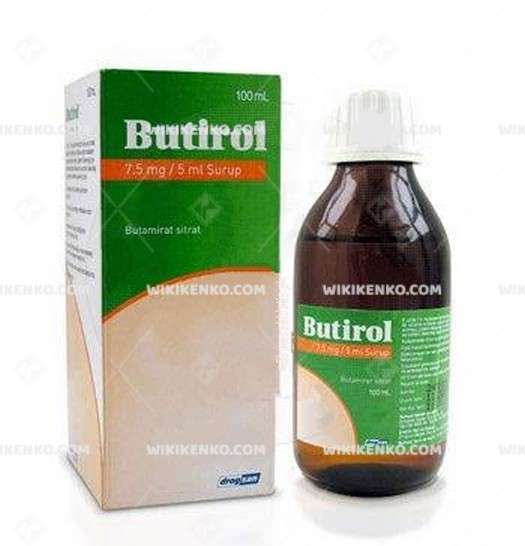
Butirol Syrup is an antitussive (cough suppressant) medication containing butamirate citrate as its active ingredient. This medication is primarily used for the symptomatic treatment of non-productive cough from various etiologies. Unlike opioid-based cough suppressants, Butirol offers effective relief without causing sedation, constipation, or dependency concerns. This comprehensive review examines the pharmacological properties, therapeutic applications, dosage recommendations, and safety profile of this widely prescribed medication.
Composition and Formulation
Active Ingredient
Butirol Syrup contains butamirate citrate as its active pharmaceutical ingredient. Each 5 ml of the syrup contains 7.5 mg of butamirate citrate (equivalent to 1.5 mg/ml). This compound belongs to the non-narcotic antitussive class and is not chemically or pharmacologically related to opioid alkaloids.
Excipients
The formulation includes several excipients that contribute to its stability, palatability, and therapeutic efficacy. These include sorbitol (non-crystallizing liquid, 70%), glycerol, sodium benzoate, raspberry flavor, sucralose, fructose, citric acid monohydrate, sodium citrate dihydrate, tutti frutti flavor, azorubin, and purified water. These components work together to provide a stable, pleasant-tasting medication suitable for oral administration.
Pharmacological Properties
Mechanism of Action
Butamirate citrate functions primarily as a centrally acting cough suppressant, though the exact mechanism of action is not fully understood. It is believed to diminish the tussigenic reflex by acting on the cough center in the brainstem. Additionally, it demonstrates peripheral activity through non-specific anticholinergic and bronchospasmolytic effects that facilitate respiratory function. This dual-action mechanism provides effective cough suppression without the disadvantages associated with narcotic antitussives.
Pharmacokinetics
Butirol is rapidly and completely absorbed following oral administration. Upon absorption, butamirate undergoes rapid hydrolysis in the plasma, primarily into two active metabolites: 2-phenylbutyric acid and diethylaminoethoxyethanol. The peak plasma concentration of the principal metabolite, 2-phenylbutyric acid, reaches approximately 6.4 μg/ml at about 1.5 hours after administration.
Both metabolites demonstrate antitussive properties and exhibit high plasma protein binding (approximately 95%), which accounts for the medication’s extended plasma half-life. The elimination half-life of 2-phenylbutyric acid is approximately 23-24 hours, while butamirate and diethylaminoethoxyethanol have shorter half-lives of 1.5-2 hours and 2.7-3 hours, respectively.
The metabolites are primarily eliminated through renal excretion, with the acid metabolites extensively conjugated with glucuronic acid in the liver prior to elimination.
Therapeutic Applications
Primary Indications
Butirol Syrup is primarily indicated for the symptomatic treatment of non-productive cough arising from various etiologies. Its effectiveness makes it particularly suitable for managing acute cough associated with respiratory infections, including those related to cold and flu.
Perioperative Use
Another important application is the suppression of cough before and after surgical procedures and bronchoscopy examinations. By effectively inhibiting the cough reflex, Butirol helps prevent complications during and after these interventions, facilitating smoother recovery and improved patient comfort.
Clinical Administration
Recommended Dosage
The dosage of Butirol Syrup varies based on the patient’s age and the severity of symptoms. The standard recommended dosages are as follows:
-
Children aged 3-6 years: 5 ml (7.5 mg) three times daily
-
Children aged 6-12 years: 10 ml (15 mg) three times daily
-
Adolescents (over 12 years): 15 ml (22.5 mg) three times daily
-
Adults: 15 ml (22.5 mg) four times daily
Administration Method
Butirol Syrup is designed exclusively for oral administration. It can be taken with or without food, using the provided measuring device to ensure accurate dosing. The measuring device should be cleaned and dried after each use to maintain hygiene and prevent contamination.
Duration of Treatment
The treatment duration should typically not exceed one week without medical supervision. If symptoms persist beyond 4-5 days or if fever, dyspnea, or chest pain develops, medical advice should be sought. This precaution helps ensure that underlying conditions requiring different therapeutic approaches are not overlooked.
Safety Profile and Precautions
Butirol Syrup is contraindicated in patients with known hypersensitivity to butamirate citrate or any of the excipients in the formulation. Due to its sorbitol content, it is also contraindicated in patients with hereditary fructose intolerance.
Use in Special Populations
Pregnancy and Lactation
While no specific restrictions exist for use during pregnancy, caution is advised, particularly during the first trimester. The safety of butamirate citrate during lactation has not been fully established, as it is unknown whether the drug is excreted in human milk. A risk-benefit assessment should guide decisions regarding continuation of breastfeeding during treatment.
Pediatric Use
Butirol Syrup is contraindicated in children under 3 years of age. For children between 3 and 6 years, use is generally not recommended unless specifically prescribed by a healthcare provider.
Geriatric Use
The safety and efficacy of Butirol in elderly patients have not been specifically studied, suggesting caution in this population.
Renal and Hepatic Impairment
Limited data exist regarding the use of butamirate citrate in patients with impaired renal or hepatic function. Due to potential drug and metabolite accumulation, these patients may be at greater risk for adverse effects.
Effect on Ability to Drive and Use Machines
Butamirate citrate may cause dizziness, which could impair the ability to drive or operate machinery. Patients should be advised to exercise caution when engaging in such activities until they understand how the medication affects them.
Side Effects and Adverse Reactions
Butirol is generally well-tolerated, but like all medications, it may cause certain adverse effects. The most commonly reported side effects include:
-
Drowsiness or sleepiness
-
Nausea and vomiting
-
Diarrhea
-
Dizziness
-
Hypotension (low blood pressure)
-
Headache
-
Skin rash (allergic reactions)
These side effects are typically mild and transient, often resolving with dose reduction or discontinuation of treatment.
Drug Interactions
Based on available evidence, Butirol Syrup does not appear to interact significantly with other medications. However, concurrent use with expectorants is not recommended as butamirate’s inhibition of the cough reflex might lead to mucus accumulation in the respiratory tract, potentially increasing the risk of bronchospasm and airway infection.
Storage and Handling
Butirol Syrup should be stored below 25°C in its original container, protected from light. It should be kept out of reach of children and used before the expiration date indicated on the packaging.
Equivalent Medications
Several equivalent medications containing butamirate citrate are available in various markets. These include BUTAMCOD, BUTAMCORD, CODACTIV, CUTMIRAT, KAF, KREVAL, NOTUSS, PULMISTAT, and SINECOD. Consultation with a healthcare professional is recommended for information about the most appropriate alternative based on individual needs.
Summary Table
| Parameter | Details |
|---|---|
| Active Ingredient | Butamirate citrate 7.5 mg/5 ml (1.5 mg/ml) |
| Therapeutic Class | Non-narcotic antitussive (cough suppressant) |
| Primary Uses | Symptomatic treatment of non-productive cough; pre-and post-surgical cough suppression |
| Dosage – Adults | 15 ml four times daily |
| Dosage – Adolescents (>12 years) | 15 ml three times daily |
| Dosage – Children (6-12 years) | 10 ml three times daily |
| Dosage – Children (3-6 years) | 5 ml three times daily |
| Administration Route | Oral |
| Common Side Effects | Drowsiness, nausea, diarrhea, dizziness, headache |
| Contraindications | Hypersensitivity to ingredients, hereditary fructose intolerance |
| Pregnancy Category | B (Use with caution, especially in first trimester) |
| Maximum Treatment Duration | 1 week without medical supervision |
| Storage Conditions | Below 25°C, in original container |
Conclusion
Butirol Syrup represents an effective therapeutic option for managing non-productive cough from various causes. Its active ingredient, butamirate citrate, provides cough suppression through central and peripheral mechanisms without the drawbacks associated with opioid-based antitussives. The medication’s favorable safety profile, ease of administration, and suitability for different age groups make it a valuable tool in symptomatic cough management.
While generally well-tolerated, appropriate patient selection, dosage adjustment for special populations, and vigilance for potential adverse effects remain essential components of responsible prescribing. As with all medications, Butirol should be used under appropriate medical supervision, particularly for extended treatment durations or in patients with underlying health conditions.











Reviews
There are no reviews yet.