

Description
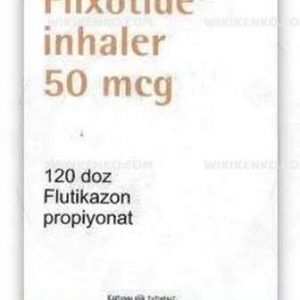
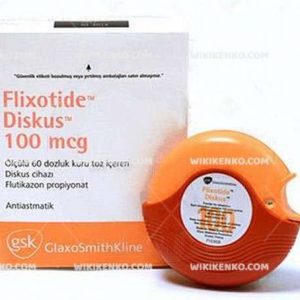
Flixotide is a proprietary brand name for fluticasone propionate, an inhaled synthetic glucocorticoid developed by GlaxoSmithKline for the long‑term control of asthma. Inhaled fluticasone propionate is established as a first‑line controller therapy in persistent asthma due to its potent local anti‑inflammatory action in the airways and relatively low systemic bioavailability. The 25 microgram strength, though less commonly marketed globally than 50–250 microgram strengths, follows the same pharmacologic and safety principles as other fluticasone‑only Flixotide inhalers.
Turkish and other regional markets often align with the reference product characteristics defined for fluticasone propionate inhalation aerosols in major regulatory regions, with dose bands adapted for paediatric and low‑dose regimens.
Pharmaceutical Composition and Formulation
Flixotide Inhaler 25 micrograms contains fluticasone propionate (INN) 25 micrograms per delivered actuation as the active ingredient. Fluticasone propionate is formulated as a micronised suspension in a pressurised metered‑dose inhaler (MDI) or Evohaler‑type device, propelled by hydrofluoroalkane (HFA) propellants in CFC‑free formulations. Typical excipients in CFC‑free fluticasone MDIs include HFA‑134a (norflurane) as propellant and small quantities of surfactants and ethanol to stabilise the suspension and ensure dose uniformity, although exact excipient profiles vary by manufacturer and market.
Fluticasone propionate is a highly lipophilic corticosteroid with very low aqueous solubility, which favours prolonged residence time within bronchial mucosa following inhalation. The particle size distribution of the aerosol is engineered so that a significant fraction of the emitted dose falls within the respirable range (approximately 1–5 micrometres), enabling deposition in both central and peripheral airways when the inhaler is used correctly.
Mechanism of Action
Fluticasone propionate is a synthetic trifluorinated glucocorticoid that exerts potent local anti‑inflammatory effects in the bronchial tree. After inhalation, fluticasone diffuses across cell membranes and binds with high affinity to cytosolic glucocorticoid receptors in airway epithelial cells, eosinophils, mast cells and other inflammatory cells. The ligand–receptor complex translocates to the nucleus, where it modulates gene transcription by binding to glucocorticoid response elements and interacting with transcription factors such as NF‑κB and AP‑1.
This genomic activity leads to up‑regulation of anti‑inflammatory proteins (e.g. lipocortin‑1/annexin‑1) and down‑regulation of pro‑inflammatory cytokines, chemokines, adhesion molecules and inflammatory enzymes. Clinically, this translates into reduced airway oedema, decreased mucosal hypersecretion, inhibition of eosinophilic inflammation, and attenuation of airway hyper‑responsiveness. Fluticasone propionate does not provide immediate bronchodilation; its onset of therapeutic effect in asthma generally becomes evident within 4–7 days of regular use, and maximal benefit may require several weeks.
Pharmacokinetics
Absorption and Distribution
Systemic exposure from inhaled fluticasone propionate is determined by both pulmonary absorption and swallowed fraction following oropharyngeal deposition. Oral bioavailability is extremely low (<1%) due to extensive first‑pass metabolism in the liver, so most systemic exposure arises from the fraction absorbed through the lungs. Following inhalation, peak plasma concentrations are typically reached within 1–2 hours, with systemic exposure increasing less than proportionally across the usual clinical dose range.
Fluticasone propionate exhibits a large apparent volume of distribution and is highly protein bound (>90%), predominantly to albumin. Its high lipophilicity and tissue affinity contribute to sustained occupancy of airway tissues and prolonged local pharmacologic action despite relatively short plasma half‑life.
Metabolism and Elimination
Fluticasone propionate undergoes rapid and extensive hepatic metabolism primarily via cytochrome P450 isoenzyme CYP3A4 to an inactive carboxylic acid metabolite. Systemic clearance is high, and terminal elimination half‑life after inhalation is generally in the range of 7–8 hours, though this may vary with dose and formulation. Excretion of metabolites occurs mainly via the biliary route into the faeces, with renal excretion playing only a minor role.
Clinical Indications
Flixotide Inhaler 25 micrograms belongs to the class of inhaled corticosteroids indicated for prophylactic treatment of asthma. Fluticasone‑only inhalers are indicated in patients with persistent asthma who require regular anti‑inflammatory controller therapy, including those previously treated with as‑needed short‑acting bronchodilators alone or with other prophylactic agents such as cromones or low‑dose ICS. They are not intended for relief of acute bronchospasm or status asthmaticus.
In clinical practice, very low strengths such as 25 micrograms per actuation are typically used in:
-
Paediatric patients or patients of low body weight who require fine‑tuned low‑dose ICS therapy.
-
Step‑down therapy following control with higher ICS doses, enabling gradual tapering while maintaining asthma control.
-
Initial treatment in patients with very mild persistent asthma or in specific regional dosing schemes.
Posology and Method of Administration
General Dosing Principles
Dosing of fluticasone propionate inhalers follows the principle of using the lowest effective dose to maintain asthma control. Usual adult and adolescent doses for fluticasone MDIs in persistent asthma range from 100 to 1,000 micrograms per day, administered in two divided doses. In children 4–11 years, common recommended total daily doses range from 88 to 200 micrograms when expressed as fluticasone equivalents, depending on severity and product.
A 25 microgram strength permits dosing regimens such as 25–50 micrograms twice daily in young children or low‑dose titration schedules, in line with region‑specific labelling and clinical judgement. Dose adjustments are guided by symptom control, frequency of rescue bronchodilator use, night‑time symptoms, and pulmonary function metrics such as FEV₁ and peak expiratory flow (PEF).
Administration Technique
Flixotide MDI or Evohaler‑type devices must be used with correct inhalation technique to ensure reliable lung deposition. Recommended steps typically include:
-
Shake the inhaler thoroughly to disperse the suspension.
-
Exhale fully to functional residual capacity, away from the mouthpiece.
-
Place the mouthpiece between the lips, ensuring a tight seal.
-
Begin slow, deep inspiration through the mouth and actuate the device at the start of inhalation.
-
Continue inhaling to total lung capacity, then remove the inhaler and hold the breath for approximately 10 seconds or as long as comfortably possible.
-
Exhale slowly and, if a second actuation is prescribed, wait 30 seconds to 1 minute and repeat.
Rinsing the mouth and gargling with water (without swallowing) after each dosing session is strongly recommended to reduce the risk of oropharyngeal candidiasis and dysphonia.
Efficacy Data and Clinical Outcomes
Randomised controlled trials of inhaled fluticasone propionate in asthma have consistently shown significant improvements in FEV₁, PEF, symptom scores, and reductions in exacerbations when compared with placebo or non‑steroidal prophylactic therapies. Fluticasone is approximately twice as potent on a microgram basis as beclometasone dipropionate or budesonide in older CFC‑containing formulations, enabling similar control at half the nominal dose. In paediatric populations, combination therapy with salmeterol/fluticasone has demonstrated clinical efficacy comparable to doubling the ICS dose, supporting the principle of adding a long‑acting bronchodilator rather than increasing ICS dose in patients insufficiently controlled on moderate doses.
The 25 microgram strength is aligned with the lower end of effective ICS dosing and is frequently integrated into stepped‑care regimens where patients escalate or de‑escalate through defined dose bands. Clinical benefits are most apparent when the product is used regularly and adherence is maintained; intermittent or “as‑needed only” use undermines its preventive potential.
Safety Profile and Adverse Reactions
Local Adverse Effects
The most common adverse reactions to inhaled fluticasone are local and dose‑related.
-
Oropharyngeal candidiasis (thrush)
-
Hoarseness and dysphonia
-
Throat irritation and cough
These events are usually mild and may be mitigated by correct inhaler technique, use of a spacer (where compatible) and mouth rinsing after use.
Systemic Corticosteroid Effects
At higher doses or in vulnerable patients, inhaled fluticasone may cause systemic corticosteroid effects, although the risk is lower than with systemic steroids. Potential systemic effects include:
-
Adrenal suppression and impaired stress response
-
Decreased bone mineral density, particularly with long‑term high‑dose therapy
-
Growth suppression in children and adolescents
-
Cushingoid features and weight gain in extreme cases or with significant drug interactions
-
Cataract and glaucoma with prolonged exposure
Growth velocity in children on chronic ICS therapy should be monitored, and the lowest effective dose should be used. Sudden withdrawal of high‑dose ICS, especially in patients previously on systemic corticosteroids, may precipitate adrenal insufficiency, so dose reductions should be gradual.
Hypersensitivity and Paradoxical Bronchospasm
Hypersensitivity reactions, including rash, angioedema and anaphylaxis, have been reported rarely. Paradoxical bronchospasm, manifested by immediate increase in wheezing and dyspnoea following dosing, may occur and requires immediate discontinuation and alternative therapy.
Drug Interactions
Fluticasone propionate is a substrate of CYP3A4; strong inhibitors of this enzyme can significantly increase systemic exposure. Concomitant use with potent CYP3A4 inhibitors such as ritonavir, cobicistat‑containing regimens, certain azole antifungals (e.g. ketoconazole) and macrolide antibiotics may enhance the risk of systemic corticosteroid effects including Cushing’s syndrome and adrenal suppression. In such cases, careful risk–benefit assessment, clinical monitoring and consideration of ICS alternatives or dose reduction are warranted.
Co‑administration with other inhaled or systemic corticosteroids may lead to additive systemic exposure, whereas use with standard inhaled bronchodilators (short‑ or long‑acting β₂‑agonists) is common and generally safe in guideline‑directed asthma therapy.
Special Populations
Paediatric Use
Inhaled fluticasone is widely used in children for maintenance therapy of persistent asthma. Low strengths such as 25 micrograms per actuation are particularly relevant in younger age groups, where precise titration to the minimum effective dose is critical to minimise systemic effects. Clinical trials and regulatory guidance emphasise monitoring of growth, weight and adrenal function in children receiving chronic ICS treatment.
Elderly Patients
No specific dose adjustment is generally required for elderly patients solely on the basis of age; however, co‑morbidities, polypharmacy (including CYP3A4 inhibitors) and increased susceptibility to osteoporosis and ocular effects warrant careful clinical monitoring.
Hepatic and Renal Impairment
Because fluticasone propionate undergoes extensive hepatic metabolism, severe hepatic impairment may increase systemic exposure and risk of adverse effects. While renal impairment has less direct impact on fluticasone elimination, overall frailty and co‑morbid conditions should be considered when determining the appropriate dose.
Pregnancy and Lactation
Inhaled corticosteroids are generally considered acceptable for use in pregnancy when clinically indicated, with fluticasone among those commonly used when asthma control cannot be maintained by non‑pharmacologic measures alone. The lowest effective dose should be employed, balancing maternal respiratory stability and foetal safety. Fluticasone is excreted in animal milk, and although systemic levels after inhalation are low, caution is advised during breastfeeding.
Comparative Dose Ranges for Fluticasone Propionate
The table below summarises representative daily dose ranges for fluticasone propionate inhalers in asthma management, illustrating where a 25 microgram strength can fit within dosing bands. Actual recommendations vary by country, product and guideline.
| Therapeutic category | Typical fluticasone daily dose (adults/adolescents) | Typical fluticasone daily dose (children) | Example use of 25 mcg strength | Sources |
|---|---|---|---|---|
| Low‑dose ICS | 100–250 micrograms per day divided twice daily. | 88–200 micrograms per day divided twice daily. | 25–50 micrograms twice daily in young or low‑weight children, or as step‑down from higher doses. | |
| Medium‑dose ICS | >250–500 micrograms per day in adults. | 200–400 micrograms per day in children. | Escalation from 25 micrograms via multiple actuations or transition to higher‑strength inhalers. | |
| High‑dose ICS | >500–1,000 micrograms per day in adults. | >400 micrograms per day in children. | 25 microgram strength generally not used as sole device at this level; higher‑strength products preferred. |
Patient Counselling and Practical Considerations
Patients should be counselled that Flixotide Inhaler 25 micrograms is a preventer medication intended for regular, long‑term use and not for immediate relief of acute asthma symptoms. They should maintain access to a rapid‑acting bronchodilator inhaler and seek urgent medical attention if they experience worsening breathlessness, increased rescue inhaler use, or poor response to usual therapy.
Correct inhaler technique should be demonstrated and periodically reassessed by healthcare professionals, since poor technique is a common cause of suboptimal control. Patients should be informed about the benefits of mouth rinsing after use, recognition of local side‑effects such as hoarseness or candidiasis, and the importance of not discontinuing therapy abruptly without medical advice, especially after long‑term use or higher doses.
Conclusion
Flixotide Inhaler 25 micrograms (fluticasone propionate) represents a low‑dose ICS formulation aligned with established fluticasone‑based asthma controller therapies. Its pharmacodynamic profile—potent local anti‑inflammatory action with limited systemic bioavailability—supports its use for prophylactic treatment of persistent asthma, particularly in paediatric and low‑dose titration contexts when integrated into guideline‑consistent stepwise management. Prudent dosing, vigilant monitoring for local and systemic adverse effects, careful consideration of CYP3A4‑mediated interactions and sustained patient education on adherence and inhaler technique are critical to maximising its therapeutic benefit and safety.












Reviews
There are no reviews yet.