
Description
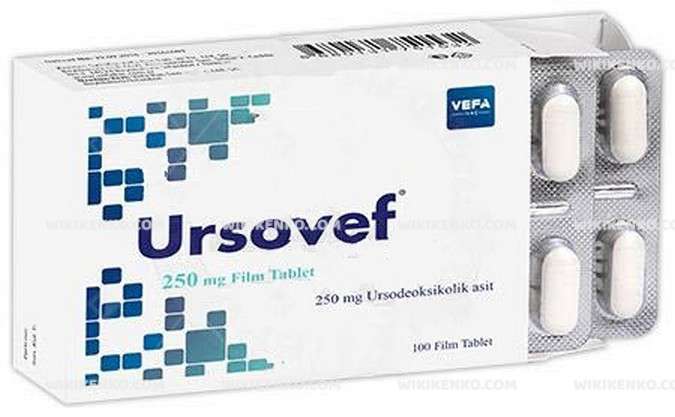
Each Ursovef Film Tablet contains 250 mg ursodeoxycholic acid as the active ingredient, specifically specified as ursodeoxycholic acid obtained from chicken bile. UDCA is a naturally occurring tertiary bile acid present in low concentrations in human bile and classified under ATC code A05AA02 (bile acids for bile therapy).
The product is formulated as a film‑coated tablet for oral administration, with excipients (not detailed in English sources) that form the core and film coat to ensure stability, appropriate dissolution, and palatability. Packaging commonly includes blisters of film‑coated tablets; Turkish product listings indicate boxes containing 100 film‑coated tablets manufactured by Vefa İlaç Sanayi ve Ticaret A.Ş.
Mechanism of Action and Pharmacodynamics
Ursodeoxycholic acid exerts multiple hepatobiliary effects that underpin the therapeutic profile of Ursovef. UDCA is more hydrophilic and less cytotoxic than endogenous hydrophobic bile acids; by partially replacing these toxic bile acids in the bile acid pool, it reduces cholestatic injury at the hepatocellular and cholangiocellular levels. It stabilises hepatocyte and cholangiocyte membranes, mitigates bile acid–induced apoptosis, and modulates immune‑mediated mechanisms implicated in cholestatic liver diseases such as primary biliary cholangitis (PBC).
UDCA promotes choleresis by stimulating bile flow and altering bile composition, increasing the proportion of UDCA in bile and reducing cholesterol saturation. In cholesterol gallstone disease, this leads to gradual dissolution of radiolucent cholesterol gallstones through decreased biliary cholesterol secretion, improved micellar solubilisation, and partial disintegration of cholesterol crystals. In cystic fibrosis–associated hepatobiliary disease, UDCA improves bile fluidity and may delay progression of liver involvement, though long‑term outcome data are heterogeneous.
Clinical Indications
The Turkish patient and prescriber information for Ursovef 250 mg indicates its use in selected hepatobiliary disorders and gallstone disease, in line with the international UDCA indication spectrum. Specifically, the Turkish leaflet lists:
-
Dissolution of radiolucent cholesterol gallstones in patients with functioning gallbladders.
-
Prevention and treatment of certain biliary disorders, including conditions associated with impaired bile flow.
-
Treatment of hepatobiliary disease associated with cystic fibrosis in children over 6 years and adults, at typical doses of 20 mg/kg/day in 2–3 divided doses, with potential titration to 30 mg/kg/day.
Although the Ursovef leaflet itself is in Turkish, its content parallels established UDCA indications in other jurisdictions, including PBC and gallstone dissolution, as described in EU SmPCs and FDA‑approved labels for ursodeoxycholic acid tablets and capsules.
Pharmacokinetics
Following oral administration, UDCA is absorbed in the small intestine by passive diffusion and active transport, with bioavailability influenced by individual variability and bile salt circulation. After absorption, it undergoes conjugation with glycine and taurine in the liver and is excreted into bile, where it becomes part of the enterohepatic circulation.
Steady‑state bile composition during therapy can reach 30–50% UDCA of the total bile acid pool, depending on dose and baseline composition. UDCA’s elimination is predominantly biliary, with a small fraction excreted in urine, mainly as conjugated metabolites; its terminal half‑life depends on enterohepatic recirculation and intestinal bacterial transformation to lithocholic acid.
Dosage and Administration
Although precise dosing instructions for Ursovef must follow the Turkish Summary of Product Characteristics (Kısa Ürün Bilgisi), dosing regimens align with internationally established UDCA dosing schemes.
Adult Dosing
-
Primary biliary cholangitis (PBC): 13–15 mg/kg/day of UDCA, often divided into 2–4 doses initially, with potential consolidation into once‑daily evening dosing after stabilisation of liver function tests.
-
Dissolution of radiolucent cholesterol gallstones: 6–12 mg/kg/day, administered as a single nightly dose or in divided doses; in obese patients, up to 15 mg/kg/day may be required.
-
Adjuvant therapy before and after extracorporeal shock‑wave lithotripsy for gallstones: similar gallstone‑dissolution doses applied.
Given each Ursovef tablet contains 250 mg UDCA, the total number of tablets is calculated based on body weight; Turkish product information notes typical adult daily doses corresponding to 2–5 tablets, i.e. 500–1250 mg/day.
Paediatric Dosing
In children and adolescents (aged 6–18 years) with cystic fibrosis–associated hepatobiliary disease, doses of 20 mg/kg/day divided into 2–3 doses are standard, with potential titration up to 30 mg/kg/day in selected cases. Dose adjustment in paediatric patients should consider body weight, disease severity, and tolerability.
Method of Administration
Ursovef Film Tablets are intended for oral use, swallowed whole with a sufficient amount of fluid, typically water. To optimise gallstone dissolution, administration in the evening may be preferred, in line with other UDCA tablets and capsules, as nocturnal bile stasis favours drug–bile interaction.
Contraindications and Precautions
Contraindications
Using data from the Ursovef leaflet and other UDCA product labels, the main contraindications include:
-
Hypersensitivity to ursodeoxycholic acid or any excipients.
-
Acute inflammatory diseases of the gallbladder and bile ducts (e.g. acute cholecystitis, cholangitis).
-
Obstructive cholestasis (complete biliary obstruction) and occlusion of bile ducts.
-
Radiopaque (calcified) gallstones, non‑functioning gallbladder, or frequent biliary colic episodes when used for gallstone dissolution.
-
Advanced decompensated hepatic cirrhosis where UDCA may worsen decompensation.
Special Warnings and Precautions
Careful monitoring of liver function tests (ALT, AST, ALP, γ‑GT, bilirubin) is recommended during therapy, particularly in PBC or other chronic cholestatic diseases. In patients with advanced PBC, rare cases of worsening liver function and decompensated cirrhosis have been reported, often reversible after discontinuation. During gallstone dissolution therapy, periodic imaging (e.g. ultrasound) should confirm gallbladder function and monitor stone response.
In PBC, pruritus may transiently worsen at the start of therapy; guidelines recommend temporary dose reduction (e.g. to one 250 mg tablet daily) followed by gradual up‑titration to the target dose. UDCA should be used cautiously in patients with concomitant conditions requiring interacting drugs (e.g. bile acid‑binding resins), as these may reduce UDCA efficacy.
Adverse Reactions
The adverse event profile of UDCA is generally favourable, with most reactions mild to moderate and reversible.
Common Adverse Reactions
-
Gastrointestinal symptoms: diarrhoea, pasty stools, abdominal pain, nausea.
-
Cutaneous symptoms: pruritus (particularly in PBC), which can occasionally intensify at initiation.
Uncommon or Rare Adverse Reactions
-
Radiographically visible gallstones due to calcification during gallstone therapy.
-
Elevation of liver enzymes in patients with pre‑existing liver disease; in rare cases, progression to hepatic decompensation in advanced PBC.
-
Allergic reactions, including rash or urticaria, have been reported infrequently.
The following table summarises key adverse reaction categories and management considerations, combining data from UDCA prescribing information and clinical overviews.
| Adverse reaction category | Typical manifestations | Frequency (qualitative) | Management considerations |
|---|---|---|---|
| Gastrointestinal | Diarrhoea, soft stools, abdominal discomfort | Common | Dose adjustment, symptomatic treatment, consider discontinuation if persistent |
| Hepatobiliary | Increased liver enzymes, rare decompensation in advanced PBC | Uncommon–rare | Regular LFT monitoring; discontinue if significant deterioration |
| Gallbladder/gallstones | Calcification of gallstones during dissolution therapy | Rare | Periodic imaging; discontinue if calcification occurs |
| Dermatologic | Pruritus, rash, urticaria | Common (pruritus in PBC); rare (rash) | Temporarily reduce dose, add antipruritic agents, discontinue in severe allergy |
Drug Interactions
UDCA interacts with several medicinal products mainly via altered intestinal absorption or bile composition.
-
Bile acid‑binding resins (e.g. cholestyramine, colestipol) and some antacids containing aluminium hydroxide reduce UDCA absorption by binding bile acids; administration should be separated by several hours to avoid reduced efficacy.
-
Concomitant use with oral contraceptives or oestrogens may increase biliary cholesterol saturation and counteract UDCA’s litholytic effect.
-
UDCA reduces the peak concentration and overall exposure of the calcium channel blocker nitrendipine, and an interaction with dapsone with diminished therapeutic effect has been reported; dose adjustment and clinical monitoring are recommended.
-
Conversely, UDCA does not significantly influence cytochrome P450 metabolism at therapeutic doses, but a full medication review is necessary given interindividual variability.
Clinical Efficacy and Evidence Base
Randomised and observational studies in PBC have demonstrated that UDCA at 13–15 mg/kg/day improves cholestatic biochemical markers (ALP, γ‑GT, bilirubin), delays histological progression, and reduces the need for liver transplantation in early‑stage disease. Regulatory authorities (e.g. FDA, EMA) have granted UDCA an established role as first‑line pharmacotherapy for PBC, reflected in prescribing information for tablets and capsules.
For cholesterol gallstones, multiple trials have shown that UDCA can dissolve small, radiolucent stones in patients with functioning gallbladders, with dissolution rates depending on stone size, composition, and treatment duration (up to 2 years). In cystic fibrosis–associated hepatobiliary disease, UDCA improves biochemical markers and may slow progression, though data on hard clinical endpoints (transplant‑free survival) remain mixed, and practice varies between countries.
Special Populations
In paediatric patients aged 6 years and older, UDCA is used for cystic fibrosis–associated hepatobiliary disease with weight‑based dosing; safety data from SmPCs support its use in this age group. In elderly patients, no specific dose adjustment is typically required beyond routine adjustment for body weight and comorbidities.
In pregnancy, UDCA has been used for intrahepatic cholestasis of pregnancy in some regions, but such uses are not universally reflected in official labels and must follow local regulatory and guideline recommendations. SmPCs note that animal studies do not show teratogenicity at therapeutic exposures, but UDCA should be used during pregnancy only if clearly needed; breastfeeding data are limited but suggest minimal excretion into milk.
Practical Considerations and Monitoring
Implementation of Ursovef therapy should include:
-
Baseline evaluation of liver biochemistry, gallbladder status (ultrasound), and confirmation of gallstone radiolucency where relevant.
-
Regular monitoring of liver function tests (e.g. every 3 months initially) to assess biochemical response and detect potential worsening.
-
Imaging follow‑up during gallstone dissolution (e.g. every 6–12 months) to assess stone size and detect calcification.
-
Assessment of symptom control (pruritus, abdominal pain) and tolerability, with dose modification if necessary.
Patient counselling should emphasise adherence to weight‑adjusted dosing, the long duration often required for gallstone dissolution, and the importance of not combining UDCA with bile acid‑binding resins without appropriate spacing.
Regulatory and Product‑Specific Information
Ursovef 250 mg Film Tablet is marketed in Turkey as a normal‑prescription medicine containing 250 mg ursodeoxycholic acid per film‑coated tablet. The product’s ATC classification (A05AA02), qualitative and quantitative composition, and key clinical characteristics are provided in the Turkish Kısa Ürün Bilgisi, accessible through national drug information portals. Internationally, comparable UDCA tablet and capsule products (e.g. URSO 250, URSO Forte, and generic UDCA 250 mg capsules) share similar indications and dosing guidelines, reflecting the harmonised evidence base for UDCA therapy in cholestatic liver disease and gallstone dissolution.











Reviews
There are no reviews yet.