
Description
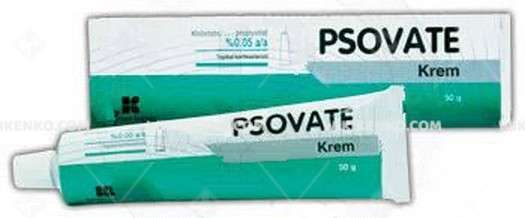
Psovate is a branded topical corticosteroid line that includes lotion, ointment, and cream formulations, all containing clobetasol 17‑propionate as the active ingredient at a concentration of 0.05%. In Turkey, Psovate Cream 0.05% is manufactured for Kurtsan Pharmaceuticals A.Ş. and is available as a prescription-only medicine (“beyaz reçete”) for dermatological use.
The product is indicated for inflammatory and hyperproliferative skin disorders such as certain forms of psoriasis, lichen planus, discoid lupus erythematosus, and other dermatoses that have not adequately responded to less potent topical corticosteroids. Like other very potent corticosteroid creams, Psovate is intended for short treatment courses under medical supervision to minimise systemic adverse effects.
Qualitative and quantitative composition
Psovate Cream contains clobetasol 17‑propionate 0.05% as the single active component, which corresponds to 0.5 mg clobetasol per gram of cream. This active substance belongs to the class of synthetic, fluorinated, very potent topical glucocorticoids and exhibits strong anti‑inflammatory and vasoconstrictor activity in the skin. The exact excipient composition of Psovate Cream is not publicly detailed in English-language sources, but comparable 0.05% clobetasol creams (e.g. Dermovate) typically contain emulsifying agents (such as glyceryl monostearate), fatty alcohols (cetyl and stearyl alcohol), humectants (propylene glycol), preservatives (e.g. chlorocresol), and purified water to form an oil‑in‑water emulsion base.
These excipients influence emolliency, penetration characteristics, and stability, and similar technological principles can reasonably be assumed for Psovate Cream given its classification as a 0.05% clobetasol cream for dermatologic use.
Mechanism of action and pharmacology
Clobetasol 17‑propionate is a synthetic fluorinated glucocorticoid with very high topical potency, acting primarily via binding to cytosolic glucocorticoid receptors in keratinocytes, endothelial cells, and immune cells within the skin. The drug–receptor complex translocates to the nucleus, where it modulates gene transcription, upregulating anti‑inflammatory proteins (such as lipocortin/annexin‑1) and downregulating pro‑inflammatory cytokines, chemokines, and adhesion molecules involved in cutaneous inflammation. This leads to inhibition of phospholipase A2 activity, reduced synthesis of prostaglandins and leukotrienes, and suppression of the accumulation and activity of inflammatory cells, resulting clinically in decreased erythema, edema, pruritus, and scaling.
From a pharmacokinetic perspective, percutaneous absorption of clobetasol is influenced by the integrity of the epidermal barrier, use of occlusion, treatment duration, and surface area treated, with higher absorption observed on inflamed or thin skin and under occlusive dressings. Systemically absorbed clobetasol undergoes hepatic metabolism and is eliminated mainly in the urine and bile as inactive metabolites, but clinically relevant systemic exposure can occur with high‑potency preparations such as 0.05% creams, leading to hypothalamic–pituitary–adrenal (HPA) axis suppression in susceptible patients and at higher cumulative doses.
Clinical indications and place in therapy
Psovate Cream is indicated in adults, and typically adolescents, for short-term treatment of dermatoses that are responsive to very potent topical corticosteroids, especially when lower‑potency agents have failed or are inadequate. Documented Turkish product information for Psovate 0.05% ointment lists its use in psoriasis (excluding widespread plaque psoriasis), stubborn dermatoses, lichen planus, discoid lupus erythematosus, and other conditions not responding satisfactorily to less active steroids; the same active ingredient and concentration support analogous indications for the cream formulation.
In guideline‑oriented practice, clobetasol 0.05% preparations are typically reserved for severe plaques of psoriasis, lichen simplex chronicus, lichen planus, hyperkeratotic eczema, and other recalcitrant localised inflammatory lesions requiring strong anti‑inflammatory action.
Clinical studies comparing clobetasol 0.05% cream with lower‑concentration novel formulations (0.025%) demonstrate that 0.05% products achieve high levels of clinical improvement but are associated with a relatively greater risk of systemic effects, as evidenced by higher proportions of patients with abnormal ACTH stimulation tests. These data support the positioning of 0.05% clobetasol creams such as Psovate as short‑course, high‑potency options to be used at the lowest effective dose and titrated down or switched to less potent agents once disease control is achieved.
Posology and method of administration
Standard practice for clobetasol 0.05% creams is to apply a thin layer to the affected area once or twice daily, gently massaging into the skin, with the total weekly amount and treatment duration limited to minimise systemic absorption. In many labelling documents, therapy is restricted to a maximum of two consecutive weeks for most indications, and use on large body surface areas, under occlusion, or on intertriginous or facial skin is either discouraged or tightly controlled due to a significantly increased risk of local and systemic adverse effects.
For Psovate specifically, Turkish information sources note that it is used as a topical medicine in psoriasis and other resistant dermatoses, and as with other very potent steroids, it is dispensed on prescription with instructions tailored by a dermatologist according to the lesion type, site, and severity.
In paediatric patients, high‑potency corticosteroids such as clobetasol 0.05% are generally avoided or, if absolutely necessary, used only for very short periods and on limited body areas because of the higher surface‑area‑to‑body‑mass ratio and increased risk of HPA axis suppression and growth effects. Once the acute flare is controlled, step‑down therapy to a medium‑ or low‑potency corticosteroid or to non‑steroidal agents is recommended, in line with standard dermatological practice for chronic inflammatory skin diseases.
Efficacy data and clinical outcomes
Randomised controlled trials in psoriasis demonstrate that clobetasol propionate 0.05% cream produces substantial clinical improvement in plaque morphology and symptoms over short treatment courses, but that lower‑strength novel formulations (0.025%) can achieve comparable efficacy with lower rates of biochemical adrenal suppression. In one study, the proportion of patients achieving investigator‑rated “success” (Physician’s Global Assessment response) was about 30.8% for the 0.05% reference cream at 3 weeks, compared with roughly 37.9% for 0.025% formulations, indicating similar clinical benefit.
However, approximately 30% of patients exposed to clobetasol 0.05% cream had abnormal ACTH stimulation tests after 28 days, underscoring the significance of systemic absorption and HPA axis effects at this potency and concentration.
Observational and clinical experience collated in drug monographs and clinical resources further supports the utility of clobetasol 0.05% preparations in rapidly reducing erythema, scaling, and pruritus in severe eczema and psoriasis when used appropriately. Patients often note improvement within the first several days of treatment, but continued monitoring and early tapering are essential to balance benefits against risks of cutaneous atrophy and systemic corticosteroid effects.
Safety profile and adverse reactions
Local adverse effects
Topical clobetasol 0.05% creams such as Psovate carry a characteristic risk profile for very potent corticosteroids, with local adverse reactions including skin atrophy, striae, telangiectasia, purpura, and easy bruising, particularly with prolonged use, occlusion, or application to thin skin. Other commonly reported local reactions include burning, stinging, itching, dryness, folliculitis, hypertrichosis, perioral dermatitis, allergic contact dermatitis, and hypopigmentation or hyperpigmentation. In psoriatic patients, misuse or abrupt discontinuation of high‑potency corticosteroids may result in rebound flares or the development of pustular psoriasis in rare cases, reinforcing the need for structured treatment plans.
Systemic adverse effects
Systemic absorption of clobetasol 0.05% can lead to HPA axis suppression, Cushingoid features, hyperglycaemia, and glucosuria, especially when used over large areas, under occlusion, on damaged skin, or in paediatric populations. The trial comparing 0.025% versus 0.05% clobetasol formulations demonstrated an approximate 30% frequency of abnormal ACTH stimulation results in the 0.05% cream group at 28 days, highlighting this risk even in controlled clinical settings. Chronic or excessive exposure may also affect growth in children and adolescents and contribute to osteoporosis, hypertension, and other systemic corticosteroid toxicities, although such outcomes are typically associated with extensive misuse.
Contraindications and precautions
Very potent topical corticosteroids like Psovate are generally contraindicated in untreated bacterial, viral, or fungal skin infections, in rosacea and acne vulgaris, and in perioral dermatitis, because immunosuppression may exacerbate these conditions. Use on the face, groin, and axillae should be avoided or kept very short-term due to heightened risk of local adverse effects, and care is required to prevent ocular exposure, which can contribute to glaucoma and cataract formation. In pregnancy and lactation, clobetasol 0.05% should be used only if the potential benefit justifies the risk, for the shortest duration and smallest body surface area possible, in line with established corticosteroid safety principles.
Drug interactions and special populations
Clinically significant pharmacokinetic drug–drug interactions are uncommon with appropriately used topical clobetasol 0.05% creams, but co‑administration with other systemic or topical corticosteroids can increase cumulative steroid exposure and the likelihood of systemic effects. In patients with liver impairment, systemic clearance of absorbed clobetasol may be reduced, theoretically increasing the risk of HPA axis suppression, although data are limited and the principal risk drivers remain dose, duration, and treated surface area. Paediatric patients, pregnant women, and individuals with thin or damaged skin represent special populations in whom Psovate should be reserved for exceptional circumstances and used under close medical supervision due to increased systemic absorption and sensitivity.
Packaging, storage, and pharmaceutical characteristics
Psovate 0.05% cream is supplied in aluminium tubes, commonly 50 g, containing 0.05% clobetasol propionate and distributed in Turkey with a specific national barcode identifier (e.g. 8699512350059 for a 50 g pack). The cream is described for analogous products as a smooth, white or nearly white oil-in-water emulsion suitable for application to inflamed, non‑exudative lesions, and should be stored at controlled room temperature, protected from excessive heat and freezing, with the cap tightly closed when not in use to maintain stability and prevent contamination. The product is classified as a prescription medicine, and its sale and dispensing are regulated accordingly within the Turkish pharmaceutical system.
Comparative overview of clobetasol 0.05% formulations
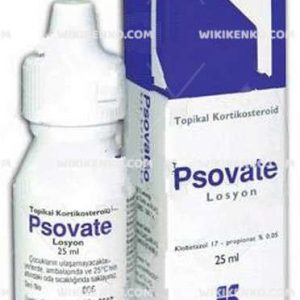
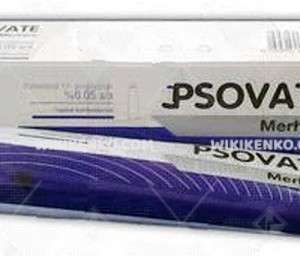
The Psovate range includes multiple topical dosage forms with the same active ingredient concentration, tailored to different clinical scenarios and skin areas. The following table summarises key pharmaceutical and clinical characteristics of Psovate preparations relative to other clobetasol 0.05% creams, based on available information.
Table 1. Selected characteristics of Psovate and related clobetasol 0.05% topical products
| Parameter | Psovate Cream 0.05% | Psovate Ointment 0.05% | Psovate Lotion 0.05% | Reference clobetasol 0.05% cream (e.g. Dermovate) |
|---|---|---|---|---|
| Active ingredient | Clobetasol 17‑propionate 0.05% | Clobetasol 17‑propionate 0.05% | Clobetasol 17‑propionate 0.05% | Clobetasol propionate 0.05% |
| Licensed holder / manufacturer | Kurtsan Pharmaceuticals A.Ş.; manufactured by Recordati, Istanbul | Kurtsan Pharmaceuticals A.Ş. | Kurtsan Pharmaceuticals A.Ş.; Recordati, Istanbul | Various; example: GSK for Dermovate in some markets |
| Pharmaceutical form | Cream, oil‑in‑water emulsion for general skin use | Ointment, greasier base for very dry, lichenified lesions | Lotion, low‑viscosity solution for scalp and hairy areas | Cream, high‑potency topical corticosteroid |
| Primary indications | Psoriasis, eczema, resistant dermatoses responsive to very potent steroids | Psoriasis (excluding widespread plaque), stubborn dermatoses, lichen planus, discoid lupus erythematosus | Psoriasis, eczema, inflammatory scalp or hairy‑area dermatoses | Moderate‑to‑severe eczema, psoriasis, lichen planus, discoid lupus, other steroid‑responsive dermatoses |
| Availability (Turkey) | Prescription‑only, marketed nationally, e.g. 50 g tube (barcode 8699512350059) | Prescription‑only, marketed nationally | Prescription‑only, marketed nationally | Country‑dependent prescription status; prescription‑only where available |
| Relative potency | Very potent (Class I) topical corticosteroid | Very potent (Class I) | Very potent (Class I) | Very potent (Class I) |
Clinical use considerations and risk minimisation
Evidence from pharmacodynamic and clinical studies, coupled with post‑marketing experience, supports Psovate Cream as an effective short‑term therapy for severe, localised inflammatory dermatoses when lower‑potency steroids are insufficient. However, the high potency of clobetasol 0.05% necessitates a cautious, protocol‑driven approach emphasising limited duration, minimal effective quantity, avoidance of routine occlusion, and preferential use on thicker, non‑facial skin areas to reduce the risk of cutaneous atrophy and systemic HPA axis suppression.
Regular clinical review, patient education on fingertip‑unit dosing and correct application, and planned step‑down strategies to weaker agents once disease control is achieved are key elements of safe and rational Psovate prescribing within dermatological practice.










Reviews
There are no reviews yet.