
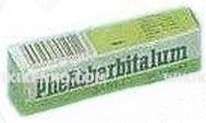
Description
Phenobarbitalum 100 mg tablet is a solid oral dosage form containing 100 mg of the barbiturate anticonvulsant phenobarbital as the active pharmaceutical ingredient, used primarily for the long‑term management of epilepsy and for its sedative–hypnotic properties in selected indications.
Definition, Nomenclature and Composition
Phenobarbital (also historically termed phenobarbitone) is a long‑acting barbiturate, chemically designated as 5‑ethyl‑5‑phenylbarbituric acid, belonging to the pharmacotherapeutic group of antiepileptics and central nervous system (CNS) depressants. The term “Phenobarbitalum tablet” conventionally refers to a tablet formulation containing phenobarbital as the sole active substance in various strengths, including 100 mg.
Each 100 mg tablet typically contains:
-
Active ingredient: phenobarbital 100 mg.
-
Excipients (formulation‑dependent, manufacturer‑specific), commonly including lactose (anhydrous and/or monohydrate), microcrystalline cellulose, corn starch or sodium starch glycolate as disintegrants, magnesium or calcium stearate as lubricants, colloidal silicon dioxide as a glidant, and other conventional tableting aids.
The product referenced as “Phenobarbitalum 100 mg tablet” in many markets conforms to pharmacopeial standards (e.g. USP/BP) for identity, assay, dissolution, and impurity limits, though exact specifications and excipient profiles may differ by manufacturer and region.
Mechanism of Action and Pharmacodynamics
Phenobarbital acts primarily by enhancing inhibitory neurotransmission mediated by gamma‑aminobutyric acid (GABA) at GABAA receptors. It increases the duration of opening of ligand‑gated chloride channels associated with GABAA receptor complexes, thereby promoting chloride influx, neuronal membrane hyperpolarization, and reduced neuronal excitability. At higher concentrations, phenobarbital can also directly activate GABAA receptors and inhibit excitatory glutamatergic neurotransmission, including effects at AMPA receptors, which further contributes to its anticonvulsant properties.
Clinically, these pharmacodynamic effects result in:
-
Anticonvulsant activity against generalized tonic–clonic and focal seizures, and, less preferably, some generalized epilepsies.
-
Dose‑dependent sedation and hypnosis, progressing to general anesthesia and respiratory depression at high doses.
-
Decreased cerebral metabolic rate and CNS activity, conferring therapeutic potential in refractory status epilepticus and alcohol or benzodiazepine withdrawal under specialist supervision.
Pharmacokinetics
Phenobarbital is well absorbed after oral administration, with bioavailability generally exceeding 90%. Peak plasma concentrations are usually reached within several hours, while clinical onset of action after oral dosing is often observed within approximately 30 minutes, with prolonged duration owing to its long elimination half‑life.
Key pharmacokinetic characteristics include:
-
Distribution: moderate plasma protein binding; substantial distribution into total body water and CNS.
-
Metabolism: extensive hepatic biotransformation, mainly via cytochrome P450 enzymes (notably CYP2C9/19), to inactive metabolites.
-
Elimination: primarily renal excretion of metabolites and unchanged drug; elimination half‑life in adults commonly ranges from about 2 to 5 days, supporting once‑daily dosing in maintenance therapy.
-
Enzyme induction: phenobarbital is a potent inducer of several hepatic CYP isoenzymes and uridine diphosphate‑glucuronosyltransferases (UGTs), leading to clinically significant pharmacokinetic interactions.
Therapeutic Indications
Phenobarbital 100 mg tablets are used as part of individualized dosing regimens for various approved and off‑label indications in neurology and psychiatry.
Major indications include:
-
Long‑term treatment of epilepsy (partial and generalized tonic–clonic seizures), especially in resource‑limited settings and in patients in whom other antiepileptics are ineffective or not tolerated.
-
Management of status epilepticus and acute seizure clusters when first‑line agents (e.g. benzodiazepines) are insufficient, usually via parenteral formulations, with oral tablets used for subsequent maintenance.
-
Sedative–hypnotic use in selected cases of severe insomnia or preoperative sedation, although modern practice generally prefers safer alternatives.
-
Adjunctive therapy for withdrawal from alcohol or benzodiazepines in specialist settings.
National regulatory approvals and approved indications may vary by jurisdiction; clinicians must adhere to local product information and guidelines.
Dosage and Administration
Phenobarbitalum 100 mg tablets are administered orally and dosed individually based on age, body weight, indication, comorbidities, and concomitant medications. For epilepsy, therapy is typically initiated at low doses with gradual upward titration to achieve optimal seizure control with minimal adverse effects.
General principles of dosing include:
-
Adults: maintenance doses often fall within a range corresponding to 60–200 mg per day, divided once or twice daily, with 100 mg tablets used as full or partial daily doses depending on the regimen.
-
Elderly or debilitated patients: reduced starting and maintenance doses are recommended due to increased sensitivity and reduced clearance.
-
Pediatric patients: dosing is weight‑based (mg/kg/day) using lower‑strength tablets or oral solutions; 100 mg strength is generally unsuitable for small children.
-
Hepatic or severe renal impairment: cautious dosing and close monitoring are mandatory because of altered clearance and elevated toxicity risk.
Tablets may be taken with or without food but should be taken consistently in relation to meals to minimize fluctuations in absorption. Abrupt discontinuation must be avoided; dose tapering is required to prevent withdrawal symptoms and seizure exacerbation.
Excipients and Pharmaceutical Characteristics
The 100 mg phenobarbital tablet is a conventional compressed tablet containing the active ingredient with excipients that ensure manufacturability, stability, and appropriate disintegration and dissolution. While excipient compositions vary among manufacturers, documented formulations for 100 mg tablets include combinations such as:
-
Lactose anhydrous and/or lactose monohydrate (diluent).
-
Microcrystalline cellulose (binder, filler).
-
Corn starch or sodium starch glycolate (disintegrants).
-
Magnesium stearate or calcium stearate (lubricants).
-
Colloidal silicon dioxide (glidant).
-
Talc or ethylcellulose in some brands (anti‑adherent or modified‑release aid).
These excipients are generally pharmacologically inactive but may have clinical relevance in patients with specific intolerances, such as lactose intolerance or hypersensitivity to certain excipient classes.
Selected Formulation Examples
The following table illustrates examples of documented excipient compositions for phenobarbital 100 mg tablets from reputable sources; actual composition of a given “Phenobarbitalum 100 mg tablet” must be verified from the specific product’s summary of product characteristics or package insert.
| Product/Source (100 mg) | Active ingredient (per tablet) | Documented excipients (non‑exhaustive) |
|---|---|---|
| Phenobarbital Tablets, USP – 100 mg (DailyMed/FDA) | Phenobarbital 100 mg | Anhydrous lactose, lactose monohydrate, corn starch, microcrystalline cellulose, colloidal silicon dioxide, docusate sodium, magnesium stearate, sodium starch glycolate |
| Phenobarbital 100 mg tablets (Arpimed) | Phenobarbital 100 mg | Microcrystalline cellulose, lactose monohydrate, ethylcellulose, sodium starch glycolate, magnesium stearate, purified talc |
| Phenobarbital tablet (100 mg strength listed in US product data) | Phenobarbital 100 mg | Colloidal silicon dioxide, lactose anhydrous, magnesium stearate, microcrystalline cellulose, sodium starch glycolate, stearic acid |
This table demonstrates that while the dose of the active substance is standardized at 100 mg, excipient profiles differ among manufacturers; clinicians and pharmacists should consult the specific product label to identify exact excipients, particularly in patients with excipient‑related allergies or intolerances.
Clinical Efficacy in Epilepsy
Phenobarbital remains one of the oldest and most widely used antiepileptic drugs worldwide, especially in low‑ and middle‑income countries, due to its low cost and broad availability. Evidence from clinical practice and comparative studies supports its efficacy in reducing seizure frequency in generalized tonic–clonic and partial seizures, with seizure control rates in some cohorts comparable to certain newer antiepileptic drugs, albeit at the expense of higher rates of sedative and cognitive adverse effects.
Guidelines often consider phenobarbital as an alternative or second‑line agent in high‑income settings, where drugs with more favorable tolerability profiles are available, but it continues to be recommended as a first‑line agent in resource‑constrained settings due to its robust anticonvulsant efficacy, ease of dosing, and long half‑life enabling once‑daily administration.
Adverse Effects
Adverse reactions to phenobarbital are dose‑dependent and more frequent at higher plasma levels; many effects relate to CNS depression. Common adverse effects include:
-
Sedation, drowsiness, fatigue, and impaired concentration.
-
Ataxia, dizziness, and nystagmus at higher doses.
-
Cognitive slowing, behavioral changes, especially in children (irritability, hyperactivity, and paradoxical excitement).
-
Depressive symptoms and emotional lability in susceptible individuals.
Long‑term therapy may be associated with:
-
Physical dependence and withdrawal phenomena upon abrupt discontinuation.
-
Osteopenia or osteoporosis and vitamin D deficiency with chronic enzyme induction.
-
Potential connective‑tissue or soft‑tissue changes and endocrine disturbances via hepatic enzyme induction.
Serious adverse effects, though less common, include:
-
Severe hypersensitivity reactions, including rash, Stevens–Johnson syndrome, or toxic epidermal necrolysis.
-
Respiratory depression, hypotension, and coma in overdose.
-
Hematologic abnormalities such as megaloblastic anemia or other blood dyscrasias.
Patients should be monitored regularly for neurocognitive function, mood changes, bone health, and laboratory parameters (e.g. blood counts, liver function tests) during long‑term therapy.
Contraindications and Precautions
Phenobarbital is contraindicated in patients with:
-
Known hypersensitivity to phenobarbital, other barbiturates, or any excipient in the tablet.
-
Severe respiratory insufficiency, significant airway obstruction, or uncontrolled sleep apnea.
-
Marked hepatic impairment or acute intermittent porphyria, due to barbiturates’ porphyrinogenic potential.
-
A history of barbiturate dependence when used for sedative purposes.
Precautions are required in:
-
Elderly patients, those with cardiorespiratory compromise, and patients with hepatic or renal impairment.
-
Individuals with depression or suicidal ideation, as barbiturates may exacerbate mood disorders.
-
Pregnancy and lactation: phenobarbital crosses the placenta and appears in breast milk; it has been associated with teratogenicity and neonatal withdrawal or respiratory depression, so risk–benefit assessment and perinatal monitoring are essential.
Drug–Drug Interactions
Phenobarbital is a strong inducer of hepatic CYP enzymes and UGTs, which significantly affects the metabolism of many co‑administered drugs. Clinically important interactions include:
-
Reduced plasma levels (and efficacy) of oral anticoagulants, oral contraceptives, corticosteroids, certain antiretrovirals, many antiepileptics (e.g. lamotrigine), and other drugs metabolized by induced pathways.
-
Additive CNS depression when combined with alcohol, benzodiazepines, opioids, antihistamines, or other sedatives.
-
Altered phenobarbital levels when co‑administered with inhibitors or inducers of CYP2C9/19.
Careful medication reconciliation, dosage adjustment, and therapeutic drug monitoring (where available) are critical for safe long‑term therapy.
Overdose and Toxicity
Acute phenobarbital overdose is a medical emergency characterized by profound CNS and respiratory depression, hypotension, hypothermia, and coma, with risk of death from respiratory failure or cardiovascular collapse. Management typically involves supportive care in an intensive setting, airway protection, circulatory support, and enhanced elimination strategies such as multiple‑dose activated charcoal; in some cases, extracorporeal elimination may be considered.
Chronic toxicity may manifest as persistent sedation, cognitive impairment, ataxia, and behavioral changes, and may necessitate dose reduction or substitution with alternative antiepileptic therapy.
Use in Special Populations
-
Pediatric patients: Phenobarbital has long been used for neonatal and childhood seizures; however, concerns about neurodevelopmental effects increasingly favor alternative agents where available, and dosing must be carefully weight‑adjusted.
-
Elderly patients: Increased sensitivity to CNS depressant effects and slower clearance necessitate lower doses and closer clinical monitoring.
-
Hepatic impairment: As phenobarbital is hepatically metabolized and hepatotoxicity is possible, patients with hepatic dysfunction require cautious use or avoidance in severe impairment.
-
Renal impairment: Accumulation of phenobarbital and metabolites may occur in severe renal dysfunction, requiring dosage adjustment and monitoring.
Patient Counselling and Risk Management
Patients receiving Phenobarbitalum 100 mg tablets should be counselled to:
-
Take the medication exactly as prescribed and avoid abrupt discontinuation.
-
Avoid alcohol and non‑prescribed sedative medicines due to additive CNS depressant effects.
-
Report signs of rash, mood changes, suicidal ideation, severe fatigue, or easy bruising.
-
Use effective non‑hormonal contraception where appropriate, as enzyme induction can reduce the efficacy of hormonal contraceptives.
From a public health perspective, phenobarbital is classified as a controlled substance in many jurisdictions due to its abuse potential, and prescribing should follow regulatory controls and good prescribing practices.
Conclusion
Phenobarbitalum 100 mg tablet is a long‑established, evidence‑based antiepileptic and sedative–hypnotic agent whose therapeutic value derives from potent GABAergic CNS depression and enzyme‑inducing properties. While highly effective in seizure control and widely used globally, it carries substantial risks of CNS and systemic adverse effects, dependence, and complex drug–drug interactions, necessitating judicious, individualized prescribing, comprehensive monitoring, and careful patient education.











Reviews
There are no reviews yet.