
Description
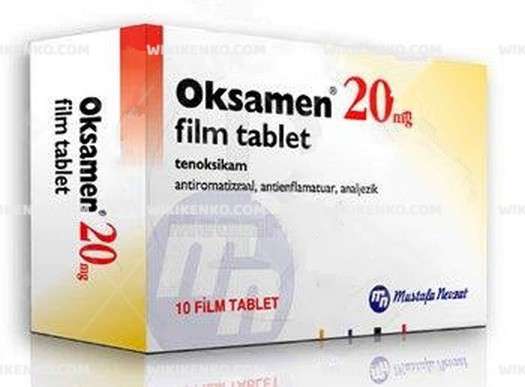
Oksamen is a film-coated tablet medication containing 20 mg of tenoxicam, a non-steroidal anti-inflammatory drug (NSAID) belonging to the oxicam class. This medication, produced by Gensenta İlaç Sanayi A.Ş. in Turkey, provides anti-inflammatory, analgesic (pain-relieving), antipyretic (fever-reducing), and antirheumatic effects. As a once-daily treatment option, Oksamen offers effective management for various inflammatory and painful conditions of the musculoskeletal system, combining therapeutic efficacy with convenient dosing.
Composition and Pharmaceutical Form
Each Oksamen film-coated tablet contains 20 mg of tenoxicam as its active pharmaceutical ingredient. The tablets appear as yellowish-orange, oval, biconvex film-coated tablets. The core tablet contains auxiliary ingredients including lactose monohydrate (derived from cow’s milk), pregelatinized starch, talc, and magnesium stearate. The film coating consists of hydroxypropylmethyl cellulose, titanium dioxide, polyethylene glycol 400, and iron oxide. Oksamen is available in blister packs containing 10 or 30 tablets, making it suitable for both short-term and maintenance therapy.
Pharmacological Properties
Mechanism of Action
Tenoxicam, Oksamen’s active component, works primarily through the reversible inhibition of cyclooxygenase enzymes (COX-1 and COX-2). This inhibition results in decreased synthesis of prostaglandins-key mediators of pain, inflammation, and fever. By reducing prostaglandin production, Oksamen effectively mitigates inflammatory responses and alleviates pain. Additionally, it inhibits various leukocyte functions, including phagocytosis and histamine release, further contributing to its anti-inflammatory efficacy. The medication also helps eliminate active oxygen radicals at inflammation sites, enhancing its therapeutic effects in inflammatory conditions.
Pharmacokinetics
Tenoxicam demonstrates favorable pharmacokinetic properties that contribute to its clinical efficacy and convenient dosing schedule. After oral administration, it is rapidly and completely absorbed from the gastrointestinal tract without being altered. The medication maintains its absorption rate even when taken with food or antacids, allowing flexibility in administration timing. Tenoxicam exhibits approximately 99% protein binding in plasma, contributing to its prolonged half-life.
The drug has a low systemic clearance and a long elimination half-life of approximately 72 hours, which permits once-daily dosing. Tenoxicam is completely metabolized via oxidation and conjugation pathways before elimination, with no unchanged drug found in bile, suggesting no enterohepatic recirculation of the parent compound. The drug easily penetrates into synovial fluid, reaching its site of action for arthritis treatment. Importantly, its pharmacokinetics remain relatively consistent regardless of age, sex, or rheumatic disease status, and it does not accumulate unexpectedly during long-term therapy.
Therapeutic Indications
Oksamen film-coated tablets are prescribed for a wide range of conditions characterized by pain, inflammation, and degenerative changes in the musculoskeletal system. The primary indications include:
-
Rheumatoid arthritis: A chronic inflammatory disorder affecting the joints, causing pain, swelling, and potential deformity
-
Osteoarthritis: A degenerative joint disease characterized by the breakdown of joint cartilage and underlying bone
-
Ankylosing spondylitis: A type of inflammatory arthritis primarily affecting the spine, leading to vertebral fusion and rigidity
-
Acute gout arthritis: An inflammatory form of arthritis characterized by sudden, severe attacks of pain, redness, and tenderness in joints
-
Extra-articular conditions: Including tendinitis, bursitis, shoulder arthritis, hip periarthritis, sprains, and strains
-
Other painful conditions: Such as epicondylitis, sciatica, lumbago, and traumatic injuries affecting the musculoskeletal system
-
Post-operative pain management: Providing relief after surgical procedures
-
Dysmenorrhea: Alleviating painful menstruation
The medication effectively addresses symptoms associated with these conditions, including pain, inflammation, stiffness, and limited mobility, thereby improving patients’ quality of life and functional capacity.
Dosage and Administration
The standard recommended dosage of Oksamen is 20 mg once daily, typically administered at the same time each day to maintain consistent blood levels. This standard dosage applies to most indications, including chronic conditions like rheumatoid arthritis, osteoarthritis, and ankylosing spondylitis.
For specific conditions, dosage adjustments may be necessary:
-
For acute gout attacks: The recommended regimen is 40 mg once daily for two days, followed by 20 mg once daily for an additional five days
-
For post-operative pain: A dose of 40 mg once daily for up to five days is recommended
-
For primary dysmenorrhea (painful menstruation): A dosage of 20 to 40 mg once daily may be prescribed
In chronic disorders, the therapeutic effect of tenoxicam becomes evident early in treatment and progressively increases over time. Daily doses exceeding 20 mg are not recommended for long-term use in chronic conditions, as higher doses may increase the frequency and intensity of adverse reactions without significantly enhancing efficacy. For patients requiring long-term treatment, a reduction to a daily maintenance dose of 10 mg may be considered.
The tablet should be taken with a glass of water, preferably during or immediately after a meal to minimize potential gastrointestinal irritation. The film coating and once-daily dosing regimen contribute to improved patient compliance, particularly for chronic conditions requiring extended treatment periods.
Special Populations
Elderly Patients
Elderly patients are at increased risk of experiencing serious adverse reactions to NSAIDs, including tenoxicam. For these patients, the lowest effective dose should be used for the shortest possible duration. Close monitoring for gastrointestinal bleeding and other complications is recommended during therapy. Despite these precautions, specific dosage adjustments are generally not required solely based on advanced age.
Renal Impairment
For patients with renal impairment, caution is advised when administering Oksamen. While the standard dosage recommendations generally apply, dosage should be minimized in patients with significant renal dysfunction. Regular monitoring of renal function is recommended when tenoxicam is used in patients with pre-existing kidney disease. The medication should be avoided in patients with severe renal impairment.
Hepatic Impairment
Similar precautions apply to patients with hepatic impairment. Although specific dose adjustments may not be necessary for mild to moderate liver dysfunction, tenoxicam should be used cautiously in such patients, with regular monitoring of liver function. The medication is contraindicated in cases of severe hepatic impairment.
Pregnancy and Lactation
Tenoxicam, like other NSAIDs, is contraindicated during the last trimester of pregnancy due to risks of premature closure of the ductus arteriosus in the fetus and potential complications during delivery. During early pregnancy, the medication should be used only if clearly needed and after careful risk-benefit assessment. Regarding lactation, limited information exists on tenoxicam excretion in human milk, so caution is advised when administering to nursing mothers.
Contraindications
Oksamen is contraindicated in patients with:
-
Hypersensitivity to tenoxicam or any of the excipients in the formulation
-
History of or active peptic ulceration, gastrointestinal bleeding (melena, hematemesis), or severe gastritis
-
Severe heart failure
-
Severe renal or hepatic impairment
-
Last trimester of pregnancy
-
History of asthma, rhinitis, urticaria, or angioedema precipitated by aspirin or other NSAIDs
Patients with these conditions should not use Oksamen, and alternative treatment options should be considered.
Warnings and Precautions
When using Oksamen, several precautions should be observed. Like all NSAIDs, tenoxicam carries risks of gastrointestinal adverse effects, including inflammation, bleeding, ulceration, and perforation, which can be life-threatening. These events can occur at any time during treatment, with or without warning symptoms, and may be more serious in elderly patients or those with a history of GI disorders.
Caution is needed in patients with hypertension or heart failure, as NSAIDs can lead to fluid retention and edema. Tenoxicam may also affect renal function, particularly in patients with pre-existing kidney disease, heart failure, liver dysfunction, or those taking diuretics.
Long-term administration of NSAIDs has been associated with renal papillary necrosis and other renal injuries. Patients with impaired renal function, heart failure, liver dysfunction, and the elderly are at greater risk for renal toxicity. Caution is also advised in patients with a history of bronchial asthma, as NSAIDs can precipitate bronchospasm in these individuals.
Skin reactions, including serious conditions like toxic epidermal necrolysis and Stevens-Johnson syndrome, have been reported with tenoxicam use, particularly during the first month of treatment. Patients should be advised to discontinue the medication at the first appearance of skin rash, mucosal lesions, or any other sign of hypersensitivity.
Drug Interactions
Tenoxicam may interact with several medications, potentially altering their effectiveness or increasing the risk of adverse effects. Concurrent use with other NSAIDs, including COX-2 inhibitors, should be avoided due to the increased risk of gastrointestinal adverse events. Caution is advised when administering tenoxicam with anticoagulants like warfarin, as NSAIDs can enhance the anticoagulant effect, increasing bleeding risk.
Patients receiving oral antidiabetic medications should be closely monitored when initiating or adjusting tenoxicam therapy, as interactions affecting blood glucose control may occur. When used with diuretics or antihypertensive agents, tenoxicam may reduce their effectiveness in controlling blood pressure. The medication may increase lithium plasma levels if administered concurrently, necessitating careful monitoring of lithium concentrations.
Oksamen Film Coated Tablet Side Effects
Like all medications, Oksamen may cause various adverse effects, although not every patient will experience them. Common side effects include:
-
Gastrointestinal disturbances: Nausea, vomiting, abdominal pain, dyspepsia, diarrhea, and constipation
-
Central nervous system effects: Dizziness, headache, drowsiness, and insomnia
-
Dermatological reactions: Ranging from mild rash to severe conditions
-
Other effects: Dry mouth, sweating, and difficulty sleeping
More serious but rare adverse reactions include:
-
Severe skin reactions: Stevens-Johnson syndrome and toxic epidermal necrolysis
-
Cardiovascular effects: Chest pain
-
Respiratory issues: Shortness of breath or breathing difficulties
-
Neurological manifestations: Weakness in one part or side of the body, slurred speech
-
Hepatotoxicity, nephrotoxicity, hypersensitivity reactions, and blood dyscrasias
Patients should seek immediate medical attention if they experience signs of serious adverse reactions, such as skin rash, unexplained bleeding or bruising, jaundice, severe abdominal pain, or hypersensitivity reactions.
Storage Considerations
Oksamen film-coated tablets should be stored in their original packaging to protect from moisture and light. The medication should be kept at room temperature, away from direct heat and sunlight. As with all medications, Oksamen should be stored out of reach of children. The product should not be used after the expiration date stated on the packaging.
| Category | Details |
|---|---|
| Active Ingredient | Tenoxicam 20 mg |
| Pharmaceutical Form | Film-coated tablet |
| Manufacturer | Gensenta İlaç Sanayi A.Ş. |
| Pharmacological Class | Non-steroidal anti-inflammatory drug (NSAID), Oxicam group |
| Mechanism of Action | Inhibition of cyclooxygenase (COX-1 and COX-2) enzymes, resulting in decreased prostaglandin synthesis |
| Therapeutic Uses | Rheumatoid arthritis, osteoarthritis, ankylosing spondylitis, acute gout, tendinitis, bursitis, musculoskeletal pain, post-operative pain, dysmenorrhea |
| Standard Dosage | 20 mg once daily for most indications; 40 mg daily for acute gout (first 2 days) and post-operative pain |
| Administration | Oral, preferably with food or after meals with a glass of water |
| Common Side Effects | Gastrointestinal disturbances (nausea, dyspepsia, abdominal pain), dizziness, headache, skin reactions |
| Serious Adverse Effects | GI bleeding/ulceration, severe skin reactions (Stevens-Johnson syndrome, toxic epidermal necrolysis), hepatotoxicity, nephrotoxicity, hypersensitivity reactions |
| Contraindications | Hypersensitivity to tenoxicam, active/history of peptic ulcer, severe heart/kidney/liver failure, 3rd trimester of pregnancy |
| Drug Interactions | Other NSAIDs, anticoagulants, corticosteroids, diuretics, antihypertensives, lithium, oral antidiabetics |
| Special Precautions | Elderly patients, history of GI disorders, hypertension, heart failure, renal/hepatic impairment, asthma |
| Half-life | Approximately 72 hours |
| Storage | Keep at room temperature in original packaging, protected from moisture and light |
Conclusion
Oksamen film-coated tablet containing 20 mg tenoxicam represents an effective therapeutic option for various inflammatory and painful conditions affecting the musculoskeletal system. Its once-daily dosing regimen, facilitated by its long half-life, offers convenience and potentially improves treatment adherence. The medication’s broad spectrum of indications makes it versatile for both acute conditions like gout attacks and post-operative pain, as well as chronic disorders such as rheumatoid arthritis and osteoarthritis.
However, like all NSAIDs, Oksamen carries risks of adverse effects, particularly gastrointestinal, cardiovascular, and dermatological reactions. Special caution is warranted in high-risk populations, including the elderly and those with pre-existing gastrointestinal, cardiovascular, renal, or hepatic conditions. Appropriate patient selection, dosing, and monitoring are essential to maximize therapeutic benefits while minimizing potential risks. Patients should be educated about potential side effects and advised to promptly report any concerning symptoms to their healthcare provider.











Reviews
There are no reviews yet.