
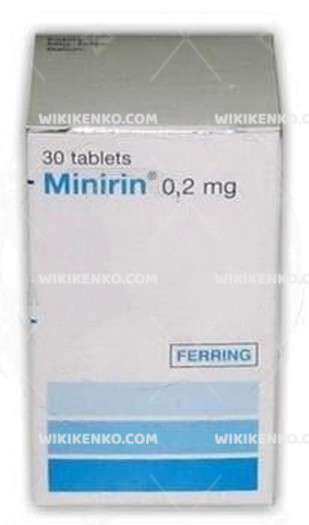
Description
Qualitative and Quantitative Composition
Each Minirin 0.2 mg tablet contains desmopressin acetate 0.2 mg, equivalent to 0.178 mg desmopressin free base. The tablet excipients include lactose monohydrate (also functioning as a sweetener/filler), potato starch, povidone, and magnesium stearate. The product is lactose‑containing and does not contain sucrose, gluten, tartrazine, or other azo dyes in commonly marketed formulations.
Pharmaceutical Form
Minirin 0.2 mg tablets are described as white, round, convex tablets, scored and typically marked “0.2” on one side, supplied in bottles or blisters, often in packs of 30 tablets depending on the market. The presence of a score line allows division into equal halves to facilitate dose titration when clinically appropriate.
Mechanism of Action
Desmopressin is a structural analogue of arginine vasopressin with a modified amino acid sequence conferring prolonged antidiuretic activity and reduced vasoconstrictor effect. It binds selectively to V2 receptors in the renal collecting ducts, increasing cyclic AMP and promoting insertion of aquaporin‑2 water channels into the luminal membrane, thereby enhancing water reabsorption and reducing urine output. As a result, desmopressin raises urine osmolality, decreases urine volume, and reduces nocturnal urine production, without clinically relevant direct effects on systemic blood pressure at usual therapeutic doses.
Pharmacokinetic Properties
Oral desmopressin exhibits relatively low absolute bioavailability (on the order of a few percent), with high inter‑individual variability. Peak plasma concentrations after oral 0.2 mg dosing are typically attained within 0.5–2 hours, and the antidiuretic effect may persist for 6–14 hours depending on dose, formulation, and patient factors. Desmopressin is largely excreted unchanged in the urine, and renal impairment can enhance exposure and prolong pharmacodynamic effects, increasing the risk of hyponatraemia.
Pharmacodynamic Properties
Minirin belongs to the ATC pharmacotherapeutic group “vasopressin and analogues” (H01B A02). In central diabetes insipidus, desmopressin normalizes or significantly reduces polyuria and polydipsia, decreasing 24‑hour urine volume and improving hydration status. In primary nocturnal enuresis and nocturia, it reduces nocturnal urine volume and the frequency of bedwetting or night‑time voids, thereby improving sleep continuity and quality of life.
Therapeutic Indications
Commonly approved indications (may vary by jurisdiction) for Minirin 0.2 mg tablets include:
-
Central diabetes insipidus (CDI), including idiopathic and secondary forms (e.g., after surgery or trauma).
-
Primary nocturnal enuresis (PNE) in children and adolescents with normal bladder function and nocturnal polyuria.
-
Nocturia associated with nocturnal polyuria in adults (in selected markets/formulations).
Use outside approved indications (e.g., haemostatic indications) requires different desmopressin formulations and dosing and should not be extrapolated directly from the Minirin 0.2 mg tablet label.
Posology and Method of Administration
General principles
Dosing must be individualized according to clinical response, urine volume, and serum sodium, with the minimum effective dose employed. Tablets are administered orally with water, usually in the evening, and fluid restriction from 1 hour before to at least 8 hours after dosing is mandatory to minimise hyponatraemia risk.
Central diabetes insipidus
For central diabetes insipidus, treatment commonly starts at a low dose (e.g., 0.1 mg orally once or twice daily) with titration by increments (for example from 0.1 mg to 0.2 mg, up to 0.4 mg per dose) until adequate urine output control is achieved. In some product monographs, typical maintenance dosing ranges from 0.1 mg twice daily to 0.4 mg three times daily, but individual needs vary considerably and frequent reassessment is essential.
Primary nocturnal enuresis
In primary nocturnal enuresis, Minirin is generally taken once daily at bedtime, starting at 0.2 mg, with the option to increase to 0.4 mg if response after 1–2 weeks is insufficient and serum sodium remains normal. Periodic treatment interruptions (e.g., after 3 months) are recommended to reassess the continuing need for therapy and limit cumulative hyponatraemia risk.
Nocturia due to nocturnal polyuria
In adults treated for nocturia (where approved), initial doses may be lower and sex‑ or age‑adjusted, with strict fluid restriction and baseline plus follow‑up sodium monitoring due to a higher hyponatraemia risk in older patients.
Key Clinical Uses and Dosing – Summary Table
| Clinical use | Typical oral starting dose* | Usual timing | Key monitoring focus |
|---|---|---|---|
| Central diabetes insipidus | 0.1 mg 1–2 times daily | Morning and/or evening | Urine volume, serum sodium |
| Primary nocturnal enuresis | 0.2 mg at bedtime | Evening (bedtime) | Enuresis frequency, sodium |
| Nocturia (nocturnal polyuria)† | Low, sex‑adjusted dose | 1–2 hours before sleep | Serum sodium, nocturia episodes |
*Exact ranges and titration schedules are country‑ and label‑specific and must be taken from the local product information.
†Where this indication is approved and sometimes with specific desmopressin formulations.
Contraindications
Minirin 0.2 mg tablets are contraindicated in the following situations (wording and completeness depend on jurisdiction):
-
Known hypersensitivity to desmopressin acetate, desmopressin, or any tablet excipient (including lactose).
-
Habits or conditions associated with polydipsia, including psychogenic polydipsia, due to increased hyponatraemia risk.
-
Moderate to severe renal impairment (commonly creatinine clearance <50 mL/min), as reduced clearance leads to accumulation and water retention.
-
Hyponatraemia or a history of hyponatraemia associated with desmopressin or other causes.
-
Syndrome of inappropriate antidiuretic hormone secretion (SIADH).
Special Warnings and Precautions for Use
Because desmopressin increases renal water reabsorption, all patients must adhere to fluid restriction around dosing to prevent dilutional hyponatraemia and water intoxication. Early symptoms of hyponatraemia include headache, nausea, vomiting, weight gain, and in severe cases confusion, seizures, and coma, which require immediate discontinuation and urgent medical management. Extra caution is warranted in children, elderly patients, those with conditions predisposing to fluid and electrolyte imbalance, and those receiving concomitant drugs that may enhance antidiuretic effect or impair sodium balance.
Drug and Excipient Profile – Table
| Component | Role in formulation | Key clinical considerations |
|---|---|---|
| Desmopressin acetate 0.2 mg | Active antidiuretic agent | Risk of water retention, hyponatraemia |
| Lactose monohydrate | Diluent/sweetener/filler | Contraindicated in patients with lactose intolerance or galactose metabolism disorders as per label. |
| Potato starch | Disintegrant | Generally well tolerated; rare starch hypersensitivity. |
| Povidone | Binder/solubiliser | Rare hypersensitivity reactions reported for povidone‑containing products. |
| Magnesium stearate | Lubricant | Typically inert at excipient doses. |
Interaction with Other Medicinal Products
Concomitant use of Minirin with drugs that increase antidiuretic hormone effect or impair free water excretion can increase the risk of severe hyponatraemia. Examples include systemic or inhaled selective serotonin reuptake inhibitors, tricyclic antidepressants, carbamazepine, non‑steroidal anti‑inflammatory drugs, chlorpropamide, and certain antipsychotics. Loop diuretics (e.g., furosemide) can profoundly alter fluid and electrolyte balance and should be co‑administered only with extreme caution or avoided as specified in some labels.
Use in Specific Populations
Paediatric population
Minirin 0.2 mg is widely used for primary nocturnal enuresis in children who have normal renal function and bladder capacity, with strict fluid restriction and careful selection to exclude daytime urinary symptoms or underlying urological disease. Safety in very young children (below label‑specified age thresholds) may be limited and is governed by local prescribing information.
Elderly
Elderly patients, particularly those over 65 years, have a heightened risk of hyponatraemia and may require lower starting doses, tighter fluid restriction, and more frequent serum sodium monitoring. In some regions, oral desmopressin for nocturia is either contraindicated or recommended only with stringent pre‑treatment and follow‑up sodium checks.
Renal and hepatic impairment
Minirin is contraindicated in significant renal impairment and must be used with caution in milder dysfunction. Hepatic impairment may indirectly affect fluid and sodium regulation; clinical judgement and monitoring are required.
Pregnancy and lactation
Desmopressin has been used in pregnant women, including for diabetes insipidus, with limited but generally reassuring data; however, risk–benefit assessment and specialist supervision are recommended. Only small amounts of desmopressin are excreted in breast milk, but caution and monitoring of the nursing infant are still advised.
Undesirable Effects
The most clinically important adverse effect is hyponatraemia with or without water intoxication, which can be life‑threatening. Other reported adverse reactions include headache, abdominal pain, nausea, mild gastrointestinal disturbances, nasal or respiratory symptoms (more relevant to intranasal formulations), and allergic skin reactions such as rash and pruritus. In enuresis and nocturia trials, the frequency of hyponatraemia increases with age, higher doses, excessive fluid intake, and concomitant interacting medicines.
Overdose
Overdose of Minirin leads primarily to prolonged antidiuretic effect, water retention, and dilutional hyponatraemia. Management includes immediate discontinuation of desmopressin, strict fluid restriction, and careful correction of serum sodium, using hypertonic saline and loop diuretics (e.g., furosemide) in severe cases according to specialist protocols. Rapid over‑correction of hyponatraemia must be avoided to prevent osmotic demyelination.
Manufacturer and Regulatory Status
Minirin 0.2 mg desmopressin tablets are originator products of Ferring Pharmaceuticals and are registered in multiple countries under various national regulatory agencies. Several markets also have locally manufactured Minirin‑branded tablets (for example, by Atco in Pakistan) and regulatory listings confirm desmopressin tablet strengths including 0.1 mg and 0.2 mg as prescription medicines. Country‑specific product information (e.g., Medsafe New Zealand, Australian CMI, Health Canada, FDA documents) should be consulted for detailed local dosing, indication, and safety language.
Clinical and Practical Considerations
From a pharmaceutical and clinical perspective, Minirin Tablet 0.2 mg is an established, evidence‑supported oral desmopressin formulation for antidiuretic therapy in carefully selected patients with CDI, nocturnal enuresis, and in some regions nocturia. Its safe use depends less on the nominal dose and more on adherence to strict fluid restriction, patient selection, baseline and periodic sodium monitoring, and vigilance for early signs of water intoxication. For any individual patient, clinicians must follow the locally approved label, adjust dosing to clinical response, and integrate comorbidities and concomitant medications into the benefit–risk assessment.


Abdul Rauf –
good
Medical Guidance Center –
Hello Abdul Rauf, this is WikiKenko. It’s great to hear that you found the information helpful!
We really appreciate you taking a moment to leave a “good” word—it’s feedback like yours that keeps us motivated to keep our medical database accurate and easy to use for everyone. Thanks for being part of our community!