
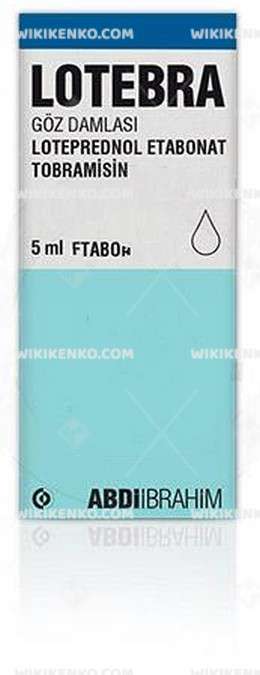
Description
Topical corticosteroid–antibiotic combinations are widely used in ophthalmology to manage inflammatory ocular surface disorders where bacterial infection coexists or is likely to occur. Lotebra Eye Drop combines loteprednol etabonate, a “soft” corticosteroid, with tobramycin, an aminoglycoside antibiotic, in a sterile aqueous ophthalmic suspension. The formulation 0.5%/0.3% mirrors established international products used for short‑term treatment of conditions such as blepharitis, conjunctivitis, keratitis, and post‑operative inflammation when bacterial pathogens are suspected. This article provides an evidence‑oriented review of the formulation, pharmacology, clinical use, and safety profile in a formal pharmaceutical framework.
Qualitative and quantitative composition
Each milliliter of Lotebra Eye Drop typically contains:
-
Loteprednol etabonate 0.5% w/v (5 mg/mL).
-
Tobramycin 0.3% w/v (3 mg/mL).
-
Excipients: sterile isotonic vehicle, usually including tonicity adjusters (e.g. sodium chloride), suspending agents (e.g. hypromellose or other cellulose derivatives), buffering system (e.g. borate or phosphate), and preservatives (often benzalkonium chloride) depending on national formulation.
The suspension is supplied as a multidose, white to off‑white, micronized ophthalmic suspension intended for topical ocular use only. The exact excipient profile, pH, and osmolality are product‑specific and should be verified from the official package leaflet for Lotebra in the relevant market.
Pharmacotherapeutic classification and ATC code
Lotebra Eye Drop is classified pharmacotherapeutically as:
-
Pharmacological group: Corticosteroids and anti‑infectives in combination.
-
Therapeutic area: Ophthalmologicals, anti‑inflammatory agents and anti‑infectives.
-
Common ATC linkage for this class: S01CA (corticosteroids and anti‑infectives in combination).
Within this group, loteprednol/tobramycin combinations are positioned as second‑line or adjunctive therapy when inflammation and infection coexist and when monotherapy with an antibiotic or non‑steroidal anti‑inflammatory agent is considered insufficient.
Mechanism of action
Loteprednol etabonate
Loteprednol etabonate is a C‑20 ester corticosteroid derived from prednisolone and designed according to the “soft drug” concept. After topical ocular administration, it exerts potent local anti‑inflammatory activity via:
-
Reversible binding to cytosolic glucocorticoid receptors in ocular tissues.
-
Down‑regulation of phospholipase A2 activity, reducing arachidonic acid release.
-
Decreased synthesis of pro‑inflammatory mediators, including prostaglandins, leukotrienes, and various cytokines.
-
Inhibition of leukocyte migration, capillary dilation, and edema in conjunctival and corneal tissues.
The ester modification at C‑20 facilitates rapid metabolism to inactive carboxylic acid derivatives after exerting local effects, which is associated with a lower propensity for intraocular pressure (IOP) elevation compared with ketone corticosteroids such as dexamethasone.
Tobramycin
Tobramycin is a hydrophilic aminoglycoside antibiotic with bactericidal activity. Its mechanism of action includes:
-
Active transport into susceptible bacteria via an oxygen‑dependent system.
-
Irreversible binding to the 30S ribosomal subunit, causing misreading of mRNA and inhibition of protein synthesis.
-
Disruption of bacterial cell membrane integrity at higher concentrations.
Tobramycin demonstrates concentration‑dependent killing and a post‑antibiotic effect against many Gram‑negative bacilli and some Gram‑positive cocci relevant in external ocular infections.
Rationale for combination
The combination in Lotebra Eye Drop provides:
-
Rapid suppression of inflammatory signs and symptoms (pain, redness, edema, photophobia) via the corticosteroid component.
-
Concurrent eradication or suppression of susceptible bacteria via tobramycin, reducing the risk that steroid‑induced immunosuppression will worsen or unmask infection.
-
Simplified dosing regimen and improved adherence compared with separate steroid and antibiotic products.
Antimicrobial spectrum and resistance considerations
Tobramycin displays activity against a range of ocular pathogens:
-
Gram‑negative: Pseudomonas aeruginosa, Escherichia coli, Klebsiella spp., Enterobacter spp., Proteus spp., Haemophilus influenzae, Moraxella spp.
-
Gram‑positive: Staphylococcus aureus (including many methicillin‑sensitive strains), coagulase‑negative staphylococci, some Streptococcus spp.
However, local susceptibility patterns vary, and increasing resistance, particularly among methicillin‑resistant staphylococci and some Gram‑negative organisms, has been reported. Prolonged or repeated use may select for resistant organisms, including fungi. Culture and sensitivity testing should be considered when clinical response is suboptimal or infection is severe or recurrent.
Pharmacokinetics
Loteprednol etabonate
-
Absorption: After topical ocular administration of 0.5% suspension, systemic absorption is minimal, with plasma concentrations typically below quantifiable limits (often <1 ng/mL) in healthy volunteers.
-
Distribution: High local distribution in conjunctiva and cornea; limited penetration into the aqueous humor relative to some older corticosteroids.
-
Metabolism: Undergoes rapid hydrolysis by ocular and systemic esterases to inactive metabolites (e.g. PJ‑91 and PJ‑90).
-
Elimination: Metabolites are excreted mainly via bile and urine; systemic exposure is low, so elimination half‑life is of limited clinical relevance.
Tobramycin
-
Absorption: Systemic exposure after topical ocular administration is very low; serum concentrations are typically far below therapeutic or toxic levels observed after parenteral dosing.
-
Distribution: Concentrates in tear film and superficial ocular tissues; penetration into the anterior chamber is limited.
-
Metabolism: Not significantly metabolized; eliminated unchanged.
-
Elimination: Systemic clearance, when absorbed, is via glomerular filtration.
The low systemic bioavailability of both components under recommended dosing schedules reduces the risk of systemic adverse effects, although caution remains warranted in special populations.
Indications and clinical uses
Lotebra Eye Drop is intended for the treatment of steroid‑responsive inflammatory conditions of the palpebral and bulbar conjunctiva, cornea, and anterior segment of the eye, where:
-
Bacterial infection exists, or
-
There is a high risk of bacterial infection.
Typical indications (subject to local labeling) include:
-
Acute bacterial conjunctivitis with significant inflammatory reaction.
-
Blepharitis and blepharoconjunctivitis with suspected bacterial contribution.
-
Keratitis and keratoconjunctivitis where bacterial infection or colonization is suspected.
-
Post‑operative inflammation following ocular surgery, where prophylaxis or treatment of superficial bacterial infection is required.
-
Other external inflammatory ocular conditions judged by the clinician as likely to benefit from combined steroid and antibiotic therapy.
Use should always be predicated on clinical judgment that steroid therapy is appropriate and that bacterial infection is present or likely.
Posology and method of administration
General adult dosing
A commonly used regimen for this combination class is:
-
1–2 drops instilled into the conjunctival sac of the affected eye(s) every 4–6 hours.
-
During the first 24–48 hours of severe inflammation, the dosage may be increased (e.g. up to every 2 hours), with subsequent tapering as clinical signs improve.
Duration of therapy is usually short‑term:
-
Typically 7–14 days, with longer courses reserved for selected cases under close ophthalmic supervision.
Pediatric population
Safety and efficacy in children may depend on age and national regulatory approval. Where approved, dosing is usually similar to adults but with:
-
Greater caution regarding IOP elevation and growth of non‑susceptible organisms.
-
Regular clinical follow‑up by an ophthalmologist.
Method of administration
-
For ocular use only.
-
Shake the bottle well before each use to ensure uniform suspension.
-
Avoid touching the dropper tip to any surface, including the eye and eyelids, to prevent contamination.
-
If multiple topical ophthalmic agents are used, separate instillation by at least 5–10 minutes, applying ointments last.
Contact lenses should generally be removed before instillation and reinserted only after sufficient time (often ≥15 minutes), if the product is not contraindicated in contact lens wearers and if the underlying condition permits lens use.
Contraindications
Lotebra Eye Drop is contraindicated in:
-
Viral diseases of the cornea and conjunctiva, including epithelial herpes simplex keratitis (dendritic keratitis), vaccinia, and varicella.
-
Mycobacterial ocular infection.
-
Fungal diseases of ocular structures.
-
Hypersensitivity to loteprednol, tobramycin, other aminoglycosides, or any excipient in the formulation.
-
Untreated purulent eye infection where a steroid could mask or worsen the condition.
-
Known or suspected steroid‑induced ocular hypertension or glaucoma without appropriate monitoring.
Warnings and precautions
Ocular hypertension and glaucoma
-
Prolonged use of topical corticosteroids may cause elevated IOP and/or glaucomatous optic nerve damage and visual field defects.
-
Although loteprednol has a lower average IOP‑elevating potential than some older steroids, “steroid responders” may still develop clinically relevant IOP rises.
-
IOP should be monitored, particularly when treatment exceeds 10 days, in patients with glaucoma, diabetes, high myopia, or a history of steroid response.
Cataract formation
Long‑term use of topical corticosteroids can promote the development of posterior subcapsular cataracts. Chronic or repeated courses should be avoided unless clearly justified and monitored by an ophthalmologist.
Delayed wound healing
Steroids may delay epithelialization and wound healing, especially after surgery or in corneal ulceration. Combined use with NSAIDs may further increase this risk.
Infection masking and secondary infection
-
Corticosteroids may suppress the host immune response and mask the clinical signs of infection.
-
Prolonged use can encourage overgrowth of non‑susceptible bacteria, fungi, or viruses.
-
Any new signs of ocular infection during therapy should prompt re‑evaluation, including possible discontinuation and microbiological work‑up.
Hypersensitivity and cross‑sensitivity
-
Tobramycin may cause hypersensitivity reactions; cross‑sensitivity to other aminoglycosides (e.g. gentamicin) can occur.
-
If allergic reactions develop (e.g. lid itching, conjunctival hyperemia, swelling, dermatitis), treatment should be discontinued.
Use in specific populations
-
Pregnancy: Data with topical loteprednol/tobramycin combinations are limited. Systemic exposure is low, but use should be restricted to situations where the expected benefit outweighs potential risk.
-
Lactation: It is unknown whether topically administered loteprednol or tobramycin is excreted in human milk; given low systemic exposure, the risk is probably low, but caution is advised.
-
Pediatric patients: Higher vigilance for IOP rise and infection masking is required.
-
Contact lens wearers: Many labels advise avoiding soft contact lenses during active therapy, particularly when preservatives like benzalkonium chloride are present.
Undesirable effects
Adverse reactions are generally mild to moderate and transient. They can be grouped as follows:
Ocular adverse effects
-
Very common/common:
-
Transient burning or stinging after instillation.
-
Ocular discomfort, irritation, or foreign body sensation.
-
Conjunctival hyperemia.
-
-
Less common:
-
Dry eye, blurred vision, photophobia.
-
Tearing (epiphora).
-
Superficial punctate keratitis.
-
Lid edema or erythema.
-
-
Rare but clinically important:
-
Elevated IOP, optic nerve damage, visual field defects.
-
Posterior subcapsular cataract (usually after prolonged use).
-
Corneal thinning, perforation in patients with corneal disease.
-
Hypersensitivity reactions, including allergic blepharoconjunctivitis.
-
Systemic adverse effects
Given minimal systemic absorption, systemic aminoglycoside toxicity (ototoxicity, nephrotoxicity) is extremely unlikely at standard ophthalmic doses. However, cumulative exposure should be considered in patients concurrently receiving systemic aminoglycosides or with significant epithelial disruption.
Safety and efficacy: summary table
The following table summarizes key benefit–risk considerations for Lotebra Eye Drop as a representative loteprednol/tobramycin 0.5%/0.3% combination.
| Domain | Loteprednol/tobramycin 0.5%/0.3% – core points |
|---|---|
| Therapeutic intent | Short‑term management of steroid‑responsive ocular inflammation with confirmed or suspected bacterial infection. |
| Anti‑inflammatory profile | Potent local effect via glucocorticoid receptors; “soft steroid” design aims to reduce IOP and systemic effects compared with traditional ketone steroids. |
| Antibacterial activity | Bactericidal against many Gram‑negative bacilli and certain Gram‑positive cocci commonly implicated in external ocular infections. |
| Onset of action | Symptomatic relief of pain, redness, and irritation often within the first days of treatment, with microbiological control dependent on pathogen susceptibility. |
| Major ocular risks | IOP elevation, cataract (with prolonged use), delayed wound healing, masking of infection, corneal thinning in predisposed patients. |
| Resistance concerns | Potential selection of resistant bacteria and overgrowth of fungi/viruses with prolonged or repeated courses; underscores need for short‑term, targeted use. |
| Systemic safety | Very low systemic exposure; clinically significant systemic corticosteroid or aminoglycoside effects are unlikely at recommended doses. |
Drug interactions
Systemic interactions are unlikely due to low systemic exposure, but the following should be considered:
-
Concomitant topical NSAIDs: May enhance corneal healing impairment.
-
Concurrent ocular hypotensive therapy: IOP‑lowering agents may mask steroid‑induced IOP rises; regular monitoring remains necessary.
-
Systemic or topical aminoglycosides: Theoretical additive risk of hypersensitivity; clinically relevant cumulative nephrotoxicity or ototoxicity is improbable at ophthalmic topical doses but warrants caution in heavily compromised patients.
No specific cytochrome P450‑mediated interactions are expected for loteprednol due to its esterase‑based metabolism.
Overdose
Topical ocular overdose is unlikely to produce acute toxicity. Accidental instillation of an excessive number of drops may result in increased local irritation, which can be managed by:
-
Rinsing the eye with sterile saline or clean water.
-
Symptomatic treatment as needed.
Accidental oral ingestion of the entire contents of an ophthalmic bottle is unlikely to result in clinically significant systemic toxicity in adults, but medical assessment is advisable, particularly in children.
Pharmaceutical particulars
Storage
-
Store at controlled room temperature (exact range is product‑specific; often 15–25 °C).
-
Protect from light and freezing.
-
Keep the bottle tightly closed when not in use.
Shelf life
-
Shelf life for unopened bottles is defined in the national product information.
-
After first opening, most multidose ophthalmic products must be discarded within a specified period (commonly 28–30 days), to minimize microbial contamination risk.
Clinical considerations and place in therapy
Lotebra Eye Drop, as a 0.5% loteprednol/0.3% tobramycin suspension, occupies a niche for short‑term treatment when both inflammation and bacterial involvement are present or strongly suspected. Compared with non‑steroidal anti‑inflammatory eye drops plus antibiotic, it offers stronger anti‑inflammatory efficacy but with corticosteroid‑related risks. Compared with older steroid/antibiotic combinations based on dexamethasone, loteprednol‑based combinations are often preferred in patients at risk for steroid‑induced IOP elevation, though patient‑specific response still varies.
Consequently, Lotebra Eye Drop should be:
-
Reserved for indications where a topical steroid is clearly required.
-
Used for the shortest duration necessary to control signs and symptoms.
-
Prescribed with appropriate monitoring of IOP and ocular structures, especially in long‑term or repeated courses.
-
Discontinued or revised if there is inadequate clinical response or evidence of superinfection.
Conclusion
Lotebra Eye Drop (loteprednol etabonate 0.5% and tobramycin 0.3%) is a rational ophthalmic combination designed to provide potent local anti‑inflammatory action with simultaneous coverage of common bacterial pathogens in external ocular infections. Its soft‑steroid design seeks to mitigate, but does not eliminate, classical corticosteroid risks such as IOP elevation and cataract. Optimal use requires careful patient selection, short treatment duration, and appropriate ophthalmologic monitoring. For product‑specific details (national indications, dosing, excipients, and regulatory status), the official package leaflet and local regulatory documents for Lotebra should be consulted.











Alina Daniloaia –
Hello, I would also like a bottle of this solution for my husband, he had eye surgery and he needs it urgently.
Medical Guidance Center –
Hi Alina, this is WikiKenko. I’m so sorry to hear about your husband’s situation—eye surgery is no small thing, and I can definitely understand why you’re looking for this so urgently.
While I wish we could help directly, please be aware that WikiKenko does not sell any medications. We’re strictly an information resource. Since you mentioned this is urgent, your best bet is to visit our “Community Support Network” form at https://wikikenko.com/community-support-network/. The community there might be able to help you track down official, verified sellers in your area quickly.