
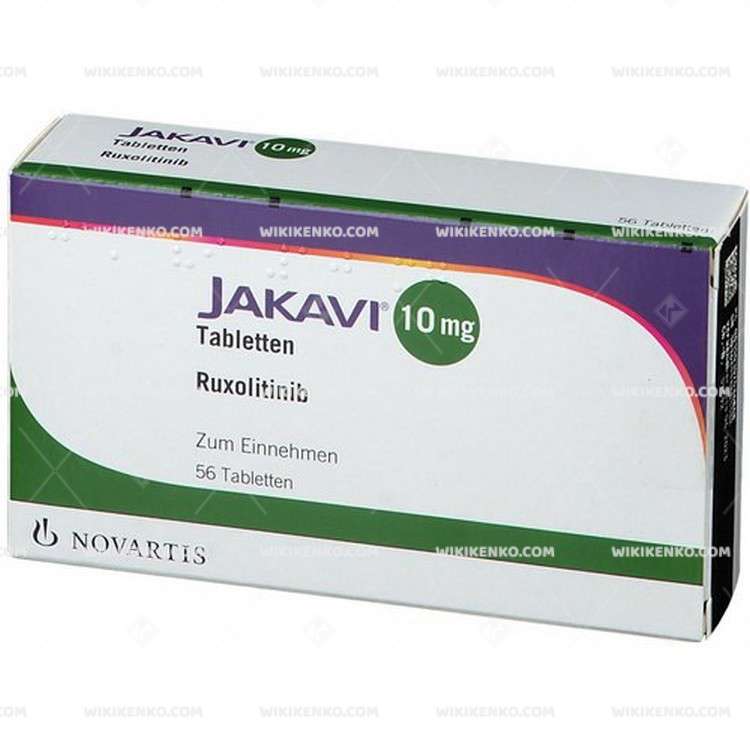
Description
Jakavi tablet, with the active ingredient Ruxolitinib Phosphate, is a targeted medication primarily used for treating specific blood disorders like myelofibrosis and polycythemia vera. It operates as a Janus kinase (JAK) inhibitor, crucial in managing blood cell production and immune function, providing relief from disease symptoms.
Chemical and Pharmacological Profile
- Active Ingredient: Ruxolitinib Phosphate
- Molecular Formula: C₁₇H₂₁N₆O₄P
- Molecular Weight: 404.37 g/mol
- CAS Number: 941678-49-5
Ruxolitinib Phosphate, the phosphate salt form of Ruxolitinib, is recognized for its efficacy in controlling disorders associated with abnormal blood cell proliferation.
Mechanism of Action
Ruxolitinib functions by selectively inhibiting the JAK1 and JAK2 enzymes, which are integral to signaling pathways that influence blood cell formation (hematopoiesis) and immune regulation. By blocking these pathways, the drug reduces inflammation and abnormal blood cell growth, thereby easing the symptoms linked to myelofibrosis and polycythemia vera.
Indications for Use
Jakavi tablet is prescribed for several conditions:
Myelofibrosis
Used for primary myelofibrosis and secondary myelofibrosis due to polycythemia vera or essential thrombocythemia.
Effective in alleviating symptoms like splenomegaly (enlarged spleen), significantly improving patients’ quality of life.
Polycythemia Vera
Recommended for patients who show intolerance to or do not respond adequately to hydroxyurea, a standard treatment.
Graft-versus-Host Disease (GVHD)
Approved for adults and children (12+ years) with steroid-refractory acute or chronic GVHD.
Dosage and Administration
Jakavi is available in tablet form, typically administered orally, with or without food. The dosage depends on various factors, including the patient’s weight, disease severity, and treatment response.
| Condition | Starting Dose | Administration Frequency |
|---|---|---|
| Polycythemia Vera | 10 mg | Twice daily |
| Chronic GVHD | 10 mg | Twice daily |
| Acute GVHD | 5–10 mg (based on tolerance) | Twice daily |
Dosage adjustments may be needed based on efficacy and safety monitoring, such as blood counts and symptom response.
Efficacy and Safety Overview
Clinical Studies
Clinical trials have demonstrated that Jakavi tablet is highly effective in managing symptoms of myelofibrosis. In studies involving patients, significant reduction in spleen size and symptom relief were noted, highlighting Jakavi’s clinical benefits.
Common Side Effects
Despite its efficacy, Jakavi tablet is associated with some common side effects, including:
- Hematological Issues:
- Thrombocytopenia (low platelet count) — may lead to bleeding or bruising.
- Anemia (low red blood cell count) — symptoms include fatigue, pale skin, and breathlessness.
- Neutropenia (low white blood cell count) — increases infection risks.
- Infections:
- Increased susceptibility to infections, including serious ones like tuberculosis or viral reactivations.
- Gastrointestinal Symptoms:
- Diarrhea and nausea are frequently reported.
- Neurological Effects:
- Headaches and dizziness are potential side effects.
- Fluid Retention:
- Swelling due to fluid retention may occur, along with potential weight gain.
- Liver Function:
- Elevated liver enzymes require regular monitoring to detect potential liver stress.
Serious Side Effects
In rare cases, serious side effects have been observed:
- Severe Allergic Reactions: Symptoms include difficulty breathing, facial swelling, and hives.
- Progressive Multifocal Leukoencephalopathy (PML): A severe brain infection seen in immunocompromised patients.
- Cardiovascular Risks: Higher risk of heart attack or stroke in individuals with pre-existing cardiovascular conditions.
Comparison with Other Treatments
Spleen Size Reduction
In clinical studies, Jakavi tablet demonstrated superior efficacy compared to placebo. Approximately 42% of Jakavi patients achieved a significant spleen size reduction after six months, compared to less than 1% with placebo.
Survival Benefit
Jakavi treatment showed a 31% reduced risk of death over five years compared to placebo, indicating improved survival rates for patients with intermediate-to-high risk myelofibrosis.
Traditional Treatments
Standard therapies like hydroxyurea, anagrelide, and interferons primarily manage symptoms without significantly altering the underlying disease. Jakavi’s targeted approach provides greater clinical benefits.
| Comparison Parameter | Jakavi | Traditional Therapies |
|---|---|---|
| Mechanism | JAK1/JAK2 Inhibition | General symptom management |
| Spleen Size Reduction | Significant | Limited effectiveness |
| Symptom Relief | Comprehensive improvement | Symptom-focused, not disease-modifying |
| Side Effects | Manageable, monitoring needed | Broader, systemic, potentially severe |
Drug Interactions and Considerations
Jakavi is known to interact with various medications:
Major Interactions: 133 identified interactions, including with antibiotics like rifampin and cardiovascular drugs like amlodipine.
Moderate Interactions: 302 cases, involving common drugs like gabapentin.
Minor Interactions: 58 instances, with minor impact.
Enzyme Interactions
Jakavi is metabolized by CYP3A4 and CYP2C9. Inhibitors of these enzymes can elevate ruxolitinib levels, while inducers may decrease its effectiveness.
| Interaction Type | Examples | Effect |
|---|---|---|
| CYP3A4 Inhibitors | Fluconazole | May require 50% dose reduction |
| CYP3A4 Inducers | Carbamazepine, St. John’s Wort | May necessitate higher doses |
| Cardiovascular Medications | Amlodipine, Carvedilol | Possible enhanced or diminished effect |
Food Interactions
Grapefruit juice may interfere with Jakavi’s metabolism and should be avoided.
Monitoring and Adjustments
Regular monitoring of blood counts, liver enzymes, and lipid profiles is essential during Jakavi treatment. Dose adjustments are made based on clinical response and side effects, particularly concerning thrombocytopenia and neutropenia.
| Monitoring Parameter | Frequency | Action |
|---|---|---|
| Blood Cell Counts | Every 2–4 weeks initially | Adjust dosage if necessary |
| Liver Enzymes | Regular intervals | Monitor for elevations |
| Lipid Profile | Periodic checks | Address hyperlipidemia if present |
Special Considerations
Patients with low platelet or neutrophil counts may require dose reductions or temporary treatment interruptions. Jakavi should be taken consistently, with missed doses not being doubled but resumed at the next scheduled time.
Conclusion
Jakavi tablet (Ruxolitinib Phosphate) remains a pivotal treatment option for blood disorders like myelofibrosis and polycythemia vera. Its targeted mechanism offers distinct advantages over traditional therapies, providing substantial improvements in symptoms, survival, and quality of life. Despite potential side effects and drug interactions, careful monitoring ensures effective and safe treatment for most patients.













Mahmoud –
I need the same medicine 10 mg send to uae
and I need 180 tablet
Medical Guidance Center –
Hello Mahmoud, this is WikiKenko.
Thank you for your interest in the Jakavi Tablet 10 mg.
As per our policy, WikiKenko does not sell or distribute any pharmaceutical products. We are an online encyclopedia focused on providing information about various medications.
If you are in a life-threatening situation and require immediate access to this medication, I would suggest visiting our “Community Support Network” page. There, you can fill out the form detailing your urgent need, and our team will try to guide you towards appropriate resources and support.
Please note that the “Community Support Network” form is specifically designed for emergency situations only. We cannot facilitate the direct purchase or delivery of medications.
I apologize that I cannot assist you with the purchase request. For your health and safety, I recommend consulting a licensed healthcare professional who can provide personalized medical advice and assistance in obtaining the necessary medication.