
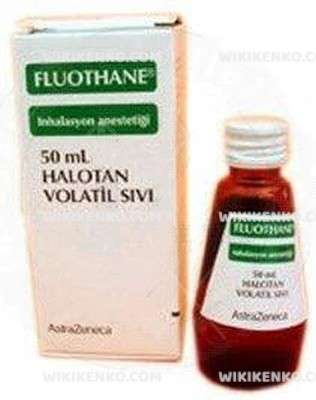
Description
Fluothane Volatile Liquid, containing halothane as its primary active ingredient, is a well-established general inhalation anesthetic. It is widely utilized for inducing and maintaining anesthesia during surgical procedures. Despite being largely replaced by newer anesthetics in many regions, it retains historical significance and utility in specific scenarios. This article delves into its composition, mechanisms of action, clinical uses, side effects, precautions, and a comparison with other inhalation anesthetics.
Composition
Fluothane Volatile Liquid is composed of two primary components:
- Halothane: The active anesthetic agent responsible for inducing and maintaining anesthesia.
- Thymol (0.01% w/w): A stabilizer added to prevent the degradation of halothane and maintain its efficacy during storage.
Thymol plays an essential role in preserving the chemical integrity of halothane, allowing it to remain stable under various storage conditions.
Understanding Halothane
Halothane is a halogenated hydrocarbon anesthetic, first synthesized in 1951 and introduced for medical use in 1956. Known for its rapid induction and moderate recovery times, halothane is a non-flammable anesthetic primarily delivered via inhalation. Its properties make it a versatile choice for surgical applications, particularly when rapid onset and smooth induction are required.
Clinical Applications
Halothane has historically been utilized for various clinical purposes, most notably:
- Induction and Maintenance of General Anesthesia: It facilitates unconsciousness and analgesia, making it suitable for a range of surgical procedures.
- Pediatric Anesthesia: Halothane’s minimal airway irritation has made it a preferred option for pediatric patients, although newer agents now dominate this field.
Its broad applicability and predictable pharmacokinetics contributed to its widespread adoption before the advent of newer alternatives.
Mechanism of Action
Halothane produces its anesthetic effects through several mechanisms that collectively suppress central nervous system activity:
- GABA Receptor Activation: Halothane enhances the action of gamma-aminobutyric acid (GABA), the primary inhibitory neurotransmitter, resulting in sedation and anesthesia.
- NMDA Receptor Antagonism: It blocks excitatory neurotransmission, contributing to its analgesic properties.
- Potassium Channel Modulation: By altering the activity of ion channels, halothane affects neuronal excitability and action potential generation.
These combined effects make halothane effective for achieving the desired depth of anesthesia.
Pharmacological Properties
Halothane exhibits distinct pharmacokinetic and pharmacodynamic properties that influence its clinical use:
- Minimum Alveolar Concentration (MAC): At 0.74%, halothane is highly potent, requiring a relatively low concentration to achieve anesthetic effects in 50% of patients.
- Blood/Gas Partition Coefficient: With a value of approximately 2.4, halothane demonstrates moderate solubility in blood, which affects its induction and recovery profiles.
Contraindications
Halothane is contraindicated in patients with specific medical histories or conditions, including:
- Hypersensitivity to halothane or similar agents.
- Previous liver injury linked to halothane use.
- Predisposition to malignant hyperthermia, a life-threatening reaction to certain anesthetics.
Avoiding halothane in these populations is critical to minimizing the risk of severe adverse effects.
Storage and Handling
Proper storage and handling of Fluothane Volatile Liquid are essential for maintaining its safety and effectiveness. It should be stored in a cool, dry place, protected from light. Personnel handling the product should take precautions to avoid exposure to vapors, which can pose health risks.
Side Effects
Halothane use is associated with a range of side effects, categorized into common and serious reactions.
| Category | Examples |
|---|---|
| Common | Nausea, vomiting, chills, shivering, headache, dizziness, lightheadedness. |
| Serious | Cardiac arrhythmias, malignant hyperthermia, respiratory depression, hepatotoxicity, hypotension, bradycardia. |
Common side effects such as nausea and dizziness are generally transient, while serious reactions like malignant hyperthermia and hepatotoxicity require immediate medical attention.
Precautions
Halothane administration demands careful monitoring to ensure patient safety and minimize risks. Key precautions include:
- Close Monitoring: Continuous observation of vital signs during and after administration is essential to detect early signs of complications.
- Patient History Review: Avoid using halothane in individuals with known risk factors, such as liver dysfunction or prior adverse reactions to anesthetics.
Thymol’s Role in Halothane Preservation
Thymol serves as an effective preservative in halothane, ensuring its stability and efficacy.
Properties and Functions of Thymol:
- Chemical Nature: Thymol is a natural monoterpenoid phenol derived from thyme oil, with strong antiseptic and stabilizing properties.
- Concentration: At 0.01%, thymol prevents light-induced degradation and microbial growth in halothane formulations.
- Maintenance Considerations: Vaporizers must be cleaned regularly to prevent thymol accumulation, which can interfere with dosing accuracy.
Thymol’s dual role as a stabilizer and antimicrobial agent underscores its importance in maintaining halothane’s safety and quality.
Drug Interactions
Halothane interacts with several medications, necessitating careful consideration of concomitant drug use.
Examples of Interactions:
- Cardiovascular Drugs: Halothane can potentiate arrhythmias when combined with agents like amiodarone.
- Neuromuscular Blockers: It enhances the effects of drugs like succinylcholine, requiring dose adjustments.
- Antidepressants: Medications such as phenelzine may increase the risk of adverse effects.
Additionally, halothane use should be avoided in patients with diseases that exacerbate its side effects, such as liver disorders or malignant hyperthermia susceptibility.
Historical Uses of Thymol
Thymol has been valued for its medicinal properties across cultures and centuries.
- Ancient Applications: Egyptians used thymol for embalming, while Greeks employed it for respiratory ailments and as incense.
- Traditional Medicine: Thymol has been used as an antiseptic, expectorant, and anti-inflammatory agent in various traditional systems of medicine.
- Modern Research: Studies highlight its potential in combating antibiotic resistance, treating fungal infections, and supporting gastrointestinal health.
Comparison with Other Inhalation Anesthetics
Halothane’s properties and effects can be compared to those of more contemporary inhalation anesthetics such as isoflurane and sevoflurane.
| Aspect | Halothane | Isoflurane | Sevoflurane |
|---|---|---|---|
| Potency (MAC) | High (0.74%) | Moderate (1.15%) | Lower (2.0%) |
| Induction/Recovery | Moderate | Faster than halothane | Fastest |
| Airway Irritation | Minimal | Mild | Minimal |
| Hepatotoxicity Risk | Significant | Minimal | Negligible |
| Cardiac Sensitization | Sensitizes myocardium to catecholamines | Rarely sensitizes myocardium | Rarely sensitizes myocardium |
While halothane remains effective, its safety profile has led to its gradual replacement by agents like isoflurane and sevoflurane, which offer improved safety and faster recovery times.
Conclusion
Fluothane Volatile Liquid, with halothane as its active ingredient, has played a pivotal role in the history of anesthesia. Despite its declining use in favor of newer agents, it remains an important option in specific contexts. Understanding its pharmacological properties, mechanisms of action, and potential risks is crucial for its safe and effective application. Advances in anesthetic agents continue to enhance patient outcomes, yet the legacy of halothane endures as a foundation in the field of anesthesiology.











Reviews
There are no reviews yet.