
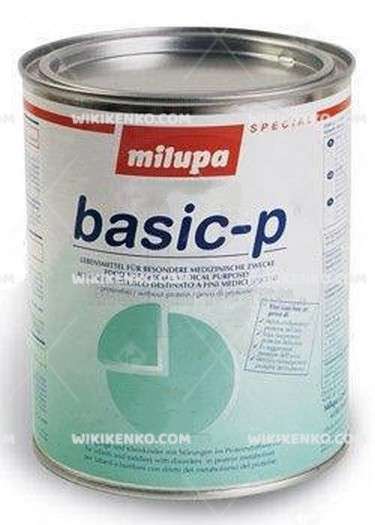
Description
In Turkey, “özel tıbbi amaçlı diyet gıda” corresponds to foods for special medical purposes, a category of specialized nutrition products formulated for patients with specific diseases or medical conditions and used under physician supervision. These products are regulated as foods, not drugs, but must comply with stringent compositional and labelling requirements, including clear statements of indication, target population, and directions for use, as well as the warning that they are not suitable for use as the sole source of nutrition unless explicitly designed for that purpose.
Within this framework, Basic – P is marketed as a powdered FSMP and is listed among other disease‑specific medical nutrition products in Turkish hospital and pharmacy supply catalogues, again reinforcing that it belongs to the FSMP class rather than conventional nutritional supplements. Internationally, FSMPs are aligned with the Codex Alimentarius “foods for special medical purposes” standard and with the European Union and United States “medical food” concept, which emphasizes targeted composition, use under medical supervision, and positioning between ordinary foods and pharmaceuticals.
Manufacturer and product positioning
The Basic family (including Basic‑P, Basic‑CH, Basic‑F, and related formulations) is attributed to Milupa Germany (Milupa‑Almanya), a long‑standing European manufacturer specializing in pediatric and metabolic nutrition, now within the broader Danone/Nutricia specialized nutrition portfolio. Milupa and Nutricia are widely known for products that support patients with inborn errors of metabolism, protein‑restricted diets, and disease‑related malnutrition, and Danone has recently expanded its medical nutrition manufacturing capacity, underlining the strategic importance of such products.
Within this cluster, the designation “Basic – P” and the “özel tıbbi amaçlı diyet gıda” label suggest that the product is a base formula designed to provide controlled amounts of macronutrients and micronutrients, potentially with specific manipulation of protein or amino acid profile for patients who require tailored protein intake (for example, certain metabolic or renal indications), although this cannot be confirmed without the proprietary composition sheet.
Pharmaceutical‑nutritional form and general composition characteristics
Basic – P is supplied as a powder in 400‑g containers, intended to be reconstituted with water or another appropriate liquid immediately before administration. Similar FSMP powders analyzed in Turkish nutritional surveys contain, per 100 g of product, protein ranging from approximately 2.3 to 43.7 g, fat from 0 to over 120 g (for fat‑enriched formulas), and carbohydrate (often including invert sugars) from around 0.5 to 15.3 g, with variation according to clinical purpose (for example, high‑energy, protein‑restricted, or fat‑modified preparations).
FSMPs also typically contain a defined profile of vitamins, minerals, and trace elements per 100 g or per 100 mL of prepared suspension, adjusted to meet a substantial portion of daily requirements in the target population when used at prescribed doses. Given the manufacturer’s portfolio and the “Basic” naming pattern, it is reasonable to infer that Basic – P represents a nutritionally complete or near‑complete base powder that can contribute significant energy and nutrient intake in individuals with special medical needs, though whether it is suitable as the sole source of nutrition depends on the undisclosed official label.
Illustrative macronutrient ranges in Turkish FSMP powders
The table below summarizes typical macronutrient ranges reported in an analytical study of FSMPs in Turkey and is presented as a contextual reference; it does not represent the exact specification of Basic – P, which is not publicly disclosed.
| Parameter (per 100 g FSMP powder) | Reported range in Turkish FSMP products | Source and comment |
|---|---|---|
| Protein content | 2.31–43.7 g | Analytical evaluation of multiple FSMP samples marketed in Turkey; reflects products formulated for diverse clinical indications. |
| Invert sugar (carbohydrate fraction) | 0.5–15.3 g | Indicates controlled carbohydrate contribution, important for glycaemic management and energy density. |
| Fat content | 0–121.69 g | Very wide range reflecting fat‑free metabolic formulas and fat‑enriched high‑energy formulas. |
These ranges indicate the breadth of formulation possibilities within the FSMP class to tailor energy and macronutrient delivery to specific diseases, a context in which Basic – P must be interpreted.
Indications and target population (inferred)
Official, detailed indications for Basic – P are not accessible in open databases; however, its classification as an FSMP and its positioning among other disease‑specific powders imply that it is intended for patients who cannot meet their nutritional requirements through normal foods due to underlying medical conditions. In Turkey and comparable jurisdictions, FSMP powders from the same manufacturer and class are frequently used in hospital and outpatient settings for patients with chronic disease–related malnutrition, neurologic disorders affecting swallowing, metabolic disorders requiring tailored amino acid profiles, or other conditions where standard infant or adult formulas are inappropriate.
The “Basic” label suggests a foundational role, such as serving as a base formula that can be adjusted in volume or combined with other components to individualize regimens, particularly in paediatric or metabolic nutrition programmes.
Mechanism of action and clinical rationale
As a food for special medical purposes, Basic – P exerts its clinical benefit not through a pharmacological mechanism but via targeted nutritional modulation, delivering defined quantities of macronutrients and micronutrients adapted to the patient’s condition. In disease‑related malnutrition, such powders help restore or maintain energy balance, support lean body mass, and prevent micronutrient deficiencies, thereby contributing indirectly to improved immune function, wound healing, and treatment tolerance.
For metabolic or organ‑specific indications (for example, certain inherited metabolic disorders or renal impairment), FSMPs may restrict or enrich particular nutrients to avoid toxic metabolite accumulation, reduce symptom burden, or accommodate limited metabolic capacity; the Basic product line from Milupa is generally consistent with this therapeutic nutrition paradigm, though the exact metabolic focus of the “P” variant remains proprietary.
Dosage, administration, and handling (general FSMP practice)
In clinical practice, FSMP powders are usually dosed according to body weight, age, and overall nutritional requirements, and are reconstituted to a prescribed concentration, yielding a defined energy density such as 1–2 kcal/mL. They may be administered orally as a drink, mixed into semi‑solid foods, or via enteral feeding tubes, depending on swallowing ability and gastrointestinal tolerance.
The powder is typically prepared with safe drinking water immediately before use, with strict adherence to hygiene and storage instructions to minimize microbial contamination; reconstituted portions are usually discarded after a limited time if not consumed. Because detailed dosing recommendations for Basic – P are not available publicly, prescribers should rely on the official Turkish product information and adjust dosing based on individual nutritional assessment, biochemical monitoring, and tolerance, particularly in paediatric or metabolically fragile patients.
Safety profile and tolerability considerations
FSMPs such as Basic – P are designed to be safe when used as directed in the indicated patient groups, but they are not risk‑free and must be used under medical supervision. Potential adverse effects are generally related to nutrient load and composition rather than pharmacology and can include gastrointestinal symptoms (nausea, bloating, diarrhoea or constipation), intolerance to specific carbohydrate or fat sources, and metabolic disturbances if the formula’s nutrient profile does not match the patient’s metabolic capacity.
For patients requiring protein‑restricted or protein‑modified diets, inappropriate dosing of an FSMP can lead to either undernutrition (with loss of lean mass and impaired development) or over‑supply of nitrogen, with possible exacerbation of underlying metabolic or renal disorders; this is particularly relevant for specialized formulas such as those in the Milupa metabolic and medical nutrition portfolio. Hypersensitivity reactions are possible in individuals with allergy to components such as milk proteins, soy derivatives, or specific additives, and therefore careful review of the full ingredient list (not available in open sources for Basic – P) is mandatory before prescription.
Contraindications, precautions, and monitoring (conceptual)
General contraindications for FSMPs include use in patients without the indicated medical condition, use as the sole source of nutrition when the product is not designed for that purpose, and administration to individuals with known hypersensitivity to any component of the formula. Additional condition‑specific precautions arise in metabolic disorders, hepatic or renal insufficiency, and severe fluid restrictions, where the volume and nutrient density of reconstituted powder must be carefully titrated; similar considerations would apply to Basic – P if it is used in such contexts.
Monitoring typically includes regular anthropometric assessment, dietary intake evaluation, and laboratory analysis of relevant biochemical markers (for example, serum electrolytes, renal and hepatic function, selected vitamins and trace elements, and, where applicable, disease‑specific metabolites) to ensure that the FSMP is achieving its therapeutic goals without causing imbalance. In Turkey and the EU, labelling rules for FSMPs require explicit instructions on the necessity of medical supervision, which implies that self‑directed, unsupervised long‑term use of Basic – P should be avoided.
Place in therapy and clinical practice implications
Foods for special medical purposes occupy an intermediate position between standard foods and pharmaceuticals, and they have become an important component of comprehensive care for patients with chronic diseases, complex metabolic conditions, and high risk of malnutrition. Within this therapeutic landscape, products such as Basic – P, manufactured by established specialized nutrition companies and supplied through hospital and pharmacy channels, offer clinicians tools to individualize nutritional support when conventional oral intake is inadequate or inappropriate.
Choice among available FSMPs is guided by the patient’s diagnosis, age, metabolic profile, gastrointestinal function, and personal preferences, as well as by availability and reimbursement policies; hence, Basic – P should be considered as one option within a broader, protocol‑driven medical nutrition strategy rather than as a stand‑alone “medicine.”
Limitations of available data and need for product‑specific documentation
A key limitation in characterizing Basic – P in an academic, product‑specific manner is the lack of publicly accessible official documentation that details its full qualitative and quantitative composition, exact indication statement, contraindications, and clinical evidence base. Unlike many pharmaceuticals, FSMPs often do not have detailed monographs indexed in international databases, and their clinical support may derive from broader evidence on disease‑specific nutrition rather than randomized trials of the exact branded product.
Clinicians who intend to prescribe or recommend Basic – P should therefore obtain and review the original manufacturer’s technical data sheet and the Turkish package label, and integrate this information with national and international guidelines on medical nutrition and, where relevant, on inborn metabolic disorders or organ‑specific disease nutrition. Until such product‑specific documentation is consulted, decision‑making should remain cautious, individualized, and grounded in systematic nutritional assessment and monitoring, recognizing that the FSMP category is heterogeneous and that extrapolation from other formulas has intrinsic limitations.
This article is informational and does not replace the official Basic – P product literature or individualized advice from a qualified physician, dietitian, or pharmacist; clinical use must always follow locally approved prescribing information and professional guidelines.











ANTONIO –
Thanks
Medical Guidance Center –
Hello ANTONIO, this is WikiKenko. Thank you so much for your feedback! Your comments help us improve the information we provide. We really appreciate you taking the time to share your thoughts.
ANTONIO –
(Milupa-Basic SPEDIZIONE VIASZIONE136 FONDI
Medical Guidance Center –
Hello ANTONIO, this is WikiKenko. Your comment doesn’t seem related to our medicine info. If you have a question about this dietary food or its usage, feel free to ask! For further support, you can also visit our help page.