
Description
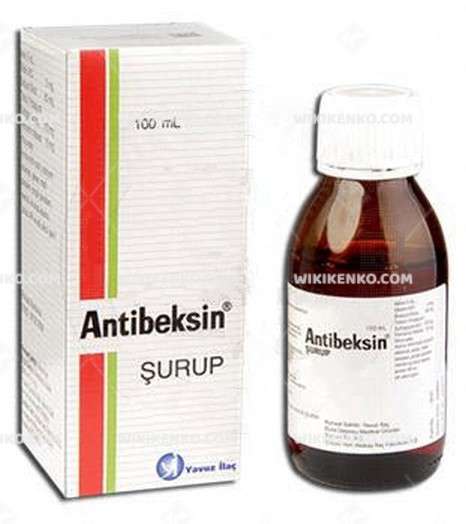
Antibeksin Syrup (Antibeksin® Şurup) is a compound medicinal product formulated for symptomatic treatment of cough and upper or lower respiratory tract conditions in which bronchial hypersecretion, bronchospasm, and airway irritation coexist. Each 5 ml of syrup contains ephedrine hydrochloride 5 mg, pheniramine maleate 15 mg, potassium sulfogaiacol 175 mg, and sodium citrate 65 mg. The product is administered orally and positioned as a prescription or pharmacy‑supplied medicine within the Turkish market.
Pharmaceutical Composition and Formulation
Antibeksin Syrup is an aqueous oral solution sweetened and flavored to improve palatability, containing four active pharmaceutical ingredients (APIs) with complementary mechanisms of action. The formulation is supplied in bottles (commonly 100 ml) with a measuring device to enable accurate dosing in milliliters corresponding to the 5‑ml unit composition. Excipients are not fully specified in the publicly accessible leaflet, but typical syrup excipients (such as solvents, sweeteners, preservatives, and flavoring agents) are implied.
Active ingredients per 5 ml
| Active ingredient | Strength per 5 ml | Pharmacological class | Primary role in product |
|---|---|---|---|
| Ephedrine hydrochloride | 5 mg | Sympathomimetic bronchodilator | Bronchodilation, reduction of nasal congestion |
| Pheniramine maleate | 15 mg | First‑generation H1 antihistamine | Reduction of rhinorrhea, sneezing, allergy‑related symptoms |
| Potassium sulfogaiacol | 175 mg | Expectorant (guaiacol derivative) | Promotion of bronchial secretion and mucus clearance |
| Sodium citrate | 65 mg | Systemic alkalinizer, mucolytic adjunct | Mild mucolytic and buffering effect on secretions |
The combination of sympathomimetic, antihistaminic, and expectorant components aims to provide multi‑modal relief in bronchitic and catarrhal states, while sodium citrate contributes a modest mucolytic and antacid action by virtue of its alkalinizing properties.
Manufacturer and Regulatory Status
Antibeksin is listed among the product portfolio of Turkish pharmaceutical manufacturers that produce antibiotics, cough syrups, and other systemic preparations using domestic capital and modern facilities. The brand ANTIBEKSIN is authorized in Turkey and appears in drug indexing resources as a nationally approved medicine containing the above combination of APIs. Distribution is focused on the Turkish market and export channels, and the product is not listed in major U.S. or EU regulatory drug databases such as FDA or EMA centralized approvals. Consequently, regulatory standards, labeling, and pharmacovigilance follow Turkish national legislation and applicable regional rules.
Pharmacology of Individual Components
Ephedrine hydrochloride
Ephedrine is a mixed‑acting sympathomimetic amine that stimulates adrenergic receptors directly and indirectly by promoting noradrenaline release from nerve terminals. In the respiratory tract, it induces bronchodilation and reduces mucosal edema by vasoconstriction, thereby improving airflow and decreasing nasal obstruction. Systemically, it increases heart rate and blood pressure, and crosses the blood–brain barrier, contributing to central nervous system stimulation and potential insomnia or nervousness.
Pheniramine maleate
Pheniramine is a first‑generation H1 receptor antagonist with anticholinergic and mild sedative properties. It reduces allergic manifestations such as rhinorrhea, sneezing, conjunctival irritation, and pruritus by competitively blocking histamine at H1 receptors. Its anticholinergic effects can contribute to drying of nasal and bronchial secretions, but also to adverse events such as dry mouth, urinary retention, or blurred vision, especially in susceptible patients.
Potassium sulfogaiacol
Potassium sulfogaiacol is a guaiacol‑derived expectorant that increases the volume and decreases the viscosity of bronchial secretions. By enhancing the fluidity of mucus, it facilitates ciliary clearance and productive coughing, which may alleviate chest congestion in acute and chronic bronchitis. The compound is conceptually related to other guaiacol‑based expectorants traditionally used in cough syrups, though robust contemporary randomized data are limited.
Sodium citrate
Sodium citrate acts primarily as a systemic alkalinizing agent and antacid, but it is also used as a mucolytic adjunct in some cough formulations. The alkalinity may slightly modify the rheological properties of mucus and help reduce irritation in the upper gastrointestinal tract when cough leads to gastric hyperacidity. In obstetric anesthesia practice, sodium citrate is recognized as a non‑particulate antacid to reduce gastric acidity prior to cesarean section, illustrating its pharmacodynamic profile, though such use is distinct from its role in Antibeksin.
Mechanism of Action at the Product Level
The therapeutic effect of Antibeksin Syrup arises from the integrated actions of its four components on airway tone, secretion, and inflammatory mediators. Ephedrine provides bronchodilation and decongestion, pheniramine attenuates histamine‑mediated symptoms and exerts a drying, sedative effect, potassium sulfogaiacol enhances mucus clearance, and sodium citrate modulates secretion properties and acidity. Together, these mechanisms aim to relieve cough, facilitate expectoration, and improve subjective breathing comfort in bronchitic and catarrhal respiratory conditions.
Indications and Clinical Use
The Turkish product information describes Antibeksin Syrup as an oral medicine intended for conditions associated with increased bronchial secretion, cough, and bronchospasm. Typical target indications, by analogy with its pharmacological profile and similar multi‑ingredient cough products, include acute bronchitis, infectious or allergic upper respiratory tract infections with bothersome cough, and mixed rhinitis–bronchitis symptom complexes. It is used as an adjunctive symptomatic treatment rather than as etiologic therapy; antimicrobial or antiviral agents, when indicated, must be selected and prescribed independently according to clinical judgement and guidelines.
Dosage and Administration
The Antibeksin patient leaflet specifies the content per 5‑ml dosing unit but publicly accessible sources provide limited detail on age‑stratified dosing regimens. In practice, dosing of such formulations is usually weight‑ or age‑based in pediatric populations and fixed or titrated in adults, with the daily dose divided into multiple administrations over 24 hours. The syrup is administered orally, with or without food, and a standardized measuring spoon or cup is recommended to ensure precise volume measurement and avoid accidental overdose, particularly of ephedrine and pheniramine.
Contraindications
Given its active components, Antibeksin Syrup is contraindicated in patients with known hypersensitivity to ephedrine, pheniramine, guaiacol derivatives, sodium citrate, or any formulation excipients. Conditions in which sympathomimetic amines are contraindicated—such as severe hypertension, significant coronary artery disease, uncontrolled hyperthyroidism, or narrow‑angle glaucoma—represent important restrictions because ephedrine can exacerbate these disorders. In addition, pheniramine’s anticholinergic actions make the product unsuitable for patients with urinary retention, prostatic hypertrophy, or certain forms of angle‑closure glaucoma without careful medical supervision.
Warnings and Precautions
The presence of ephedrine necessitates caution in patients with cardiovascular disease, including arrhythmias, ischemic heart disease, and moderate hypertension, as blood pressure and heart rate may rise. Central nervous system stimulation can lead to insomnia, agitation, or tremor, particularly in children or individuals sensitive to sympathomimetics. Pheniramine’s sedative and anticholinergic effects require vigilance regarding activities requiring mental alertness (such as driving) and in elderly patients at risk of confusion, falls, or urinary retention. As an expectorant‑containing preparation, Antibeksin should not be used as a substitute for adequate hydration and appropriate evaluation of persistent or productive cough, which may signal pneumonia or other serious disease.
Drug Interactions
Ephedrine may interact with monoamine oxidase inhibitors (MAOIs), other sympathomimetics, and certain antidepressants, leading to hypertensive crises or pronounced cardiovascular stimulation. Concurrent use with other central nervous system stimulants (such as some decongestants or caffeine in high doses) can potentiate insomnia and nervousness, whereas combination with sedatives, hypnotics, or alcohol can result in unpredictable CNS effects due to pheniramine’s sedative potential. Anticholinergic interactions may occur when Antibeksin is co‑administered with tricyclic antidepressants, antipsychotics, or other antihistamines, increasing the risk of dry mouth, urinary retention, and blurred vision.
Adverse Reactions
Reported and expected adverse reactions are consistent with the pharmacology of the components and with established experience for similar multi‑ingredient cough medicines. Commonly observed adverse effects may include:
-
Nervous system: insomnia, nervousness, tremor, headache, mild dizziness.
-
Cardiovascular: palpitations, tachycardia, elevation of blood pressure, rarely arrhythmias.
-
Gastrointestinal: nausea, epigastric discomfort, occasional vomiting or diarrhea.
-
Anticholinergic: dry mouth, blurred vision, constipation, urinary retention, especially in predisposed individuals.
-
Hypersensitivity: skin rash, pruritus, or other allergic manifestations in sensitized patients.
Severe adverse reactions are uncommon at therapeutic doses but can occur in overdose, particularly due to ephedrine‑induced cardiovascular or CNS toxicity and pheniramine‑induced profound sedation or anticholinergic syndrome.
Use in Special Populations
Pediatric use
While Antibeksin Syrup is formulated as a pediatric‑friendly oral liquid, careful age‑appropriate dosing is essential because children are more susceptible to the central and cardiovascular effects of ephedrine and the sedative and anticholinergic effects of pheniramine. International pediatric guidance has become increasingly cautious regarding cough and cold preparations containing sympathomimetics and first‑generation antihistamines in very young children, emphasizing the need for individualized medical assessment.
Geriatric use
Older adults may experience enhanced sensitivity to pheniramine‑induced sedation and anticholinergic effects, including confusion, urinary retention, and falls. Cardiovascular comorbidities also heighten the risk of ephedrine‑related blood pressure and heart rate increases, so lower initial doses and close monitoring are advisable.
Pregnancy and lactation
Publicly accessible labeling for Antibeksin does not provide detailed, evidence‑graded recommendations for use during pregnancy and breastfeeding. Given the presence of ephedrine and first‑generation antihistamine, many clinicians would avoid routine use in pregnancy and lactation unless the expected benefit clearly outweighs potential risks, and safer alternatives have been considered.
Overdose and Toxicity
Overdose of Antibeksin Syrup can produce a combination of sympathomimetic and antihistaminic toxicity. Ephedrine excess may result in severe hypertension, tachycardia, arrhythmias, hyperthermia, agitation, hallucinations, and, in extreme cases, convulsions or cardiovascular collapse. Pheniramine overdose can cause profound sedation, anticholinergic delirium, mydriasis, urinary retention, and hypotension, especially when combined with alcohol or other CNS depressants. Management is supportive and symptomatic, involving stabilization of airway, breathing, and circulation, control of agitation or seizures, and treatment of arrhythmias or blood pressure derangements according to advanced life support protocols.
Place in Therapy and Evidence Base
Antibeksin Syrup represents a traditional, multi‑component approach to managing cough and bronchitic symptoms, combining bronchodilation, antihistamine, and expectorant effects in a single product. Contemporary evidence‑based respiratory guidelines increasingly emphasize cautious, targeted use of such combinations because high‑quality randomized controlled trials for many older cough mixtures are limited, and non‑pharmacologic measures together with single‑agent therapies may suffice in mild cases. Nonetheless, multi‑ingredient syrups remain widely used in real‑world practice in some countries, including Turkey, as part of symptomatic management in uncomplicated acute bronchitis and upper respiratory tract infections. Clinical decision‑making should integrate national guidelines, patient‑specific risk factors (particularly cardiovascular and CNS risk), and evolving data on the benefit–risk balance of sympathomimetic and first‑generation antihistamine–containing cough preparations.
Summary Table: Key Clinical Characteristics
| Feature | Description |
|---|---|
| Product name | Antibeksin® Syrup (Antibeksin Şurup) |
| Dosage form and route | Oral syrup, typically supplied in 100‑ml bottle |
| Active ingredients per 5 ml | Ephedrine HCl 5 mg, pheniramine maleate 15 mg, potassium sulfogaiacol 175 mg, sodium citrate 65 mg |
| Therapeutic class | Cough and cold preparation with bronchodilator, antihistamine, and expectorant components |
| Main indications | Symptomatic treatment of cough and bronchitic/catarrhal respiratory conditions (nationally authorized use in Turkey) |
| Major contraindications | Hypersensitivity to components, severe cardiovascular disease, uncontrolled hypertension, hyperthyroidism, certain glaucomas, significant urinary retention risk |
| Key cautions | Use with caution in children, elderly, cardiovascular disease, and in combination with CNS stimulants or depressants |
| Regulatory status | Authorized brand in Turkey; not registered as an FDA‑approved product in the United States |
Important Notice
This article synthesizes publicly accessible product and pharmacology information and should not be used as a substitute for official national prescribing information, local clinical guidelines, or individual medical advice. For clinical decisions, clinicians should consult the full Turkish product information and current evidence‑based respiratory care recommendations.










صلاح –
٥٠ زجاجة
Medical Guidance Center –
أهلاً بك يا صلاح، معك WikiKenko. أشكرك على تواصلك معنا بخصوص طلبك لشراب Antibeksin.
نحن نقدّر حاجتك لهذه الكمية، ولكن يرجى العلم أن WikiKenko لا يقوم ببيع أي أدوية أو مستحضرات طبية، فنحن موسوعة معلوماتية فقط.
بما أنك تطلب كمية كبيرة، قد تجد مساعدة في الوصول إلى الموزعين الرسميين أو الصيدليات الكبرى من خلال ملء نموذج “شبكة دعم المجتمع” (Community Support Network) عبر الرابط التالي: https://wikikenko.com/community-support-network/. قد يساعدك المجتمع هناك في العثور على البائعين المعتمدين في بلدك.