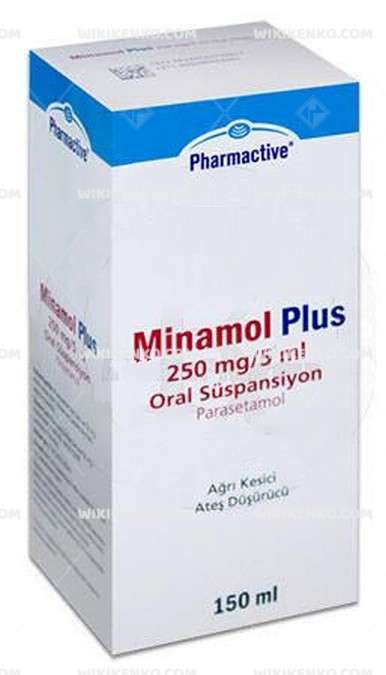
Minamol Plus Oral Suspension

Dosage form

Pack size

Potency

250 Mg/5Ml 150Ml

Manufacturer

Origin

Generic Name (Ingredient)

Each 5 Ml Suspension Contains 250 Mg Paracetamol.

Minamol Plus Oral Suspension, containing 250 mg/5 ml of paracetamol, offers a vital therapeutic option for managing mild to moderate pain and fever across diverse patient groups, including children and adults who prefer or require liquid formulations. Its favorable safety profile, when administered as directed, ensures effective symptom relief. However, precise dosing is critical to maximize therapeutic benefits while minimizing potential risks, underscoring the importance of adherence to clinical guidelines.

read more

Assuming you’re in a life-threatening situation and require immediate access to medication, please visit our Community Support Network page.


Description

Minamol Plus Oral Suspension represents a significant pharmaceutical formulation designed primarily for antipyretic (fever-reducing) and analgesic (pain-relieving) purposes. This medication contains paracetamol as its active ingredient, specifically formulated at a concentration of 250 mg per 5 ml of suspension. The oral suspension format makes it particularly suitable for patients who have difficulty swallowing tablets, especially children and elderly individuals. This comprehensive overview explores the various aspects of Minamol Plus Oral Suspension, including its composition, mechanism of action, therapeutic applications, dosage guidelines, and safety considerations.

Composition and Formulation

Minamol Plus Oral Suspension is primarily characterized by its paracetamol content, with each 5 ml dose delivering 250 mg of this active ingredient. The suspension form allows for precise dosing and easier administration, particularly for pediatric patients. The formulation includes several excipients that enhance both stability and palatability of the medication.

Active Ingredient

The primary therapeutic component is paracetamol (also known as acetaminophen), a well-established analgesic and antipyretic agent. Paracetamol has been in clinical use for decades and maintains an important position in pain management protocols worldwide due to its efficacy and favorable safety profile when used as directed.

Excipients

Based on similar paracetamol suspensions, Minamol Plus Oral Suspension likely contains several inactive ingredients that serve various pharmaceutical functions. These may include:

  • Sucrose and sorbitol, which act as sweetening agents

  • Methyl parahydroxybenzoate, functioning as a preservative

  • Flavoring agents (often fruit-based, such as banana or orange)

  • Xanthan gum and similar substances that provide appropriate viscosity

  • Coloring agents

  • Purified water as the liquid base

The specific formulation may include additional components to enhance stability, taste, and texture of the suspension.

Mechanism of Action

Pharmacodynamics

Paracetamol’s precise mechanism of action has been the subject of extensive research and continues to evolve in scientific understanding. The medication operates through multiple pathways, with two primary mechanisms considered most significant.

The first mechanism involves inhibition of cyclooxygenase (COX) enzymes, particularly COX-1 and COX-2. Unlike traditional non-steroidal anti-inflammatory drugs (NSAIDs), paracetamol’s inhibition of these enzymes is more selective toward the central nervous system than peripheral tissues. This selectivity is related to cellular concentration of peroxide and arachidonic acid, with paracetamol acting as a reducing agent that reduces the hydroperoxide tone necessary for COX activation.

The second mechanism centers on a metabolite of paracetamol called AM404. After administration, a small portion of paracetamol is deacetylated in the liver to form p-aminophenol, which crosses the blood-brain barrier. In the brain, this compound is converted by fatty acid amide hydrolase (FAAH) into N-arachidonoylphenolamine (AM404). This metabolite interacts with cannabinoid receptors and activates TRPV1 receptors, contributing to paracetamol’s analgesic effects through the endocannabinoid system.

Antipyretic Effects

As an antipyretic, paracetamol reduces fever by affecting the hypothalamic heat-regulating center. By inhibiting prostaglandin synthesis in the central nervous system, it effectively lowers the temperature setpoint, resulting in increased peripheral blood flow, sweating, and subsequent heat dissipation.

Therapeutic Indications

Minamol Plus Oral Suspension is indicated for the symptomatic treatment of mild to moderate pain and fever. Its versatility makes it suitable for various conditions, including:

Pain Management

The medication effectively addresses multiple types of pain, including:

  • Headaches and migraines

  • Toothache and dental pain

  • Muscle and joint pain

  • Post-operative pain (mild to moderate)

  • Neuralgia (nerve pain)

  • Ear pain

Fever Reduction

Minamol Plus is commonly used to reduce fever associated with:

  • Common cold and influenza

  • Upper respiratory tract infections

  • Post-vaccination fever in children

  • Various infectious diseases accompanied by pyrexia

The medication provides symptomatic relief while the underlying condition is being addressed or resolves naturally. It is particularly valuable in pediatric care when precise dosing based on age and weight is essential.

Dosage and Administration

Proper dosing of Minamol Plus Oral Suspension is crucial for safety and efficacy. The medication should be administered orally, and the bottle should be shaken thoroughly before each use to ensure uniform distribution of the active ingredient. The supplied measuring device (oral syringe, measuring spoon, or cup) should always be used to ensure accurate dosing.

Age-Specific Dosing

Dosage recommendations vary by age and weight, though specific guidelines for Minamol Plus 250 mg/5 ml typically follow these patterns:

For children:

  • 6 to 8 years: 5 ml (250 mg) every 4-6 hours as needed

  • 8 to 10 years: 7.5 ml (375 mg) every 4-6 hours as needed

  • 10 to 12 years: 10 ml (500 mg) every 4-6 hours as needed

  • 12 to 16 years: 10-15 ml (500-750 mg) every 4-6 hours as needed

For adults and children over 16 years:

  • 10-20 ml (500-1000 mg) every 4-6 hours as needed

Administration Guidelines

  • Do not exceed 4 doses in any 24-hour period

  • Maintain at least 4 hours between doses

  • Total daily dose should not exceed recommended limits

  • Duration of treatment without medical supervision should generally not exceed 3-5 days for pain and 3 days for fever

  • If symptoms persist or worsen, medical attention should be sought

Pharmacokinetics

Absorption

After oral administration, paracetamol is rapidly absorbed from the small intestine, with minimal absorption occurring in the stomach. The rate of absorption depends on gastric emptying, with food potentially slowing absorption but not affecting the total amount absorbed. Peak plasma concentrations are generally reached between 20 minutes and 1.5 hours after ingestion, depending on fasting status and formulation.

Distribution

Paracetamol distributes rapidly and evenly throughout most tissues and fluids. Its volume of distribution is approximately 0.9 L/kg, with 10-20% of the drug binding to red blood cells. Protein binding is minimal under normal therapeutic conditions but may increase to 15-21% in overdose situations.

Metabolism

Paracetamol undergoes extensive hepatic metabolism through several pathways:

  • 50-70% through glucuronidation by UGT enzymes

  • 25-35% through sulfation

  • 5-15% through oxidation by cytochrome P450 enzymes (primarily CYP2E1)

The oxidative pathway produces a toxic metabolite, N-acetyl-p-benzoquinone imine (NAPQI), which is normally detoxified by conjugation with glutathione. In overdose situations, glutathione depletion allows NAPQI to accumulate, leading to hepatotoxicity.

Elimination

In healthy individuals, 85-95% of a therapeutic dose is excreted in the urine within 24 hours, primarily as glucuronide and sulfate conjugates. The plasma half-life ranges from 1.9 to 2.5 hours, and the total body clearance is typically 4.5 to 5.5 ml/kg/min.

Contraindications

Minamol Plus Oral Suspension should not be used in the following situations:

  • Known hypersensitivity to paracetamol or any excipients in the formulation

  • Severe liver impairment or acute liver disease

  • Genetic disorders affecting paracetamol metabolism

Precautions

Caution is advised in the following conditions:

  • Hepatic impairment or hepatic disease

  • Renal insufficiency

  • Chronic alcoholism

  • Dehydration

  • Malnutrition

  • Patients taking other paracetamol-containing medications concurrently

Side Effects

Paracetamol is generally well-tolerated when used as directed, but adverse reactions can occur. These can be categorized by frequency:

Common Side Effects

  • Headache

  • Dizziness

  • Drowsiness

  • Nausea and digestive discomfort

  • Upper respiratory tract symptoms

Uncommon Side Effects

  • Allergic skin reactions

  • Elevated liver enzymes

  • Fatigue

  • Low blood pressure

Rare but Serious Side Effects

  • Severe cutaneous reactions (very rare)

  • Blood disorders including thrombocytopenia

  • Hepatotoxicity (especially in overdose)

Drug Interactions

While paracetamol has fewer drug interactions compared to other analgesics like NSAIDs, several important interactions should be noted:

  • Warfarin and other anticoagulants: May enhance anticoagulant effects with prolonged regular use of paracetamol

  • Metoclopramide and domperidone: May increase the absorption rate of paracetamol

  • Cholestyramine: May reduce paracetamol absorption if administered within one hour

  • Enzyme-inducing medications: Drugs that induce liver enzymes (such as carbamazepine, phenytoin, barbiturates) may increase the formation of hepatotoxic metabolites

Storage and Handling

Minamol Plus Oral Suspension should be stored according to manufacturer’s recommendations, typically:

  • Keep at room temperature, preferably below 25°C (77°F)

  • Protect from light and excessive heat

  • Keep tightly closed when not in use

  • Store out of reach of children

  • Do not use beyond the expiration date printed on the package

  • Shake well before each use

Overdose Management

Paracetamol overdose is a medical emergency that can lead to severe liver damage. Early symptoms may include nausea, vomiting, pallor, and abdominal pain, though in many cases symptoms may not appear for several hours. Treatment includes administration of the antidote N-acetylcysteine, which is most effective when given within 8 hours of ingestion. Immediate medical attention should be sought in any suspected overdose case.

Information Summary

Category Details
Active Ingredient Paracetamol 250 mg per 5 ml of suspension
Therapeutic Class Analgesic and antipyretic
Primary Uses Relief of mild to moderate pain; reduction of fever
Administration Route Oral
Standard Dosage (Adults) 10-20 ml (500-1000 mg) every 4-6 hours, maximum 4 doses in 24 hours
Standard Dosage (Children) Age-dependent, ranging from 5 ml to 15 ml every 4-6 hours
Maximum Daily Dose (Adults) 4000 mg (80 ml) or 2000 mg (40 ml) in patients with risk factors
Common Side Effects Headache, nausea, drowsiness
Serious Side Effects Skin reactions, hepatotoxicity (rare at therapeutic doses)
Contraindications Known hypersensitivity, severe hepatic impairment
Storage Conditions Below 25°C, protected from light, out of reach of children
Pregnancy Category Generally considered safe under medical supervision
Breastfeeding Generally considered safe under medical supervision

Conclusion

Minamol Plus Oral Suspension containing 250 mg/5 ml of paracetamol represents an important medication in the management of mild to moderate pain and fever. Its favorable safety profile, when used as directed, makes it suitable for various patient populations, including children and adults who prefer or require liquid formulations. However, as with all medications, proper dosing is essential to ensure therapeutic benefit while minimizing risks.

Healthcare providers should consider individual patient factors when recommending this medication, and patients should be educated about proper administration and potential risks associated with exceeding recommended doses. While generally safe and effective, the importance of adherence to guidelines cannot be overstated, particularly given the potential for hepatotoxicity in overdose situations. When used appropriately, Minamol Plus Oral Suspension serves as a valuable option in symptomatic management of common painful and febrile conditions.

Reviews

There are no reviews yet.

Be the first to review “Minamol Plus Oral Suspension”

Your email address will not be published. Required fields are marked *

Use the form below to report an error

Please answer the questions as thoroughly and accurately as possible. Your answers will help us better understand what kind of mistakes happen, why and where they happen, and in the end the purpose is to build a better archive to guide researchers and professionals around the world.


If an image of the drug is not available on the Wikikenko health encyclopedia, you have the option to submit images/leaflets of the product. Following verification by our pharmaceutical specialist, your submitted images/leaflets will be included in our archive, with due acknowledgment of your contribution. Your cooperation in this matter would greatly assist researchers in finding the information they seek. Upload Images/Leaflet (Less than 2MB)

No Choosen File

Wikikenko.com does not sell, distribute, or provide any pharmaceutical products or health services. Our platform functions solely as a health encyclopedia, providing information on a wide range of health topics, including but not limited to medications.


Medical Disclaimer: Seek Professional Advice

The information on this page is not intended to be a substitute for professional medical advice, diagnosis, or treatment. always seek the advice for your physician or another qualified health provider with any questions you may have regarding a medical condition. Always remember to

  1. Ask your own doctor for medical advice.
  2. Names, brands, and dosage may differ between countries.
  3. When not feeling well, or experiencing side effects always contact your own doctor.

Why you can't look for symptoms on the Internet

If diagnoses could be made simply from a textbook or an article on a website, we would all be doctors and treat ourselves. Nothing can replace the experience and knowledge of specially trained people. As in any field, in medicine there are unscrupulous specialists, differences of opinion, inaccurate diagnoses and incorrect test results. According to Wikipedia, cyberchondria is a mental disorder consisting in the desire to independently make a diagnosis based on the symptoms of diseases described on Internet sites.

 

People also search for…


More results…

Generic selectors
Exact matches only
Search in title
Search in content
Post Type Selectors

The expert search feature is especially useful for healthcare professionals, researchers, and scientists who require accurate and up-to-date information on pharmaceutical products. By narrowing down their searches using filters, they can easily access the relevant data they need, making informed decisions about treatment options or drug research endeavors.
Expert Search  →


Recent comments