
Description
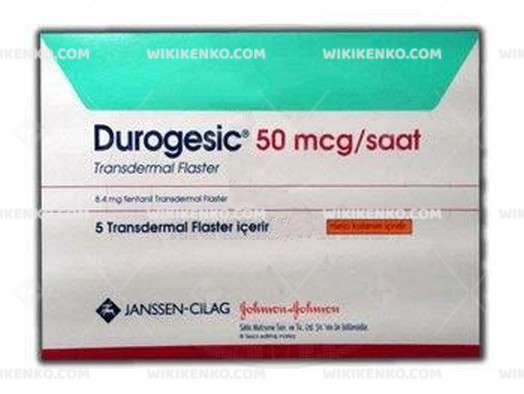
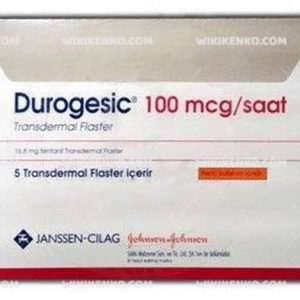
Durogesic (also marketed as Durogesic DTrans or Duragesic) is a transdermal therapeutic system containing the synthetic opioid agonist fentanyl, designed to deliver a nominal dose of 50 micrograms per hour through intact skin over 72 hours. The 50 mcg/h system typically contains several milligrams of fentanyl in a polymer matrix; for reference, comparable products contain approximately 5.5–8.4 mg fentanyl with an active surface area around 17–21 cm², formulated to achieve the target flux. Excipients include an adhesive polymer matrix and backing film; full qualitative composition is specified in the Summary of Product Characteristics (SmPC) and may vary slightly between manufacturers and markets.
The patch is translucent or semi‑translucent, often rectangular with rounded corners and printed with the strength designation “50 micrograms/hour fentanyl” or an equivalent local language statement to minimise medication errors. Patches are individually sealed in child‑resistant sachets, and the system is classified as a controlled drug due to the high abuse and diversion potential of fentanyl.
Mechanism of action and pharmacology
Fentanyl is a highly potent synthetic opioid that acts as a selective, full agonist at the mu‑opioid receptors in the central nervous system, producing analgesia, sedation, and respiratory depression. Activation of mu‑receptors leads to inhibition of adenylate cyclase activity, reduced cAMP, and decreased release of excitatory neurotransmitters (such as substance P and glutamate), thereby modulating nociceptive transmission at spinal and supraspinal levels. In addition, fentanyl increases pain threshold and alters the emotional response to pain without directly affecting the underlying cause of pain.
Compared with morphine, fentanyl exhibits a higher lipophilicity, enabling rapid penetration into the central nervous system and efficient transdermal absorption through the stratum corneum. Fentanyl demonstrates mainly mu‑mediated effects with minimal intrinsic activity at kappa and delta opioid receptors, which partly explains its clinical profile, including strong analgesia with relatively less histamine release than morphine. Like other opioids, fentanyl may cause tolerance, physical dependence, and opioid‑induced hyperalgesia after prolonged exposure.
Pharmacokinetics
Absorption
After application of a Durogesic fentanyl transdermal patch, fentanyl diffuses from the polymer matrix into the skin, where a depot forms in the upper skin layers and then transfers into the systemic circulation. Serum fentanyl concentrations rise gradually, generally approaching a plateau between 12 and 24 hours and remaining relatively constant, with minor fluctuations, for the remainder of the 72‑hour application interval. The nominal delivery rate (e.g. 50 mcg/h) represents the average systemic delivery across normal skin over 72 hours, although inter‑individual variability in transdermal absorption is substantial.
With continuous application of sequential patches, fentanyl accumulates until steady‑state is reached, typically by the end of the second 72‑hour application; at steady state, AUC and peak concentrations are approximately 40% higher than after the first patch. The absolute bioavailability of transdermal fentanyl is high, around 92%, reflecting efficient percutaneous absorption compared with intravenous administration. Application of a new patch earlier than the recommended 72 hours (for example at 24 hours) can increase serum fentanyl concentrations by about 14% on average, with a reported range of 0–26%, and is therefore not recommended except under specific specialist guidance.
Distribution
Once absorbed, fentanyl is widely distributed with a large apparent volume of distribution due to its lipophilicity and extensive tissue uptake. Fentanyl is approximately 80–85% bound to plasma proteins, primarily alpha‑1‑acid glycoprotein, and crosses both the blood–brain and placental barriers. This extensive distribution contributes to a depot effect, which partly sustains plasma levels even after patch removal.
Metabolism
Fentanyl is almost exclusively metabolised in the liver via cytochrome P450 isoenzyme CYP3A4 to inactive metabolites, principally norfentanyl. Systemic clearance of fentanyl may be reduced by inhibitors of CYP3A4 (such as azole antifungals, macrolide antibiotics, and certain protease inhibitors), resulting in higher fentanyl plasma levels and increased risk of serious adverse reactions including profound respiratory depression. Conversely, strong CYP3A4 inducers (such as rifampicin, carbamazepine, phenytoin) may decrease fentanyl concentrations and analgesic efficacy, necessitating close clinical monitoring.
Elimination
After patch removal, serum fentanyl concentrations decline gradually, with an effective terminal half‑life of approximately 13–22 hours, reflecting continued absorption from the cutaneous depot rather than rapid systemic clearance. Fentanyl metabolites are mainly excreted in urine, with a smaller fraction eliminated in faeces, and only a small proportion of the dose is excreted unchanged. Because of the long effective half‑life after transdermal administration, clinically significant opioid effects, including respiratory depression, may persist for many hours after removal of the patch.
Indications and patient population
Durogesic transdermal patches are indicated for the management of severe chronic pain that requires continuous, long‑term opioid administration and cannot be adequately controlled with non‑opioid analgesics or short‑acting opioids. Indications include chronic cancer pain and selected cases of non‑malignant chronic pain where the patient is opioid‑tolerant and requires stable, around‑the‑clock analgesia. The product is not appropriate for the management of acute pain, postoperative pain, or mild/intermittent pain that can be managed with as‑needed analgesics.
Use in paediatric populations is restricted: in many jurisdictions, fentanyl transdermal systems are authorised only for opioid‑tolerant children aged 2 years and older receiving at least the equivalent of a specified daily morphine dose, and therapy must be initiated and supervised by physicians experienced in paediatric opioid management. In opioid‑naïve patients, including most elderly individuals, transdermal fentanyl is generally contraindicated or should only be considered at the lowest strength under exceptional circumstances after careful benefit–risk assessment.
Dosing, titration, and administration
Initial dosing and conversion
Durogesic patches are available in multiple strengths (e.g. 12, 25, 50, 75, and 100 mcg/h), enabling titration based on the patient’s prior opioid requirements and clinical response. Before initiating a 50 mcg/h patch, the patient should already be opioid‑tolerant, typically receiving at least the equivalent of a moderate to high daily morphine dose, with conversion guided by standard equianalgesic ratios and the SmPC‑provided morphine‑to‑fentanyl conversion table. Previous systemic opioids should be tapered gradually after the first patch is applied, with rescue medication available until adequate analgesia with the patch alone is achieved.
The recommended application interval is 72 hours; the patch is applied to non‑irritated, non‑irradiated, hairless or clipped (not shaved) skin on the upper torso or upper arm, pressed firmly for at least 30 seconds to ensure adhesion. If analgesia is insufficient at 72 hours, the dose may be increased in increments of 12 or 25 mcg/h, based on the average daily requirement for supplemental short‑acting opioids. Dose escalation should not be undertaken more frequently than every 6 days (two patch cycles), as steady state at the new dose is generally reached only after this period.
Dose titration and maintenance
During titration, patients may require additional short‑acting opioids to treat breakthrough pain until a stable balance between analgesia and tolerability is reached. For doses above 100 mcg/h, more than one patch may be applied simultaneously to different skin sites; some patients with very high opioid requirements may require total doses exceeding 300 mcg/h, at which point alternative or additional opioid modalities should be considered. Once an effective dose is established, patients should be reviewed regularly, and the dose reduced when pain intensity decreases or when adverse effects become problematic, including in the context of disease remission or adjunctive analgesic therapies.
If therapy is to be discontinued, the patch strength should be tapered gradually rather than stopped abruptly to minimise withdrawal symptoms, and conversion to another opioid should follow accepted equianalgesic principles under close monitoring. Because of the delayed decline in fentanyl concentrations after patch removal, dose reductions or discontinuations of interacting medicinal products (such as CYP3A4 inhibitors) should also be made cautiously.
Route and site of administration
The patch is intended for transdermal use only and must not be cut, divided, ingested, injected, or applied to damaged or irradiated skin. Application sites should be rotated, with at least several days between applications to the same skin area to reduce the risk of local irritation and altered absorption. In cases of compromised adhesion, a securing dressing approved in the product information may be used, but heating pads, hot baths, saunas, or other external heat sources over the patch site must be avoided because they can markedly increase fentanyl absorption.
Contraindications and major warnings
Absolute contraindications
Durogesic fentanyl patches are contraindicated in the following situations:
-
Acute or postoperative pain.
-
Mild or intermittent pain that does not require continuous opioid therapy.
-
Opioid‑naïve patients (including most children and adults not previously receiving regular opioids).
-
Severe respiratory depression or severe obstructive lung disease.
-
Known hypersensitivity to fentanyl or any excipients.
Use is also generally contraindicated or not recommended in children below 2 years of age.
Warnings and precautions
The most clinically significant risk is life‑threatening respiratory depression, especially during initiation, dose escalation, overdose, or concomitant use of central nervous system depressants. Patients with chronic obstructive pulmonary disease, reduced respiratory reserve, or pre‑existing respiratory depression require particular caution and lower doses. Heat exposure (fever, heated blankets, sauna) may increase fentanyl release and absorption, thereby raising serum concentrations and the risk of overdose; patients must be counselled to avoid external heat sources and to seek medical advice if high fever occurs.
Durogesic patches carry a high risk of abuse, diversion, and misuse, including by individuals for whom the medicine is not prescribed, and used patches still contain enough fentanyl to cause serious harm or death, especially in children. Concomitant use with benzodiazepines, other sedatives/hypnotics, gabapentinoids, alcohol, or other opioids significantly increases the risk of profound sedation, respiratory depression, coma, and death. Additional precautions are required in patients with hepatic or renal impairment, bradyarrhythmias, raised intracranial pressure, or myasthenia gravis, and during pregnancy or breastfeeding.
Adverse reactions and safety profile
The adverse‑reaction profile of Durogesic largely reflects the pharmacology of fentanyl and other strong opioids. Common adverse effects include nausea, vomiting, constipation, drowsiness, dizziness, headache, dry mouth, sweating, and pruritus at the application site. Serious adverse reactions include respiratory depression, bradycardia, hypotension, confusion, hallucinations, urinary retention, ileus, and in rare cases serotonin syndrome when combined with serotonergic drugs.
Local reactions at the application site such as erythema, rash, or pruritus are usually mild and transient, but more severe contact dermatitis may necessitate discontinuation. Long‑term use is associated with opioid tolerance, physical dependence, and risk of opioid use disorder; abrupt cessation can precipitate withdrawal characterised by agitation, anxiety, myalgia, sweating, and gastrointestinal symptoms. Clinical experience and post‑marketing data have also highlighted the risk of accidental exposure in children and pets, which can result in fatal opioid toxicity.
Selected adverse effects overview
| Adverse effect category | Examples (non‑exhaustive) | Clinical relevance |
|---|---|---|
| Central nervous system | Somnolence, dizziness, confusion, hallucinations, sedation. | May impair driving and operating machinery; early warning of potential respiratory depression. |
| Respiratory | Respiratory depression, dyspnoea, hypoventilation. | Potentially life‑threatening; requires close monitoring, especially after initiation or dose increase. |
| Gastrointestinal | Nausea, vomiting, constipation, dry mouth. | Constipation is common and often requires prophylactic laxatives; nausea may diminish with continued use. |
| Cardiovascular | Hypotension, bradycardia, peripheral vasodilation. | Caution in patients with cardiovascular disease or hypovolaemia. |
| Dermatologic | Application‑site erythema, pruritus, rash. | Usually mild; rotate sites and manage with topical measures; consider alternative if severe. |
| Dependence/withdrawal | Tolerance, physical dependence, withdrawal syndrome. | Requires gradual tapering; assess for signs of misuse or opioid use disorder. |
Drug interactions
Clinically significant drug interactions are mainly mediated by CYP3A4 and additive CNS depressant effects. Strong CYP3A4 inhibitors (e.g. ketoconazole, itraconazole, clarithromycin, ritonavir) can increase fentanyl systemic exposure, necessitating dose reduction and careful monitoring for respiratory depression. Conversely, strong CYP3A4 inducers (e.g. rifampicin, carbamazepine, phenytoin) may reduce analgesic efficacy and precipitate withdrawal in dependent patients if the fentanyl dose is not adjusted.
Concomitant use with benzodiazepines or other CNS depressants, including alcohol, sedative antidepressants, antipsychotics, hypnotics, and gabapentinoids, can lead to additive sedation, respiratory depression, coma, and death, and should be reserved for situations where no alternative is possible under strict monitoring. Combination with serotonergic agents (such as SSRIs, SNRIs, MAOIs) may increase the risk of serotonin syndrome, although reported cases are uncommon. Fentanyl may also interact with partial agonist or mixed agonist‑antagonist opioids (e.g. buprenorphine, nalbuphine) which can precipitate withdrawal or reduce analgesic effect.
Special populations
In elderly patients, pharmacokinetic changes, comorbidities, and polypharmacy increase sensitivity to fentanyl, and lower initial doses with careful titration are recommended; in opioid‑naïve elderly patients, only the lowest strength (e.g. 12 mcg/h) should be considered if clearly indicated. Patients with hepatic impairment may have reduced fentanyl clearance and higher plasma levels, so dose reductions and extended monitoring are required. Renal impairment has less impact on parent fentanyl exposure, but accumulation of metabolites and increased susceptibility to opioid adverse effects still necessitate caution.
Pregnancy use is generally discouraged unless clearly necessary, as chronic opioid exposure may lead to neonatal withdrawal syndrome and respiratory depression in the newborn; transdermal fentanyl should not be used during labour unless specifically indicated and monitored. Fentanyl passes into breast milk, and breastfeeding is typically not recommended or should be interrupted for a defined period after the last patch removal, according to local product information.
Example: dose selection considerations table
| Patient factor | Potential impact on fentanyl PK/PD | Practical implication for Durogesic use |
|---|---|---|
| Elderly age | Reduced clearance, increased sensitivity to CNS and respiratory effects. | Start with lowest strength, titrate slowly, monitor closely for sedation and respiratory depression. |
| Hepatic impairment | Decreased metabolism via CYP3A4, higher plasma levels. | Use reduced doses, consider alternative analgesics in severe liver disease. |
| Renal impairment | Possible metabolite accumulation, increased susceptibility to adverse effects. | Cautious dosing, close monitoring; consider alternatives in advanced renal failure. |
| Concomitant CYP3A4 inhibitor | Increased fentanyl exposure and toxicity risk. | Avoid combination if possible; if unavoidable, reduce dose and monitor intensively. |
| Fever or external heat | Enhanced transdermal absorption and higher fentanyl levels. | Avoid heat sources; monitor and adjust dose or remove patch in case of significant hyperthermia. |
Overdose and emergency management
Clinical features of overdose include marked respiratory depression, extreme somnolence progressing to stupor or coma, skeletal muscle flaccidity, cold and clammy skin, bradycardia, hypotension, and miosis. In suspected overdose, all patches must be removed immediately, the patient’s airway ensured and supported, and ventilation assisted as required. Intravenous administration of an opioid antagonist such as naloxone should be considered, with repeated doses or continuous infusion possibly necessary due to the long effective half‑life of transdermal fentanyl compared with naloxone.
Supportive care includes cardiovascular monitoring, maintenance of adequate body temperature and fluid status, and observation for at least 24 hours due to the potential for recurrent depression after initial improvement. In mixed overdoses with other CNS depressants, specific management for each substance should be implemented in line with toxicology guidelines.
Handling, storage, and disposal
Patches should be stored in their original sachets at room temperature, protected from heat and moisture, and kept out of the reach and sight of children and unauthorised individuals. Used patches still contain a significant amount of fentanyl and must be folded with the adhesive sides together and disposed of safely in accordance with local regulations, preferably via take‑back programmes or as instructed in the product information. Accidental contact with a patch by opioid‑naïve individuals, especially children, can cause fatal poisoning and requires immediate removal of the patch and urgent medical assessment.












Reviews
There are no reviews yet.