
Description
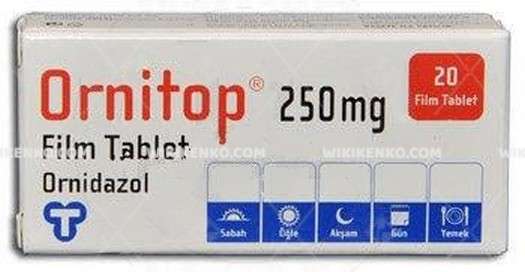
Ornitop Film Tablet 250 mg is an antiprotozoal and antibacterial medication containing ornidazole as its active pharmaceutical ingredient. This medication, manufactured by Toprak İlaç in Turkey, belongs to the nitroimidazole derivative class of drugs and is primarily used to combat various protozoal infections and anaerobic bacterial infections. It has established itself as an effective treatment option for conditions such as trichomoniasis, amebiasis, and giardiasis, among others. This comprehensive guide explores the various aspects of this medication, including its composition, mechanism of action, therapeutic applications, dosing guidelines, and safety considerations.
Composition and Classification
Ornitop Film Tablet 250 mg contains ornidazole as its active pharmaceutical ingredient, with each film-coated tablet containing exactly 250 mg of this substance. Ornidazole belongs to the 5-nitroimidazole class of antimicrobial agents, which includes other medications such as metronidazole and tinidazole.
The medication is formulated as a film-coated tablet for oral administration and is classified primarily as an antiprotozoal medication under the Anatomical Therapeutic Chemical (ATC) classification code P01AB03. This classification places it within the broader category of antiparasitic medications specifically designed to combat protozoal infections.
Mechanism of Action
The therapeutic efficacy of Ornitop Film Tablet 250 mg stems from ornidazole’s unique mechanism of action against susceptible microorganisms. When ornidazole enters anaerobic organisms or protozoal cells, it undergoes reduction by the microbial nitroreductase enzymes, leading to the formation of cytotoxic products that interact with microbial DNA.
This interaction disrupts the helical structure of DNA, inhibits protein synthesis, and ultimately leads to cell death of the targeted microorganisms. This mechanism makes ornidazole particularly effective against anaerobic bacteria and protozoal parasites that rely on anaerobic metabolism, including Trichomonas vaginalis, Entamoeba histolytica, and Giardia lamblia. The selective toxicity toward anaerobic organisms while generally sparing aerobic cells contributes to its favorable therapeutic index.
Therapeutic Indications
Protozoal Infections
Ornitop Film Tablet 250 mg demonstrates significant efficacy in treating various protozoal infections. It is particularly indicated for infections caused by Trichomonas vaginalis, which affects the genito-urinary system in both men and women. The medication is also highly effective against amebiasis (infections caused by Entamoeba histolytica), including intestinal amebiasis, amebic dysentery, and extraintestinal manifestations such as amebic liver abscess.
Additionally, Ornitop is recommended for the treatment of giardiasis (also known as lambliasis), an intestinal infection caused by the parasite Giardia lamblia that commonly manifests with symptoms such as diarrhea, abdominal cramps, and malabsorption.
Anaerobic Bacterial Infections
Beyond its antiprotozoal applications, Ornitop Film Tablet 250 mg shows remarkable efficacy against a range of infections caused by anaerobic bacteria. This includes conditions such as anaerobic bacteremia, peritonitis, intra-abdominal infections, and soft tissue infections where anaerobic bacteria are the causative agents.
The medication’s effectiveness extends to treating infections involving Bacteroides species, Clostridium species, Fusobacterium species, and various anaerobic cocci. Its ability to achieve therapeutic concentrations in most body tissues makes it particularly valuable for treating deep-seated anaerobic infections.
Surgical Prophylaxis
Ornitop Film Tablet 250 mg is also indicated for prophylactic use before surgical procedures that carry a high risk of anaerobic bacterial contamination. This preventive approach is particularly relevant for colorectal surgeries, gynecological procedures, and operations involving potentially contaminated tissues. By administering Ornitop preoperatively and potentially continuing for a short course postoperatively, the risk of developing anaerobic infections as a surgical complication can be significantly reduced, enhancing overall surgical outcomes.
Dosage and Administration
Dosage in Adults
The dosage regimen for Ornitop Film Tablet 250 mg varies according to the specific infection being treated. The medication should always be taken after meals to minimize gastrointestinal side effects. For trichomoniasis, two distinct regimens are available: either a single-dose therapy consisting of 6 tablets (1500 mg) taken once, or a five-day course of 2 tablets (500 mg) twice daily. For the treatment of intestinal or hepatic amebiasis, the standard adult dosage is typically 2 tablets (500 mg) twice daily for 5-10 days. In cases of acute amebic dysentery, a higher-dose, shorter-duration regimen may be employed, consisting of 6-8 tablets (1500-2000 mg) once daily for three days.
For giardiasis, the recommended dose is either 6 tablets (1500 mg) once daily for 1-2 days or 2 tablets (500 mg) twice daily for 5-10 days. When treating anaerobic bacterial infections, the standard dosage is 2 tablets (500 mg) twice daily, with treatment duration ranging from 5 to 10 days depending on the severity and location of the infection.
Pediatric Dosing
For pediatric patients, Ornitop dosing is weight-based. Children weighing up to 35 kg typically receive 25 mg/kg body weight once daily for 5-10 days for conditions such as amebiasis and giardiasis. For more acute presentations like amebic dysentery, the pediatric dosage increases to 40 mg/kg body weight once daily for approximately three days. It’s important to note that for children, the total daily dose can be calculated based on weight and then divided into appropriate portions of the tablet according to the physician’s guidance. For anaerobic infections in children, the recommended dosage ranges from 20 to 30 mg/kg body weight daily, divided into two administrations.
Special Populations
Dosage adjustments may be necessary for patients with certain conditions. While specific dosage modifications for renal impairment are generally not required for ornidazole, patients with severe hepatic dysfunction may need adjusted dosing schedules due to the drug’s hepatic metabolism. Pregnant women should only use Ornitop if clearly indicated, as the benefits must outweigh potential risks. Similarly, caution is advised when prescribing to breastfeeding mothers, with consideration given to temporarily discontinuing breastfeeding during treatment if possible. For elderly patients, standard adult dosing is generally appropriate, though closer monitoring for adverse effects may be prudent.
Pharmacokinetic Profile
Ornitop Film Tablet 250 mg exhibits favorable pharmacokinetic properties that contribute to its clinical efficacy. After oral administration, ornidazole is rapidly and almost completely absorbed from the gastrointestinal tract, with approximately 90% bioavailability. Peak plasma concentrations are typically achieved within 3 hours of administration. The drug has excellent tissue distribution, with less than 15% bound to plasma proteins, allowing it to penetrate effectively into various body tissues, fluids, and even the cerebrospinal fluid.
Ornidazole undergoes hepatic metabolism to form α-hydroxymethyl and 2-hydroxymethyl metabolites. The elimination half-life of ornidazole is approximately 13 hours, which supports its convenient twice-daily dosing schedule. Approximately 85% of a single dose is excreted within the first 5 days, primarily in the form of metabolites.
Contraindications and Precautions
Ornitop Film Tablet 250 mg is contraindicated in patients with known hypersensitivity to ornidazole or any component of the formulation. The medication should be used with caution in patients with central nervous system disorders such as epilepsy or multiple sclerosis, as nitroimidazole compounds may potentially aggravate these conditions. Patients with liver disease require careful consideration, as ornidazole is primarily metabolized in the liver, and severe hepatic impairment may lead to increased drug exposure. Although ornidazole appears relatively safe in patients with kidney disease, standard precautionary measures are still advised.
The medication is generally not recommended during pregnancy unless clearly indicated, and breastfeeding mothers should exercise caution during treatment. Importantly, patients should strictly avoid alcohol consumption during treatment with Ornitop and for several days afterward, as a disulfiram-like reaction (with symptoms including nausea, vomiting, flushing, and tachycardia) may occur.
Side Effects
While generally well-tolerated, Ornitop Film Tablet 250 mg may cause several adverse effects. Gastrointestinal disturbances represent the most common side effects and include nausea, vomiting, abdominal discomfort, and diarrhea. Neurological effects such as headache, dizziness, drowsiness, and in rare cases, sensory peripheral neuropathy have been reported. Some patients may experience an unpleasant metallic taste in the mouth during treatment.
Dermatological reactions, including rash, pruritus, and urticaria, occur occasionally. In rare instances, more serious adverse effects such as seizures, encephalopathy, or severe hepatotoxicity may develop. Most adverse effects are mild to moderate in severity and resolve spontaneously upon discontinuation of the medication. If severe or persistent adverse effects occur, the patient should promptly consult their healthcare provider for appropriate management.
Drug Interactions
Several important drug interactions should be considered when prescribing Ornitop Film Tablet 250 mg. Concurrent administration with oral anticoagulants, particularly warfarin, may enhance the anticoagulant effect, necessitating closer monitoring of coagulation parameters. Ornidazole may potentiate the effect of neuromuscular blocking agents such as vecuronium, which is particularly relevant in surgical settings.
The combination with disulfiram is not recommended as it may precipitate psychotic reactions. Alcohol consumption should be strictly avoided during treatment with ornidazole and for at least 72 hours after the last dose due to the risk of a disulfiram-like reaction. Other potential interactions include enhanced lithium toxicity when co-administered with lithium and altered clearance of certain drugs metabolized by hepatic microsomal enzyme systems. Healthcare providers should conduct a thorough medication review before initiating Ornitop therapy to identify and manage potential drug interactions.
Storage and Handling
Ornitop Film Tablet 250 mg should be stored in its original packaging at room temperature (below 30°C) in a dry place, protected from direct sunlight and excess humidity. The medication should be kept out of reach of children at all times. Patients should not use the product beyond its expiration date as indicated on the packaging. If the appearance of the tablet changes (such as discoloration or crumbling), the product should not be used.
Unused or expired medication should be disposed of according to local pharmaceutical waste regulations rather than discarded in household trash or sewage systems.
Summary Table
| Parameter | Information |
|---|---|
| Generic Name | Ornidazole |
| Brand Name | Ornitop |
| Manufacturer | Toprak İlaç (Turkey) |
| Active Ingredient | 250 mg ornidazole per film-coated tablet |
| Classification | Antiprotozoal, Antibacterial (Nitroimidazole derivative) |
| ATC Code | P01AB03 |
| Main Indications | Trichomoniasis, Amebiasis, Giardiasis, Anaerobic bacterial infections, Surgical prophylaxis |
| Standard Dosage (Adults) | Trichomoniasis: Either 1500 mg single dose or 500 mg twice daily for 5 days Amebiasis: 500 mg twice daily for 5-10 days Giardiasis: Either 1500 mg once daily for 1-2 days or 500 mg twice daily for 5-10 days Anaerobic infections: 500 mg twice daily for 5-10 days |
| Pediatric Dosing | Generally 25-40 mg/kg/day depending on condition |
| Administration | Oral, taken after meals |
| Common Side Effects | Gastrointestinal disturbances, headache, dizziness, metallic taste |
| Serious Adverse Effects | Peripheral neuropathy, seizures (rare), hepatotoxicity (rare) |
| Contraindications | Hypersensitivity to ornidazole or components |
| Drug Interactions | Oral anticoagulants, alcohol, disulfiram, neuromuscular blockers |
| Special Precautions | Use with caution in liver disease, CNS disorders, pregnancy, and breastfeeding |
| Storage Conditions | Store below 30°C in a dry place, protected from light |
Conclusion
Ornitop Film Tablet 250 mg represents an effective therapeutic option for various protozoal and anaerobic bacterial infections. Its active ingredient, ornidazole, demonstrates broad-spectrum activity against susceptible microorganisms through its mechanism of interfering with microbial DNA synthesis. The medication’s diverse clinical applications, from treating trichomoniasis and amebiasis to preventing post-surgical anaerobic infections, underscore its significance in contemporary antimicrobial therapy.
As with any medication, optimal outcomes depend on appropriate patient selection, accurate dosing, vigilant monitoring for adverse effects, and attention to potential drug interactions. Healthcare providers should balance the benefits and risks of Ornitop therapy for each individual patient, taking into account their specific clinical circumstances, comorbidities, and concurrent medications.











Reviews
There are no reviews yet.