
Description
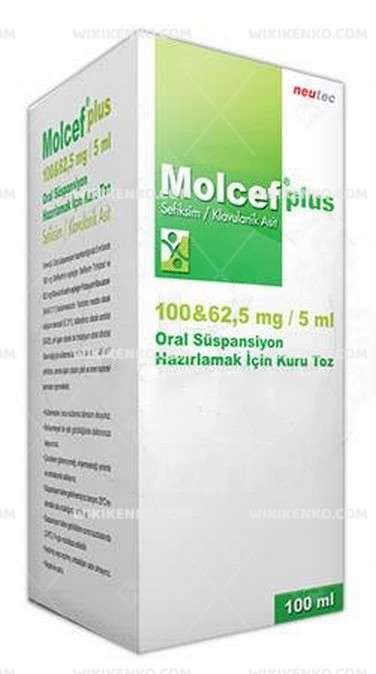
Molcef Oral Suspension is a pharmaceutical product containing cefixime, a third-generation cephalosporin antibiotic widely used in the treatment of various bacterial infections. This dry powder formulation requires reconstitution before administration, making it particularly suitable for pediatric patients and those who have difficulty swallowing solid dosage forms. The following comprehensive overview details the pharmacological properties, therapeutic applications, dosage guidelines, and safety considerations for this medication.
Composition and Pharmaceutical Form
Active Ingredient
Molcef contains cefixime as its primary active pharmaceutical ingredient. Each 5 mL of prepared suspension (one measuring unit) contains 100 mg of cefixime. The pharmaceutical preparation specifically contains cefixime trihydrate, with 447.67 mg of cefixime trihydrate corresponding to 400 mg of cefixime in the tablet form.
Excipients
The formulation contains several excipients that contribute to its stability, taste, and consistency. These include sucrose (2479.1 mg per 5 mL), sodium benzoate (E211) as a preservative, xanthan gum as a suspending agent, colloidal silicon dioxide, magnesium stearate, and flavoring agents including strawberry and cream caramel aromas. The presence of these ingredients enhances palatability, which is particularly important for pediatric patients.
Pharmaceutical Form
Molcef is available as a yellowish powder for oral suspension that, upon reconstitution with water, forms a homogeneous yellowish suspension. The product is typically packaged in an amber-colored bottle with a child-resistant cap and includes a measuring spoon for accurate dosing.
Therapeutic Indications
Cefixime, the active component of Molcef, is effective against a wide range of gram-positive and gram-negative bacteria. The drug exhibits marked bactericidal activity and is indicated for the treatment of the following acute infections when caused by susceptible microorganisms:
Upper Respiratory Tract Infections
Molcef is effective in treating infections of the upper respiratory tract, including:
-
Acute otitis media (middle ear infection) caused by Streptococcus pneumoniae, Haemophilus influenzae, and Moraxella catarrhalis
-
Acute sinusitis caused by the same pathogens as mentioned above
-
Acute tonsillopharyngitis or pharyngitis, particularly when caused by Streptococcus pyogenes
Lower Respiratory Tract Infections
The medication is indicated for the treatment of:
-
Acute exacerbations of chronic bronchitis, particularly when caused by Streptococcus pneumoniae and Haemophilus influenzae
-
Acute bronchitis
Urinary Tract Infections
Molcef is effective against uncomplicated urinary tract infections, including cystitis, cystourethritis, and uncomplicated pyelonephritis. Its efficacy against common urinary pathogens makes it a valuable option for these conditions.
Sexually Transmitted Infections
The medication is indicated for the treatment of uncomplicated gonococcal infections. For this specific indication, a single dose regimen is typically recommended.
Mechanism of Action
Cefixime inhibits bacterial cell wall synthesis by binding to specific penicillin-binding proteins (PBPs) located inside the bacterial cell wall. This action results in the interruption of cell wall synthesis, leading to bacterial cell lysis and death. The drug’s stability in the presence of beta-lactamase enzymes makes it effective against many beta-lactamase-producing organisms that might be resistant to other antibiotics.
Pharmacokinetics
Absorption and Distribution
Cefixime has a volume of distribution averaging 0.1 L/kg of body weight when administered orally. Approximately 65% of cefixime is bound to serum proteins, and this binding is concentration-independent.
Metabolism and Elimination
There is no evidence of metabolism of cefixime in vivo. Approximately 50% of absorbed cefixime is excreted unchanged in the urine within 24 hours. The serum half-life averages 3 to 4 hours in healthy subjects, though it can range up to 9 hours in some normal individuals. In patients with severe renal impairment (creatinine clearance 5-20 mL/min), the half-life can increase to an average of 11.5 hours.
Dosage and Administration
To prepare the oral suspension:
-
Shake the bottle containing the dry powder vigorously
-
Add a small amount of boiled and cooled water to initially moisten the powder
-
Shake vigorously
-
Allow to stand for 5 minutes
-
Add water up to the marked line on the bottle and shake thoroughly
-
The resulting yellowish suspension is then ready for use
The reconstituted suspension can be stored at room temperature below 25°C for up to 14 days.
Dosage Guidelines
Children 12 Years and Under
The recommended dosage for children is 8 mg/kg/day, administered either as a single daily dose or divided into two equal doses given 12 hours apart. The following table provides specific dosing guidelines based on weight:
Adults and Children Over 12 Years
The recommended daily dose is 400 mg, which can be administered either as a single daily dose of 400 mg or divided into two equal doses of 200 mg taken 12 hours apart. For uncomplicated gonococcal infections, a single dose of 400 mg is recommended.
Duration of Treatment
The usual course of treatment is 7 days, though this may be extended up to 14 days depending on the severity of the infection and clinical response. For streptococcal pharyngitis/tonsillitis, a 10-day treatment course is recommended to prevent the development of rheumatic fever.
Special Populations
Elderly Patients
No specific dosage adjustment is generally required for elderly patients, though renal function should be assessed, and dose adjustments made accordingly in cases of impaired renal function.
Patients with Renal Impairment
For patients with significant renal dysfunction, dose reduction is necessary. For those with a creatinine clearance between 21-60 mL/min, 75% of the standard daily dose should be administered at the standard frequency. For patients with creatinine clearance below 20 mL/min, 50% of the standard daily dose is recommended.
Contraindications and Precautions
Contraindications
Molcef is contraindicated in patients with known hypersensitivity to cefixime or other cephalosporin antibiotics. Caution should be exercised in patients with a history of penicillin allergy due to the possibility of cross-reactivity.
Special Warnings and Precautions
Special precautions are necessary in patients with renal impairment, as the drug is primarily eliminated through the kidneys. Additionally, prolonged use of the medication may result in overgrowth of non-susceptible organisms, requiring careful monitoring and appropriate management.
Side Effects
Molcef is generally well-tolerated, with most adverse reactions being mild and self-limiting. However, various side effects have been reported, affecting different body systems:
Blood and Lymphatic System Disorders
Cases of eosinophilia, hypereosinophilia, agranulocytosis, leukopenia, neutropenia, granulocytopenia, hemolytic anemia, thrombocytopenia, and thrombocytosis have been reported.
Gastrointestinal Effects
Common gastrointestinal adverse effects include abdominal pain, diarrhea (more common with higher doses), dyspepsia, nausea, vomiting, and flatulence. In some cases, moderate to severe diarrhea may necessitate discontinuation of therapy.
Other Adverse Reactions
Additional reported adverse effects include hepatobiliary disorders such as jaundice, central nervous system effects like dizziness and headache, respiratory symptoms including dyspnea, and various hypersensitivity reactions ranging from mild skin rashes to severe conditions like Stevens-Johnson syndrome and toxic epidermal necrolysis.
Drug Interactions
While specific drug interaction studies may be limited, as with other cephalosporins, caution should be exercised when co-administering Molcef with nephrotoxic drugs, as this may increase the risk of renal adverse effects. Additionally, the potential for altered prothrombin time with anticoagulants should be considered.
Storage Conditions
The unmixed powder should be stored in its original container at room temperature, protected from light and moisture. Once reconstituted, the suspension should be stored at temperatures below 25°C and used within 14 days.
Tabulated Summary
| Aspect | Details |
|---|---|
| Active Ingredient | Cefixime (100 mg per 5 mL of prepared suspension) |
| Pharmaceutical Form | Powder for oral suspension, yellowish in color |
| Main Therapeutic Uses | – Upper respiratory tract infections (otitis media, sinusitis, pharyngitis) – Lower respiratory tract infections (bronchitis) – Urinary tract infections – Uncomplicated gonococcal infections |
| Target Pathogens | – Streptococcus pneumoniae – Haemophilus influenzae – Moraxella catarrhalis – Streptococcus pyogenes – Escherichia coli – Proteus mirabilis – Klebsiella species |
| Adult Dosage | 400 mg daily (single dose or divided into two 200 mg doses) |
| Pediatric Dosage | 8 mg/kg/day (single dose or divided into two doses) |
| Treatment Duration | Typically 7 days, may extend to 14 days depending on infection |
| Common Side Effects | – Gastrointestinal: diarrhea, abdominal pain, nausea – Skin: rash, urticaria – Hematological: eosinophilia |
| Serious Side Effects | – Severe allergic reactions – Stevens-Johnson syndrome – Toxic epidermal necrolysis – Pseudomembranous colitis |
| Contraindications | Known hypersensitivity to cefixime or other cephalosporins |
| Storage After Reconstitution | Below 25°C for up to 14 days |
| Special Precautions | – Dose adjustment in renal impairment – Monitoring for superinfection with prolonged use – Caution in patients with history of penicillin allergy |
Conclusion
Molcef Oral Suspension is an effective cephalosporin antibiotic containing cefixime, indicated for various bacterial infections including respiratory tract infections, urinary tract infections, and uncomplicated gonorrhea. Its availability as a suspension makes it particularly suitable for pediatric patients and those with difficulty swallowing tablets. When used appropriately with consideration of dosage guidelines, potential adverse effects, and contraindications, Molcef represents a valuable therapeutic option in the management of susceptible bacterial infections. As with all antibiotics, it should be used judiciously to minimize the development of bacterial resistance.











Reviews
There are no reviews yet.