
Description
Plaque psoriasis is a persistent autoimmune skin condition marked by inflamed, red patches covered with silvery scales. Affecting millions globally, this disorder results from an accelerated skin cell turnover, leading to thickened, scaly plaques that often cause discomfort, itching, and social distress. Although its precise cause remains unclear, it is linked to genetic, immune, and environmental factors. While not contagious, plaque psoriasis can significantly impact a patient’s quality of life and often requires long-term management.
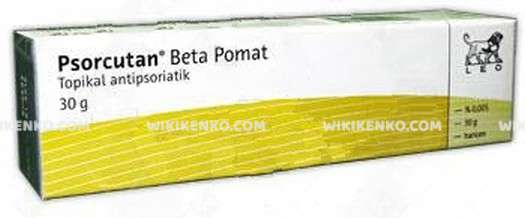
One of the widely used topical treatments for managing this condition is Psorcutan Beta Pomat, an ointment formulated to control both the symptoms and progression of plaque psoriasis. The combination of two potent active ingredients—calcipotriol and betamethasone dipropionate—makes this medication a mainstay in dermatologic therapy.
Benefits
Psorcutan Beta Pomat is an effective medication for the treatment of plaque psoriasis. It contains kalsipotriol, a substance similar to vitamin D, which helps to regulate skin cell growth. Betamethasone dipropionate, a corticosteroid, reduces inflammation and helps to relieve the symptoms of psoriasis.
Therapeutic Composition and Mechanism
Psorcutan Beta Pomat brings together the benefits of two pharmacological agents with complementary mechanisms of action. Calcipotriol is a synthetic derivative of vitamin D3 that plays a regulatory role in skin cell proliferation and differentiation. In psoriasis, skin cells multiply rapidly, leading to the characteristic plaques. Calcipotriol slows down this excessive cell division, thereby reducing plaque formation.
Betamethasone dipropionate, on the other hand, is a high-potency corticosteroid that combats inflammation, redness, and itching associated with plaque psoriasis. It works by suppressing the inflammatory response and immune activity in the skin, providing symptomatic relief and preventing further irritation.
Together, these ingredients offer a dual-action approach—one targeting the root cause (excessive skin growth) and the other alleviating the inflammation and discomfort.
Indications and Clinical Use
Psorcutan Beta Pomat is primarily indicated for the topical treatment of stable plaque psoriasis in adults. It is not suitable for facial or intertriginous (folded skin) areas due to the potency of its steroid component. The ointment should be applied externally to clean, dry skin. A thin layer is gently massaged into the affected areas once daily. The course of treatment should not exceed four continuous weeks to minimize systemic absorption and potential side effects from prolonged corticosteroid use.
This therapy is especially beneficial for patients with localized plaques that are resistant to milder treatments. Dermatologists often prescribe it as part of a stepwise or rotational treatment plan, which may include phototherapy, systemic agents, or other topical preparations.
Precautions
Patients should exercise caution when using Psorcutan Beta Pomat, particularly in terms of application area and frequency. It must not be applied to the face, eyes, or mucosal surfaces. If accidental contact occurs, the area should be rinsed thoroughly with water. This medication is contraindicated in individuals with hypersensitivity to calcipotriol, betamethasone, or any component of the formulation.
Patients with disorders of calcium metabolism, such as hypercalcemia or vitamin D toxicity, should avoid using this ointment. Similarly, individuals with severe liver or kidney dysfunction or a history of skin atrophy, rosacea, perioral dermatitis, or fungal infections should consult a healthcare professional before initiating therapy.
In addition, Psorcutan Beta should not be used concurrently with other medications containing vitamin D analogs or corticosteroids without medical supervision.
Side Effects
Like most medications, Psorcutan Beta Pomat may cause side effects, though not everyone experiences them. The most commonly reported reactions are local skin irritations, including burning, itching, dryness, or worsening of psoriasis lesions. Long-term use or application to large areas can lead to systemic effects such as adrenal suppression, skin thinning, or calcium imbalance.
Rare but serious side effects include signs of allergic reaction (e.g., rash, swelling, difficulty breathing), skin infections, and signs of hormone imbalance. If any of these occur, patients should discontinue use and seek medical attention promptly.
Patient Safety and Monitoring
While Psorcutan Beta Pomat is effective, its safety relies heavily on proper patient adherence and regular monitoring. Physicians typically recommend limiting the total weekly dose of calcipotriol to avoid systemic absorption. Patients should avoid excessive sun exposure and UV treatments during use, as corticosteroids can increase photosensitivity.
The combination therapy should be used with caution in pregnant and breastfeeding women, and only if the potential benefits outweigh the risks. Although no definitive teratogenic effects have been documented, limited data exist on its safety in pregnancy.
Summary Table
| Category | Details |
|---|---|
| Active Ingredients | Calcipotriol (Vitamin D analog), Betamethasone dipropionate (corticosteroid) |
| Indications | Topical treatment of plaque psoriasis in adults |
| Dosage & Usage | Apply thin layer once daily on affected areas; max duration: 4 weeks |
| Common Side Effects | Skin irritation, redness, dryness, burning, itching |
| Serious Reactions | Allergic reaction, adrenal suppression, calcium imbalance |
| Contraindications | Hypersensitivity, facial/intriginous application, hypercalcemia |
| Precautions | Avoid eyes, mucosa, damaged skin; monitor calcium levels and skin health |
| Pregnancy/Breastfeeding | Use only if clearly needed under medical advice |
| Storage | Store below 25°C; protect from light and moisture |
Conclusion
Psorcutan Beta Pomat remains a cornerstone in the topical management of plaque psoriasis, particularly for patients seeking fast-acting, localized relief. Its unique combination of calcipotriol and betamethasone addresses both the cellular dysregulation and inflammatory components of psoriasis. However, due diligence in application, patient education, and clinical monitoring are essential to ensure both efficacy and safety. As with any medication involving corticosteroids and vitamin D analogs, its use must be guided by a healthcare professional to maximize therapeutic benefits while minimizing risks.











Reviews
There are no reviews yet.