
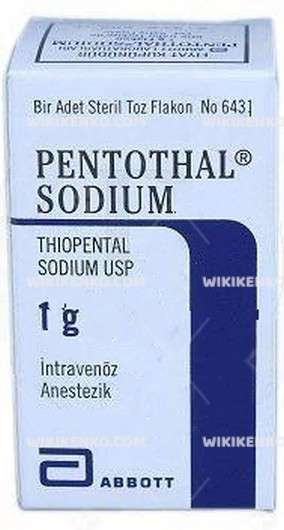
Description
Thiopental sodium (sodium thiopentone) is a thiobarbiturate, the sulfur analogue of pentobarbital, chemically designated sodium 5‑ethyl‑5‑(1‑methylbutyl)‑2‑thiobarbiturate. It is supplied as a yellowish, hygroscopic powder, typically stabilized with anhydrous sodium carbonate (about 60 mg per g thiopental) to maintain an alkaline pH and improve stability in solution.
The 1000 mg vial presentation contains 1.0 g thiopental sodium USP (or equivalent Ph. Eur. grade), intended to be reconstituted with sterile water for injection, 0.9% sodium chloride, or 5% dextrose to produce an injectable solution. After reconstitution, the product must be used promptly because no preservative is present, and any remaining solution is generally discarded within 24 hours to minimize microbial contamination risk.
Mechanism of action and pharmacodynamics
Thiopental sodium is an ultra‑short‑acting barbiturate that potentiates inhibitory neurotransmission by enhancing the action of gamma‑aminobutyric acid (GABA) at GABAA receptors in the central nervous system. It increases the duration of chloride channel opening, resulting in neuronal hyperpolarization and rapid depression of cortical activity, leading to hypnosis and loss of consciousness.
Clinically, loss of consciousness occurs within seconds after intravenous injection because thiopental is highly lipid soluble and quickly crosses the blood–brain barrier. The duration of a single induction dose is short (typically 5–10 minutes), largely determined by rapid redistribution from the brain to muscle and fat rather than by metabolic clearance. Thiopental also decreases cerebral metabolic rate and cerebral blood flow, which leads to a reduction in intracranial pressure, making it useful in selected neuroanesthesia and neurosurgical contexts.
Pharmacokinetics
Following intravenous administration, thiopental distributes rapidly to highly perfused organs, especially the brain, heart, liver and kidneys. Peak brain concentrations are achieved within about 30 seconds, correlating with onset of hypnosis. Redistribution to peripheral compartments (muscle and adipose tissue) leads to rapid decline in brain concentration and recovery of consciousness after a single bolus.
Thiopental is extensively bound to plasma proteins and undergoes hepatic metabolism via oxidative pathways to inactive metabolites, which are excreted primarily in the urine. Elimination half‑life is relatively prolonged (hours), so repeated doses or continuous infusions can result in accumulation and prolonged sedation, particularly in critically ill or obese patients. In hepatic or renal impairment, clearance may be reduced, warranting dose adjustment and close monitoring.
Clinical indications
Thiopental sodium 1000 mg vials are intended for hospital use in anesthesia and intensive care, with the main evidence‑based indications including:
-
Induction of general anesthesia prior to maintenance with inhalational or intravenous agents.
-
Short procedures requiring brief anesthesia when airway control and monitoring are assured.
-
Control of convulsive states (e.g., status epilepticus) when other first‑line agents are unavailable or ineffective, under intensive care supervision.
-
Reduction of intracranial pressure and cerebral metabolic demand in selected neurosurgical or neurocritical care patients (e.g., refractory intracranial hypertension), as part of a comprehensive management strategy.
Its use has declined in many countries in favor of propofol and newer agents, but thiopental remains in specialized use in some regions and centers.
Dosage and administration
Thiopental sodium must only be administered intravenously and only by clinicians trained in general anesthesia and airway management. Individual response is highly variable; dose titration according to age, body weight, comorbidities and concomitant medications is mandatory.
Reconstitution and concentration
For a 1000 mg vial, typical reconstitution regimens yield concentrations such as 2.5% (25 mg/mL) or 5% (50 mg/mL) for bolus induction, and 0.2–0.4% (2–4 mg/mL) for continuous infusion. Solutions are prepared aseptically by adding the calculated volume of sterile water for injection, 0.9% sodium chloride, or 5% dextrose, swirling gently until complete dissolution.
Typical dosing ranges (adults, as reported in labeling)
-
Induction of anesthesia: approximately 3–5 mg/kg IV in healthy adults, administered slowly (e.g., 25–50 mg increments every 20–40 seconds) until loss of consciousness.
-
Premedicated or high‑risk patients (e.g., elderly, hemodynamically unstable): lower doses (e.g., 2–3 mg/kg) are often adequate.
-
Pediatric patients: per‑kilogram requirements can be higher than in adults, especially in younger children, but must be individualized and follow specialized pediatric anesthesia guidance.
-
Maintenance/infusion (neuroanesthesia or refractory intracranial hypertension): low‑concentration infusions (e.g., 0.2–0.4% solutions) titrated to clinical and electroencephalographic targets, with careful hemodynamic and metabolic monitoring.
Rapid injection, especially of concentrated solutions, increases the risk of apnea, hypotension and cardiovascular collapse; slow titrated dosing with continuous monitoring is essential.
Contraindications
Thiopental sodium, including the 1000 mg formulation, is contraindicated in several clinically important situations:
-
Known hypersensitivity to thiopental, barbiturates, or formulation excipients (e.g., sodium carbonate).
-
Porphyria, particularly acute intermittent porphyria and related disorders, because barbiturates can precipitate life‑threatening porphyric crises.
-
Severe cardiovascular instability or shock where further myocardial depression or vasodilation could be fatal.
-
Status asthmaticus or severe obstructive airway disease with high risk of airway compromise, unless airway control is already secured.
-
Absence of adequate resuscitation facilities (including airway equipment, oxygen and resuscitative drugs).
Use is generally avoided or restricted during pregnancy and lactation except when the expected benefit outweighs the potential fetal or neonatal risks, and then only by specialists.
Warnings and precautions
Thiopental is a potent central nervous system depressant and must be used with comprehensive monitoring of airway, breathing and circulation.
Key precautions include:
-
Airway and respiration: Dose‑dependent respiratory depression and apnea are expected, requiring immediate availability of assisted or controlled ventilation and supplemental oxygen.
-
Cardiovascular effects: Thiopental reduces myocardial contractility and peripheral vascular resistance, producing hypotension and potential cardiovascular collapse, especially in hypovolemic, septic, cardiac, or elderly patients.
-
Injection technique: Strictly intravenous administration is required; inadvertent intra‑arterial injection can cause severe vasospasm, intense pain, thrombosis and tissue necrosis, necessitating immediate management (e.g., dilution, vasodilators, possible surgical consultation).
-
Accumulation: Prolonged infusions or repeated boluses can lead to accumulation with extended sedation, especially in obesity, organ dysfunction or when hepatic metabolism is impaired.
-
Drug dependence: Labeling carries a warning that thiopental “may be habit forming,” reflecting barbiturate class risk for abuse and dependence; however, use is almost exclusively in controlled hospital settings.
In neuroanesthesia, reductions in intracranial pressure must be balanced against potential decreases in mean arterial pressure and cerebral perfusion pressure.
Adverse reactions
Adverse reactions are largely dose related and linked to central nervous system and cardiorespiratory depression. Typical adverse events include:
-
Respiratory: apnea, hypoventilation, airway obstruction, laryngospasm, bronchospasm (particularly in reactive airway disease).
-
Cardiovascular: hypotension, tachycardia, bradycardia, arrhythmias, circulatory depression and rarely cardiac arrest.
-
CNS: prolonged sedation, delayed emergence, paradoxical excitation or agitation in rare cases, and, with prolonged high‑dose therapy, risk of tolerance and dependence.
-
Local and injection‑site reactions: pain, thrombophlebitis, tissue irritation; severe complications after intra‑arterial or extravasation exposure as noted above.
-
Hypersensitivity reactions: rash, urticaria, bronchospasm and rare anaphylactic or anaphylactoid reactions.
In long or high‑dose therapy in critical care, metabolic and hemodynamic complications such as hypotension, immunosuppression and infections must be considered in overall risk–benefit assessment.
Drug interactions
Thiopental interacts with many pharmacological agents, which can modify its anesthetic and cardiovascular effects.
-
Concomitant use with other CNS depressants (opioids, benzodiazepines, volatile anesthetics, alcohol, sedative antihistamines) enhances respiratory and cardiovascular depression, requiring lower thiopental doses and close monitoring.
-
Enzyme‑inducing agents (e.g., some antiepileptics such as phenytoin, carbamazepine, and chronic barbiturate therapy) may increase metabolism, potentially requiring higher doses for the same effect.
-
Thiopental itself can induce hepatic microsomal enzymes, affecting the metabolism of other drugs over time (e.g., warfarin, corticosteroids), though this is more relevant in prolonged or repeated administration than in single induction doses.
-
Hypotensive agents, beta‑blockers, and vasodilators can have additive cardiovascular effects.
-
In patients receiving neuromuscular blockers, thiopental may potentiate respiratory muscle weakness, reinforcing the need for ventilatory support until full recovery.
Formal checking of interaction databases and product literature is recommended before use in patients receiving polypharmacy, particularly in intensive care settings.
Use in special populations
Elderly
Older patients exhibit increased sensitivity to thiopental due to reduced cardiac reserve, decreased central nervous system tolerance and slower metabolism. Lower initial doses with cautious titration and extended monitoring are standard practice to avoid hypotension and prolonged sedation.
Hepatic and renal impairment
Because thiopental is metabolized in the liver and metabolites are excreted renally, impairment of either organ may reduce clearance. Dose reduction and lengthened recovery times should be anticipated; use in severe impairment requires careful risk–benefit evaluation.
Pregnancy and lactation
Thiopental crosses the placenta and may cause neonatal respiratory depression if used near delivery. Although it has historically been used in obstetric anesthesia, many centers now prefer alternative agents, and any use should be guided by local protocols and specialist advice. Thiopental is excreted in small amounts into breast milk; interruption of breastfeeding or clinical monitoring of the infant may be considered after large or repeated maternal doses.
Pediatrics
Children often require relatively higher mg/kg doses than adults for induction, and pharmacokinetics differ with age. Only anesthetists experienced in pediatric practice should administer thiopental in this population, with age‑appropriate monitoring and airway management.
formulation and pharmacological profile
The following table summarizes key formulation and pharmacological attributes of Pentothal Sodium 1000 mg (thiopental sodium 1 g vial).
| Parameter | Description |
|---|---|
| Active ingredient | Thiopental sodium (sodium thiopentone), 1.0 g per vial. |
| Chemical class | Ultra‑short‑acting thiobarbiturate, sulfur analogue of pentobarbital. |
| Excipients | Anhydrous sodium carbonate as alkaline buffer (approx. 60 mg/g thiopental). |
| Pharmaceutical form | Yellowish, hygroscopic sterile powder for solution for injection. |
| Route of administration | Intravenous injection or infusion only. |
| Typical bolus concentration | 2.5–5% (25–50 mg/mL) after reconstitution. |
| Infusion concentration | 0.2–0.4% (2–4 mg/mL) for continuous IV drip. |
| Onset of action | Within ~30 seconds of IV injection. |
| Duration after single induction dose | Approximately 5–10 minutes (redistribution limited). |
| Main indications | Induction of anesthesia, short procedures, control of convulsions, reduction of intracranial pressure. |
| Major risks | Respiratory depression, apnea, hypotension, intra‑arterial injection injury, porphyric crisis. |
Key clinical considerations and practice points
From a contemporary anesthetic and critical care perspective, thiopental sodium 1000 mg vials represent a high‑strength formulation of an older but still clinically relevant barbiturate anesthetic, whose use is now largely confined to specific indications such as neuroanesthesia and refractory intracranial hypertension. When used, careful adherence to evidence‑based dosing strategies, rigorous monitoring of cardiorespiratory function, and meticulous preparation and administration technique are essential to mitigate the significant risks inherent to this potent central nervous system depressant.
This article is informational and does not replace official product labeling or specialist medical advice; prescribing and administration should always conform to the current summary of product characteristics and institutional protocols for thiopental‑containing products.











Abid ali –
required for private clinic
Abid ali –
required for clinic & docters
Medical Guidance Center –
Hello Abid ali, this is WikiKenko. Thank you for your interest.
Please be aware that WikiKenko does not sell any medications. If you are in a life-threatening emergency, you may want to try filling out the “Community Support Network” form at https://wikikenko.com/community-support-network/. The community may be able to help you locate official sellers in your country.