
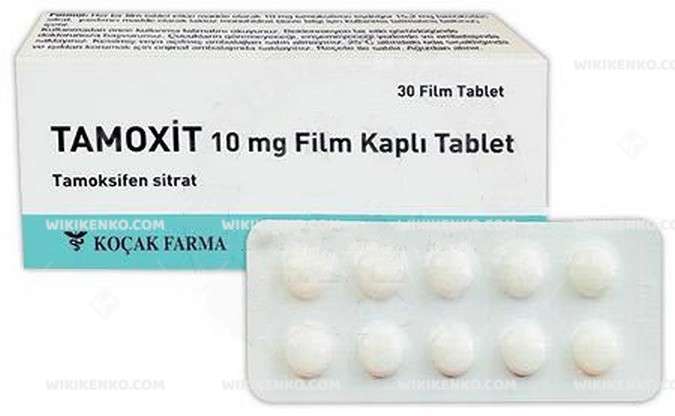
Tamoxit Film Coated Tablet 10 Mg

Dosage form

Pack size

Potency

10 Mg

Manufacturer

Origin

Generic Name (Ingredient)

Each Tablet Contains 15.2 Mg Of Tamoxifen Citrate, Equivalent To 10 Mg Tamoxifen.

Overview Tamoxit Film Coated Tablet 10 mg is primarily used in the treatment of breast cancer. The active ingredient, tamoxifen citrate, is a nonsteroidal antiestrogen. The medication comes in the form of round, white, film-coated tablets and is widely prescribed for hormone receptor-positive breast cancer patients.

read more

Assuming you’re in a life-threatening situation and require immediate access to medication, please visit our Community Support Network page.


Description

Composition

  • Active Ingredient: Each tablet contains 10 mg of tamoxifen, equivalent to 15.2 mg of tamoxifen citrate.
  • Inactive Ingredients: The tablet also contains lactose (derived from bovine milk), corn starch, pre-gelatinized corn starch, magnesium stearate, methylhydroxypropylcellulose (E5), propylene glycol, and Opaspray White M-1-711B (E171).

Indications

Tamoxit is indicated for the treatment of hormone receptor-positive breast cancer. It works by blocking the activity of estrogen in the breast, a hormone necessary for the growth of certain breast tumors. By inhibiting estrogen’s activity, tamoxifen may slow or stop the growth of these tumors.

Dosage and Administration

  • Recommended Dosage: The usual dosage for adults and elderly patients is 20-40 mg per day, divided into two doses taken in the morning and evening.
  • Administration Method: This medication is for oral use. It can be taken with or without food, but should be taken consistently at the same time each day to maintain optimal therapeutic levels.

Contraindications

Tamoxit is contraindicated in patients who have:

  • A known hypersensitivity to tamoxifen or any of the ingredients in the tablet.
  • Concurrent use of anastrozole.

Special Warnings and Precautions

  • Menstruation Suppression: Tamoxifen can cause suppression of menstruation in premenopausal women.
  • Increased Risk of Endometrial Cancer: Tamoxifen has been linked to a heightened risk of endometrial cancer and uterine sarcoma.
  • Venous Thromboembolism (VTE): There is a 2-3 fold increase in the risk of venous thromboembolism (blood clots) in women treated with tamoxifen.
  • Long QT Syndrome: The use of tamoxifen may result in the development of long QT syndrome or torsades de pointes, particularly in patients with a known or suspected congenital long QT syndrome.

Mechanism of Action

Tamoxit, containing tamoxifen, is a selective estrogen receptor modulator (SERM). Tamoxifen binds to estrogen receptors on breast cancer cells, preventing estrogen from binding to these receptors. This blockage prevents the estrogen-dependent growth of hormone receptor-positive breast cancer cells. As a result, tamoxifen slows or stops tumor growth and may shrink existing tumors.

Uses in Breast Cancer Treatment

  1. Adjuvant Therapy: Tamoxifen is often used after surgery as adjuvant therapy to reduce the risk of cancer recurrence in the same breast or its spread to other parts of the body.
  2. Neoadjuvant Therapy: In some cases, tamoxifen is used before surgery to shrink larger tumors, making them easier to remove.
  3. Prevention of Recurrence: Tamoxifen is effective in reducing the risk of breast cancer returning, particularly in premenopausal women by 30-50% and postmenopausal women by 40-50%.
  4. Prevention in High-Risk Individuals: In people at high risk of developing breast cancer due to family history or genetics, tamoxifen can act as a preventive measure to lower this risk.

Availability of Generic Version

Tamoxit has a generic counterpart, known as tamoxifen citrate, available in various dosages, including 10 mg and 20 mg.

Duration of Treatment

The duration for which Tamoxit is prescribed can vary based on the individual’s condition and cancer diagnosis.

  • Primary Breast Cancer: Most patients will take tamoxifen for 5 to 10 years.
  • Extended Therapy: In some cases, tamoxifen treatment can be extended to 10 years to further reduce the risk of recurrence.
  • Switching to Other Hormonal Therapies: In certain situations, patients may be advised to switch to other hormonal therapies after 5 years of tamoxifen treatment.

Drug Interactions

Tamoxit may interact with a variety of other medications, affecting either its efficacy or increasing the risk of side effects. The following drugs have known interactions with tamoxifen:

  • Antidepressants: Some SSRIs and SNRIs, including fluoxetine, paroxetine, and sertraline, inhibit the enzyme CYP2D6, which is necessary for converting tamoxifen into its active form. These medications may reduce the effectiveness of tamoxifen.
  • Endocrine Medications: Medications like cinacalcet and bromocriptine can interact with tamoxifen.
  • Antipsychotics: Typical and atypical antipsychotics, such as thioridazine and risperidone, may interfere with tamoxifen’s metabolism.
  • Cardiac Medications: Quinidine and nicardipine can also affect how tamoxifen is metabolized.
  • Blood Thinners: Warfarin and other anticoagulants may have an increased risk of interactions with tamoxifen.
  • Hormonal Contraceptives: Hormonal birth control methods may interact negatively with tamoxifen.

Recommendations

Patients should consult their healthcare provider before starting tamoxifen to ensure no potential drug interactions occur. Avoiding strong CYP2D6 inhibitors is essential to maintaining the effectiveness of tamoxifen.

Side Effects

The side effects of Tamoxit can range from mild to severe. Below is a detailed table outlining the potential side effects:

Category Side Effects
Common Side Effects Hot flashes, vaginal discharge, menstrual irregularities, nausea, fatigue.
Serious Side Effects Endometrial cancer, uterine sarcoma, stroke, pulmonary embolism, venous thromboembolism (VTE).
Long-Term Risks Increased risk of uterine malignancies and cataracts.

Dosage and Administration

The typical recommended dosage of Tamoxit for breast cancer treatment is as follows:

  • Adults and Elderly: 20-40 mg per day. For doses over 20 mg, it is recommended to split the dose into two administrations, one in the morning and one in the evening.

Precautions

Patients should inform their healthcare provider if they have a history of liver disease, high cholesterol, blood clots, stroke, or if they are undergoing chemotherapy. Women should avoid becoming pregnant while on tamoxifen, as it may harm the unborn baby. Non-hormonal contraception should be used during treatment and for at least two months after stopping the medication. Breastfeeding is not recommended during tamoxifen therapy.

Specific Warnings

  • Uterine Malignancies: Tamoxifen increases the risk of uterine malignancies, including endometrial cancer and uterine sarcoma.
  • Blood Clots: Patients taking tamoxifen are at increased risk of developing blood clots, including stroke and pulmonary embolism.
  • Vision Problems: Tamoxifen can increase the risk of cataracts and other vision problems.

Monitoring

Patients undergoing tamoxifen treatment should have regular check-ups to monitor for potential side effects, such as blood clots or uterine abnormalities. Gynecological exams and regular eye exams are advised.

Conclusion

Tamoxit Film Coated Tablet 10 mg, containing tamoxifen, is a key therapy in the treatment of hormone receptor-positive breast cancer. It works by blocking estrogen receptors, preventing the growth of estrogen-dependent cancer cells. However, tamoxifen use requires careful monitoring and awareness of potential side effects and drug interactions. By adhering to the recommended dosage, precautions, and regular monitoring, tamoxifen can be a highly effective treatment for breast cancer patients.

Reviews

There are no reviews yet.

Be the first to review “Tamoxit Film Coated Tablet 10 Mg”

Your email address will not be published. Required fields are marked *

Use the form below to report an error

Please answer the questions as thoroughly and accurately as possible. Your answers will help us better understand what kind of mistakes happen, why and where they happen, and in the end the purpose is to build a better archive to guide researchers and professionals around the world.


If an image of the drug is not available on the Wikikenko health encyclopedia, you have the option to submit images/leaflets of the product. Following verification by our pharmaceutical specialist, your submitted images/leaflets will be included in our archive, with due acknowledgment of your contribution. Your cooperation in this matter would greatly assist researchers in finding the information they seek. Upload Images/Leaflet (Less than 2MB)

No Choosen File

Wikikenko.com does not sell, distribute, or provide any pharmaceutical products or health services. Our platform functions solely as a health encyclopedia, providing information on a wide range of health topics, including but not limited to medications.


Medical Disclaimer: Seek Professional Advice

The information on this page is not intended to be a substitute for professional medical advice, diagnosis, or treatment. always seek the advice for your physician or another qualified health provider with any questions you may have regarding a medical condition. Always remember to

  1. Ask your own doctor for medical advice.
  2. Names, brands, and dosage may differ between countries.
  3. When not feeling well, or experiencing side effects always contact your own doctor.

Why you can't look for symptoms on the Internet

If diagnoses could be made simply from a textbook or an article on a website, we would all be doctors and treat ourselves. Nothing can replace the experience and knowledge of specially trained people. As in any field, in medicine there are unscrupulous specialists, differences of opinion, inaccurate diagnoses and incorrect test results. According to Wikipedia, cyberchondria is a mental disorder consisting in the desire to independently make a diagnosis based on the symptoms of diseases described on Internet sites.

 

People also search for…


More results…

Generic selectors
Exact matches only
Search in title
Search in content
Post Type Selectors

The expert search feature is especially useful for healthcare professionals, researchers, and scientists who require accurate and up-to-date information on pharmaceutical products. By narrowing down their searches using filters, they can easily access the relevant data they need, making informed decisions about treatment options or drug research endeavors.

Expert Search  →


Recent comments