
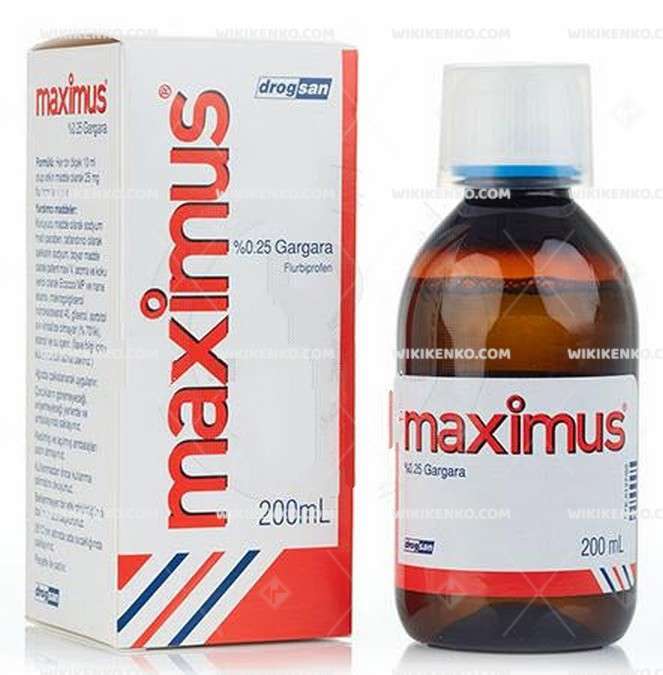
Description
Maximus Mouthwash, a pharmaceutical product containing flurbiprofen as its active ingredient, represents an important therapeutic option for oropharyngeal conditions. This medicinal product, manufactured by Drogsan in Turkey, serves as an effective anti-inflammatory agent specifically designed for localized treatment of oral and pharyngeal inflammation. In this comprehensive review, we examine the composition, pharmacological properties, therapeutic applications, and safety profile of Maximus Mouthwash, providing healthcare professionals and patients with essential information about this medication.
Composition and Formulation
Maximus Mouthwash contains flurbiprofen at a concentration of 0.25%, with each 200 ml bottle containing 0.50 g of the active ingredient. Flurbiprofen belongs to the phenylalkanoic acid derivative family of non-steroidal anti-inflammatory drugs (NSAIDs). The formulation includes several excipients that enhance the stability, palatability, and therapeutic efficacy of the product.
These excipients include sodium benzoate, macrogolglycerol hydroxystearate 40, sodium bicarbonate, glycerol, saccharin sodium, sorbitol liquid non-crystallized (70%), ecocool MP, peppermint essence, patent blue V, propylene glycol, and purified water. This careful balance of ingredients creates a rinse solution that is both therapeutically effective and relatively pleasant to use, enhancing patient compliance with the recommended treatment regimen.
Mechanism of Action
The therapeutic efficacy of Maximus Mouthwash stems primarily from the pharmacological properties of its active ingredient, flurbiprofen. Like other NSAIDs, flurbiprofen exerts its anti-inflammatory effect through the reversible inhibition of cyclooxygenase (COX) enzymes, specifically COX-1 and COX-2. These enzymes are responsible for the conversion of arachidonic acid to prostaglandin G2 (PGG2) and subsequently to prostaglandin H2 (PGH2) in the prostaglandin synthesis pathway.
By inhibiting these enzymes, flurbiprofen effectively decreases the concentration of prostaglandins involved in inflammation, pain, swelling, and fever. When applied locally to the oropharyngeal area through gargling or rinsing, flurbiprofen acts directly on the inflamed tissues, providing targeted relief at the site of inflammation. Research indicates that locally applied flurbiprofen can achieve therapeutic concentrations in the affected tissues without necessarily producing high systemic levels, thereby minimizing potential systemic side effects while maximizing local therapeutic benefits.
Therapeutic Indications
Maximus Mouthwash is specifically indicated for the symptomatic treatment of irritative and inflammatory conditions associated with oropharyngeal pain. These conditions include:
Oral and Pharyngeal Conditions
The primary applications of Maximus Mouthwash include treatment of gingivitis (inflammation of the gums), stomatitis (inflammation of the mucous lining of the mouth), and pharyngitis (inflammation of the pharynx). The anti-inflammatory properties of flurbiprofen make it particularly effective in reducing pain, swelling, and discomfort associated with these conditions.
Post-Dental Treatment Care
Maximus Mouthwash also serves as a preservative treatment following dental procedures, particularly after conservative or extractive dental therapy. The anti-inflammatory effects of flurbiprofen help reduce post-procedural inflammation and discomfort, promoting faster recovery and improving patient comfort after dental interventions.
Dosage and Administration
The proper administration of Maximus Mouthwash is essential for achieving optimal therapeutic outcomes while minimizing potential adverse effects. The recommended dosage regime is as follows:
The standard dose is two or three rinses or gargles daily using 10 ml of the mouthwash solution. The solution can be used either in its undiluted form or diluted in half a glass of water, depending on patient preference and tolerance. After gargling or rinsing, patients should spit out the solution rather than swallowing it to minimize systemic absorption and potential gastrointestinal side effects.
For maximum effectiveness, treatment should be continued until symptoms resolve, typically for a period of 5-7 days, though this may vary depending on the specific condition being treated and individual patient response to therapy. As with all medications, the lowest effective dose should be used for the shortest duration necessary to control symptoms.
Pharmacokinetic Properties
Understanding the pharmacokinetic profile of flurbiprofen helps explain both the efficacy and potential side effects of Maximus Mouthwash. When used as directed (gargled and spat out), minimal systemic absorption occurs, though some absorption through the oral mucosa is inevitable.
Absorption and Distribution
Flurbiprofen is rapidly and almost completely absorbed following oral administration, with peak plasma concentrations typically reached within 0.5 to 4 hours. The drug is extensively bound to plasma proteins (>99%), primarily albumin, which affects its distribution throughout the body. The volume of distribution of flurbiprofen is relatively small, ranging from 10 to 14 L in different patient populations.
Metabolism and Elimination
Flurbiprofen undergoes extensive hepatic metabolism, with cytochrome P450 2C9 playing a significant role in converting it to its major metabolite, 4′-hydroxy-flurbiprofen. The elimination of flurbiprofen occurs primarily via the kidneys, with approximately 70% of a dose eliminated in the urine as parent drug and metabolites, while only about 3% is excreted unchanged. The elimination half-life of flurbiprofen ranges from 3 to 6 hours.
Contraindications
Maximus Mouthwash is contraindicated in several specific situations where its use could pose health risks:
Patients with known hypersensitivity to flurbiprofen, any of the excipients in the formulation, acetylsalicylic acid, or other NSAIDs should not use this product. Additionally, patients with a history of bronchospasm, rhinitis, or urticaria related to acetylsalicylic acid or other NSAIDs should avoid using Maximus Mouthwash. The product is also contraindicated in patients with active or a history of peptic ulcer, ulcerative colitis, or Crohn’s disease.
Pregnant women in their third trimester should not use this product due to potential risks to the fetus. Furthermore, patients with severe heart failure should avoid using Maximus Mouthwash due to the potential cardiovascular risks associated with NSAIDs.
Special Precautions and Warnings
Several precautions should be observed when using Maximus Mouthwash to ensure safe and effective treatment:
Special Patient Populations
Maximus Mouthwash should be used with caution in patients with renal failure, heart failure, or liver failure. The product is not recommended for children under 12 years of age. In elderly patients, dosage adjustments may be necessary due to an increased risk of adverse effects and a higher likelihood of concomitant hepatic and/or renal impairment.
Pregnancy and Lactation
Pregnant women should consult a healthcare provider before using Maximus Mouthwash. During lactation, either breastfeeding should be discontinued or the use of the product should be stopped, as flurbiprofen can be excreted into breast milk, though the amount transferred is generally a small fraction of maternal exposure.
Side Effects
While Maximus Mouthwash is generally well-tolerated when used as directed, various adverse effects may occur, particularly if the solution is inadvertently swallowed in significant quantities:
Gastrointestinal Effects
The most common side effects of flurbiprofen are gastrointestinal in nature, including abdominal pain, constipation, diarrhea, dyspepsia/heartburn, flatulence, nausea, and vomiting. More serious gastrointestinal effects, though rare with topical application, may include gastrointestinal bleeding, ulceration, and perforation.
Other Common Side Effects
Nervous system effects such as headache, dizziness, and somnolence may occur. Additionally, allergic reactions, ranging from mild skin rash to severe anaphylactic reactions, have been reported with flurbiprofen use.
Drug Interactions
Maximus Mouthwash may interact with several medications, particularly if sufficient quantities are inadvertently ingested:
Flurbiprofen may decrease the diuretic activity of furosemide and may interact with anticoagulant drugs, potentially increasing the risk of bleeding. However, flurbiprofen has shown no significant interactions with digoxin, tolbutamide, or antacids. As with all NSAIDs, concurrent use with other NSAIDs or corticosteroids may increase the risk of gastrointestinal adverse effects.
Storage Recommendations
To maintain the stability and efficacy of Maximus Mouthwash, proper storage conditions should be observed. The product should be stored at room temperature, away from direct sunlight and moisture. The bottle should be kept tightly closed when not in use, and the medication should be kept out of reach of children. As with all medications, Maximus Mouthwash should not be used after its expiration date.
| Parameter | Details |
|---|---|
| Active Ingredient | Flurbiprofen |
| Concentration | 0.25% (0.50 g in 200 ml) |
| Pharmaceutical Form | Oral rinse/mouthwash solution |
| Recommended Dosage | 10 ml used as rinse/gargle 2-3 times daily |
| Main Indications | Oropharyngeal inflammation (gingivitis, stomatitis, pharyngitis), post-dental treatment care |
| Mechanism of Action | Inhibition of cyclooxygenase enzymes (COX-1 and COX-2) |
| Contraindications | Hypersensitivity to flurbiprofen/NSAIDs, history of bronchospasm/rhinitis/urticaria related to NSAIDs, active peptic ulcer, third trimester of pregnancy, severe heart failure |
| Common Side Effects | Gastrointestinal discomfort, headache, dizziness, possible allergic reactions |
| Special Populations | Not recommended for children under 12 years, use with caution in elderly and patients with renal/hepatic impairment |
| Drug Interactions | May interact with furosemide, anticoagulants, other NSAIDs |
| Manufacturer | Drogsan İlaçları San. ve Tic. A.Ş (Turkey) |
Conclusion
Maximus Mouthwash represents an effective therapeutic option for the management of inflammatory conditions affecting the oropharyngeal area. Its active ingredient, flurbiprofen, provides potent anti-inflammatory and analgesic effects through localized application, minimizing systemic exposure and associated risks. The product is particularly valuable in managing gingivitis, stomatitis, pharyngitis, and post-dental procedure discomfort.
When used according to recommended guidelines, Maximus Mouthwash offers several advantages over systemic NSAID administration for oropharyngeal conditions, including targeted delivery to affected tissues and potentially reduced systemic side effects. However, like all medications, it must be used with caution in certain patient populations and in accordance with prescribed dosing regimens to ensure both safety and efficacy.
Healthcare providers should consider patient-specific factors when recommending Maximus Mouthwash, including the presence of underlying medical conditions, concurrent medications, and individual risk factors for NSAID-associated adverse events. With appropriate patient selection and proper use, Maximus Mouthwash can provide effective symptomatic relief for a variety of oropharyngeal inflammatory conditions.


Reviews
There are no reviews yet.